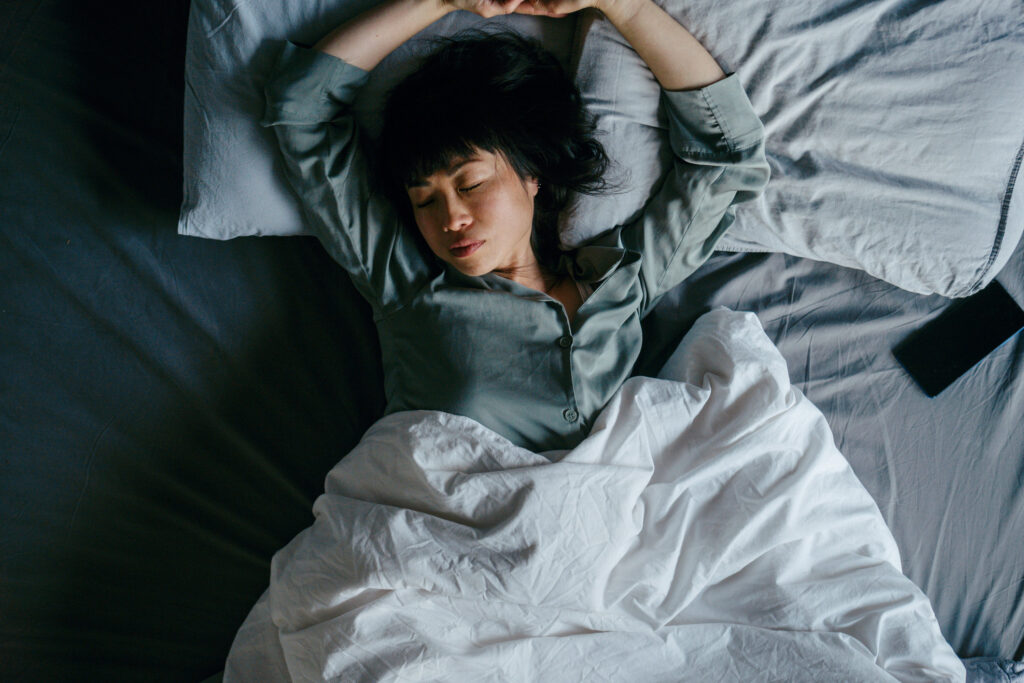
If you spend time on social media, you’ve probably seen posts proclaiming women need more sleep than men. The idea may resonate if you’re a woman who feels busy, overstimulated and constantly exhausted.
But are you tired because you’re juggling work, family and other obligations — often without enough support — or because you actually need more sleep than your male partner and friends?
Women may get slightly more sleep. In one widely cited study, women reported sleeping an average of 11 minutes more per night than men. But the gap is small, and the study doesn’t address sleep quality, how people felt upon waking or symptoms, such as daytime sleepiness, of a potential sleep disorder.
It also doesn’t suss out how much shut-eye women actually need.
One recent small study of 32 college students’ sleep, measured with a sleep-tracking device, found that even when women got more sleep than men with similar quality and efficiency, they still reported increased sleepiness, fatigue, anxiety and stress. But it’s unclear whether simply getting more sleep is the solution.
What is clear is that many people fall short of the recommended seven to nine hours of sleep each night — and pay the price the next day, relying on caffeine and a prayer to power through. Getting a proper night’s sleep is important, with recent research suggesting it might even be linked to longevity. (Sorry, did we just give you one more reason to stay awake at night worrying about your lack of sleep?)
Additionally, there are a few small differences between men and women that may help explain why some people can’t seem to feel energized — no matter how much time they spend in bed. We asked four sleep experts to explain the nuances and to share their best advice on how to get a good night’s rest.
Women may be more prone to ‘social jet lag’
Research shows that the human circadian clock, which follows a roughly 24-hour cycle and regulates essential bodily functions including our blood pressure and the sleep-wake cycle, is slightly shorter in women. Factors such as hormones and core body temperature seem to play a role.
On average, it’s only by a handful of minutes, but this suggests that women have slightly earlier preferred fall-asleep and wake-up times, said Rebecca Robbins, a sleep scientist at Brigham and Women’s Hospital and assistant professor at Harvard Medical School.
When people work against their body’s natural time to wake up or go to sleep, it can create what scientists call “social jet lag,” said Andrea Matsumura, a sleep medicine physician and spokesperson for the American Academy of Sleep Medicine.
That means that women might be at a greater risk of a chronic misalignment between their circadian clock and social obligations for school or work, which can lead to fatigue, trouble sleeping and having a harder time waking up in the morning, Matsumura said.
Women have higher risks of health conditions that affect sleep
Studies consistently show that women have between a 40 and 60 percent higher risk of insomnia — or difficulty initiating or maintaining sleep — compared with men. For example, about 17 percent have trouble falling asleep, compared with 12 percent of men, and 21 percent have trouble staying asleep, compared with 15 percent of men, according to data from the Centers for Disease Control and Prevention.
That could be from a number of reasons, including a greater burden of caregiving and other responsibilities. However, chronic pain and mood disorders such as anxiety and depression, which are also more common in women, can increase the risk of insomnia. And sleep disorders such as restless leg syndrome, a condition that causes an irresistible urge to move the legs while at rest, are also more common in women, studies show.
Sleep apnea, a sleep disorder that occurs when a person’s airway collapses as they breathe at night, temporarily reducing or stopping airflow, usually affects men more often than women. That is, until menopause, when the rates become more equal, said Natalie Solomon, a psychologist specializing in behavioral sleep medicine and a clinical associate professor at Stanford University School of Medicine.
Whereas men with sleep apnea often snore, gasp or choke in their sleep, women sometimes experience nonspecific symptoms such as daytime fatigue, sleepiness or depression, which can result in underdiagnosis and under-treatment for women, Solomon said.
Matsumura, who specializes in women’s sleep and midlife health, said sleep differences often intensify during key hormonal transitions. Pregnancy and postpartum are perhaps the most dramatic periods of disrupted sleep, and hormonal fluctuations during perimenopause and menopause often trigger symptoms such as hot flashes and night sweats that can also interfere with sleep, Matsumura said.
Women may have more difficulty recovering from sleep debt
Research shows that women feel the impact of sleep debt — which is the difference between how much sleep you need and what you actually get — more strongly than men, according to Solomon. If men and women experience a notable reduction in their sleep time, “we see a greater impact on women than on men,” Solomon said.
In studies using electroencephalograms, or EEGs, to analyze brain waves of people who are sleep-deprived, women have been shown to have greater slow wave activity — which measures sleep intensity — during recovery sleep. This suggests that when women are recovering from sleep deprivation, their bodies need deeper sleep to catch up, Solomon said.
Women also often report poorer quality sleep than men, which means not only are they more likely to experience tiredness and fatigue but also impaired moods and daytime functioning, research shows.
Insufficient or poor-quality sleep can cause brain fog, reduced cognitive performance and even immune system impairment, Robbins said.
“The good news is when it comes to sleep, small changes can go a really long way toward improved sleep duration and improved sleep quality,” Robbins said.
Here are steps anyone can take to improve sleep
A good litmus test to determine whether you’re getting enough sleep is to make note of how you feel not only when you wake up in the morning but, more importantly, by the afternoon when your body’s circadian rhythm naturally produces a dip in alertness linked to changes in core body temperature.
“If you’re able to say, ‘I feel good in the afternoon,’ that’s a really good sign that you are getting close to your biological need for sleep,” Robbins said.
If not, there are non-pharmaceutical ways to help meet sleep goals, with the caveat that sleep issues that occur most nights of the week, persist for several months or affect daytime functioning should be assessed by a health care provider, said Wendy Troxel, a clinical psychologist specializing in sleep who is a senior behavioral and social scientist at Rand, a public policy research organization.
Here are tips from experts:
Limit alcohol and caffeine intake in the late afternoon and evening. Although alcohol may help you fall asleep faster, as it wears off, it can have a rebound effect that causes you to wake up early and have trouble falling back asleep, research shows.
Develop a wind-down routine before bed. Thirty minutes to an hour before bed, relax — without screens. Take a warm bath, sip herbal tea, write in a journal, listen to music or read a book. A routine signals to the brain it’s time to sleep.
Abide by your bedtime — even on the weekends. Set an alarm on your phone or watch to remind yourself it’s time to go to bed, because passing your bedtime can throw off your sleep schedule. Keep a consistent wake time as well.
Make your bedroom a restful space. Keep your bedroom cool, dark and quiet, and when possible, invest in a good-quality mattress and bedding.
If you’re chronically tired, slowly adjust your sleep time. Go to bed 15 minutes earlier per night until you start to feel rested during the daytime. Because your circadian clock is not meant to change drastically from one day to the next, moving your bedtime too much too fast may result in tossing and turning rather than sleeping, Robbins said. “One of the most common mistakes people make is getting into bed hours before their habitual bedtime,” she said.
The key takeaway is that while sleep problems are common, they’re treatable, Troxel said.
“Too many women are told, ’It’s all in your head’ or they are taught to believe sleep disturbances are inevitable, but that is not the case,” she said. “While occasional sleep problems are normal, chronic sleep disturbances could be a sign of a clinical disorder, and there are effective treatments.”
The post Why women may feel they need more sleep than men appeared first on Washington Post.