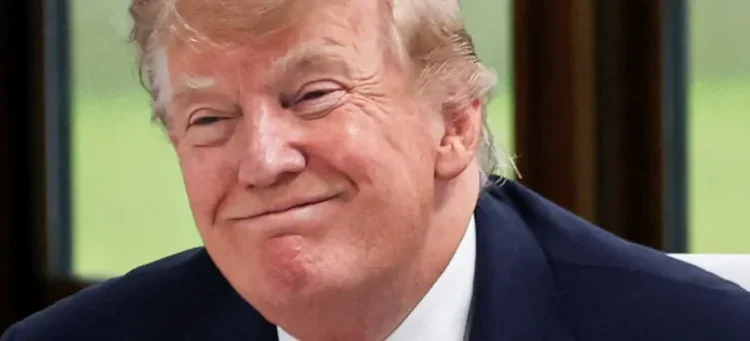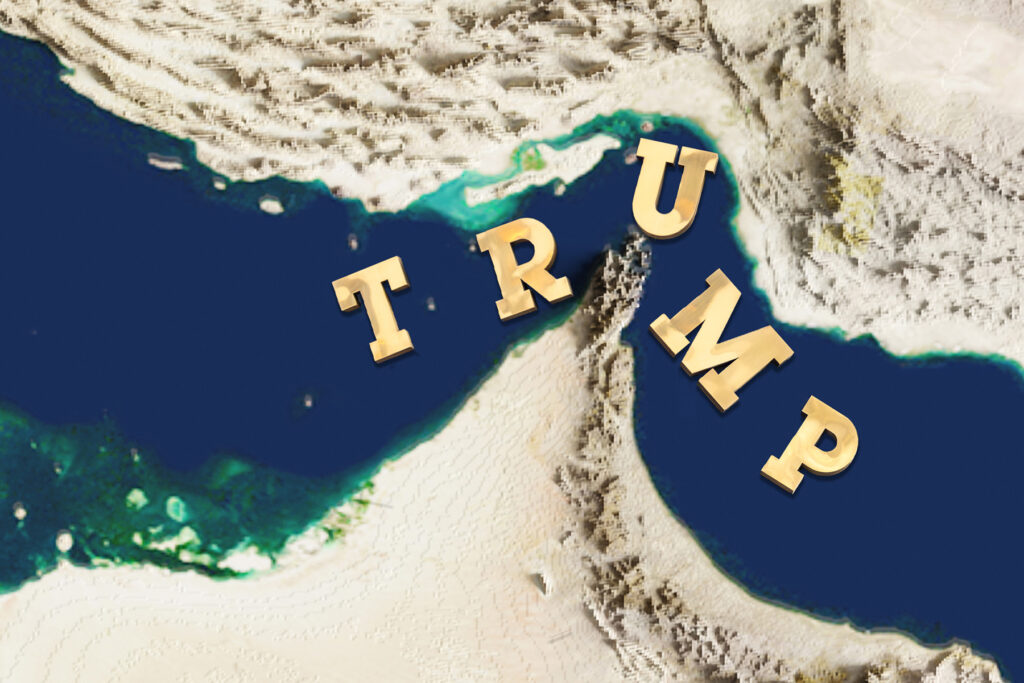
“It’s a beautiful thing,” President Donald Trump said recently, musing about a joint venture with Iran to act as the gatekeepers of the Strait of Hormuz. That same day, he posted on Truth Social, “Big money will be made” dealing with the “traffic buildup” there.
These are revealing remarks. Not because they are outrageous — Trump has said many outrageous things — but because they distill a worldview. They suggest a shift in how the United States might see its role: not as the guarantor of a system, but as a participant in a deal.
For most of its history, the U.S. has taken a different view. Freedom of navigation has been treated not as a privilege to be sold, but as a right to be defended. The young republic’s first military intervention — the quasi-war with France — was fought in part over interference with American shipping. Soon after, the U.S. confronted the Barbary pirates, refusing to pay tribute for safe passage and instead using force to establish the principle that commerce should move freely across the seas.
That commitment deepened over time. In the modern era, the U.S. has patrolled the world’s oceans, ensuring that critical choke points — from the Strait of Hormuz to the Strait of Malacca — remain open. It has done so at great expense, not to extract tolls but to sustain a global commons. Open seas would underpin open trade, which in turn would foster growth, stability and, ultimately, peace.
That is not how Trump thinks. In his view, the Strait of Hormuz is not a global artery but an asset — something to be monetized. Why provide security as a public good when it can be turned into a business venture? Why underwrite a system when you can charge admission?
This instinct runs deeper than a few words. It reflects a broader worldview that sees international relations less as the management of a shared order and shared values, and more as a series of transactions. In that world, every commitment is negotiable, every alliance conditional, every public good a potential profit center.
After World War II, the U.S. emerged not just as the most powerful nation on Earth but as the architect of an international system built on rules, openness and cooperation. Washington promoted free trade, supported multilateral institutions and maintained a security umbrella that extended far beyond its shores. It did so not out of altruism alone but because it understood that such a system would serve its interests.
And it did. A world of open markets and secure sea lanes allowed global commerce to flourish — with the U.S. at its center. American companies thrived. The dollar became the dominant currency — keeping interest rates low for Americans as the country has borrowed more and more from foreigners. U.S. influence extended across continents not through coercion but through attraction and interdependence. (And when it did coerce, its power often shrank rather than grew.)
All this required a certain mentality. It meant looking beyond immediate gains to long-term advantages. It meant accepting that some investments — in security, in institutions, in alliances — would not yield quick returns but would pay dividends over decades. It meant understanding that legitimacy and trust are strategic assets.
Trump’s approach flips that logic. It prioritizes the immediate over the enduring, the tangible over the intangible. If allies can be bullied into paying more, that is a win. If trade partners can be squeezed for concessions, that is success. If strategic commitments can be turned into revenue streams, so much the better. The costs — in diminished credibility, frayed alliances, lost trust and a weakened system — are diffuse and deferred. The gains are immediate and visible.
The scholar Stephen Walt has called this the behavior of a “predatory hegemon.” The truth is, most hegemons were predatory. Great powers have taxed trade routes, extracted tribute and leveraged dominance for direct gain. Rome did it. The Habsburgs did it. Napoleon’s France and imperial Germany did it. Even Britain, often seen as liberal, ruled its empire in ways that enriched the metropole.
What made the U.S. different was not that it lacked self-interest but that it pursued it in a broader way. It built a system others could join because it offered wide benefits. It restrained its power even as it exercised it. It chose, in other words, to be an enlightened hegemon — one that understood that the surest way to sustain dominance was to make it acceptable.
That choice is now in question.
To treat the Strait of Hormuz as a tollbooth rather than a global commons is to misunderstand both history and strategy. The U.S. benefits most not from charging per ship for access, but from building a world in which commerce flows freely and Washington’s central position is reinforced. To abandon that model for short-term extraction is to trade a durable advantage for a fleeting gain.
If the U.S. becomes just another predatory hegemon, it will discover what history has long shown: Such power is feared, resented and ultimately resisted. And in time, it is not sustained — but overturned.
The post U.S. power rests on open seas appeared first on Washington Post.