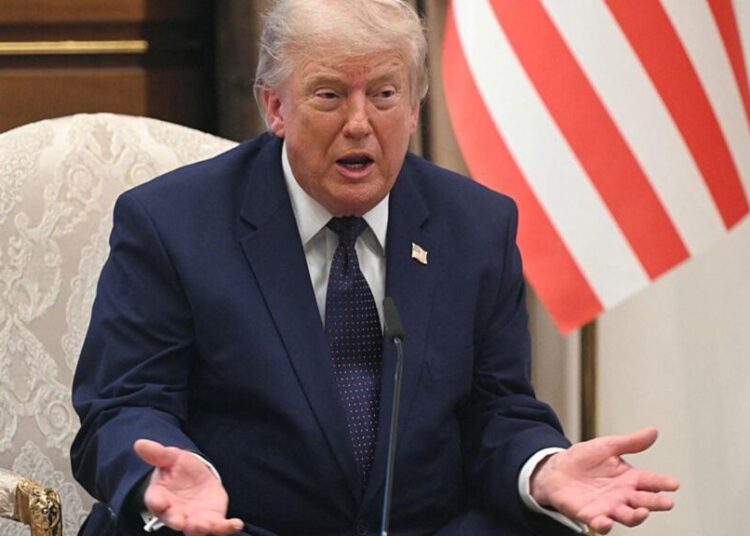
In the opening scene of the new documentary Steal This Story, Please! reporter Amy Goodman chases down a senior Trump administration adviser.
The camera follows as she weaves through a convention hall at a climate conference in Poland, shouting questions at energy expert P. Wells Griffith III right up until he shuts a door in her face. Undaunted, she waits outside. The door opens a crack. It’s some lackey, peeping out and shooing her away; right up until the door closes again, Goodman persists, trying to make contact. She’s out of breath when she finally turns back.
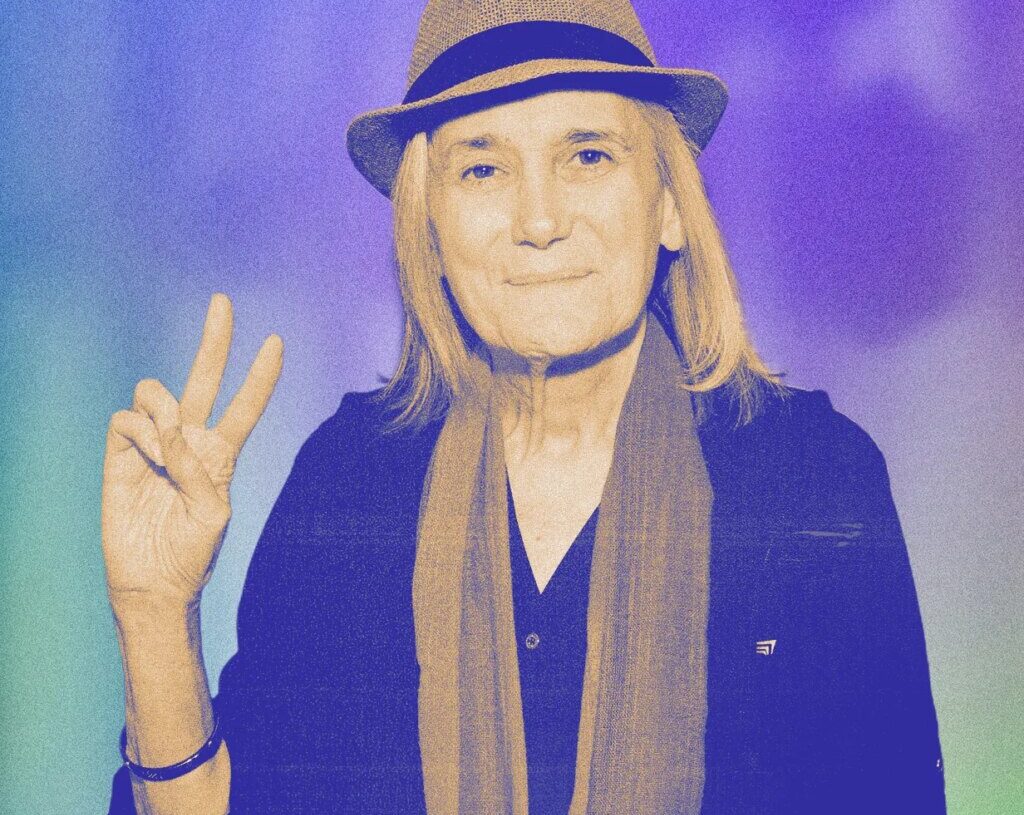
Goodman, the indefatigable longtime host and cofounder of the independent journalism stalwart Democracy Now!, has spent the past 30 years asking her subjects tough questions, leading people like former US president Bill Clinton to describe her as “hostile and combative” and intimidating government officials so much that they flee on sight.
Steal This Story, Please! traces Democracy Now!’s rise from an upstart airing on a few handfuls of public radio stations to … the exact same thing, just distributed on thousands of radio and television stations as well as the internet.
Democracy Now! is a rare media success story where an outlet has flourished by sticking to its original vision—it has always been a proudly grassroots endeavor that shuns corporate sponsorship and embraces coverage of social movements. It has also always been led by Goodman, 68, whose ascent to progressive icon is documented in parallel to the outlet’s growth.
Steal This Story, Please!, directed by Oscar-nominated filmmakers Tia Lessin and Carl Deal and in theaters Friday, casts an affectionate eye on its subject—this is no searing exposé—but it still thrusts Goodman into an unfamiliar position, where she’s the person answering questions rather than asking them. “It’s painful,” Goodman tells WIRED. “A taste of my own medicine.”
She was more than happy to deal with the discomfort, though, as she sees the project as a way to spread the word about the necessity of independent journalism. She sees the documentary’s name as a call-to-action of her journalistic ethics: “We see an exclusive story as a failure.” In an era when media executives tend toward skittishness, Goodman hopes that the success of her outlet demonstrates that there is, indeed, an appetite for coverage that is adversarial to power and focused on community-driven movements around the world.
Steal This Story, Please! is essentially a highlight reel of Democracy Now!’s reportage, from its early work covering a genocide in East Timor, where Goodman was beaten by occupying Indonesian soldiers, to its on-the-ground reporting on the 9/11 attacks, to its crusading reporting on the protest movements in Standing Rock, right up to its vigilant documentation of violence in Gaza. The film makes it abundantly clear that one of the secrets to the program’s success is its focus on global social movements and speaking with the people directly involved in them. “We don’t believe in turning to the pundits, who know so little about so much,” says Goodman. Instead, the outlet focuses on what Goodman calls “trickle-up journalism,” where it privileges interviews with activists, everyday people, and subject-matter experts. “I think it’s that authentic voice that drives people to support Democracy Now!”
Today, as the mainstream media declines and smaller, independent outings proliferate on platforms like Substack and TikTok, the audience-supported model Democracy Now! relies on has become far more prevalent. Goodman isn’t worried about lagging support in an era where an increasing number of indie outlets rely on reader or viewer donations or subscriptions to stay afloat, though. “We haven’t had an issue,” she says. “One of the engines of our growth has been no paywall.”
The outlet has also been out ahead of technological headwinds a few times. YouTube has been a major distribution channel for decades at this point, but the nonprofit has attempted to inoculate itself against overreliance on any one tech company’s offering by declining to monetize its social videos and by nurturing its old-school stand-alone website. “Democracy Now! has always made opportunistic use of technology. It’s part of how we grew, because we didn’t have a lot of resources in the beginning,” the nonprofit’s executive director, Julie Crosby, tells WIRED. “We early-adopted the RSS protocol as a way to distribute our MP3s to radio stations broadcasting the show.” To that end, the outlet has been open to using artificial intelligence in limited ways with human oversight, like to assist with transcription and some translation services.
Crosby calls its overall approach to the tech “conservative” and stresses that audience trust is crucial to the show’s survival: “I can’t imagine we would be using AI to generate content; it cuts against everything that Democracy Now! is.”
Steal This Story, Please! is at its most compelling while showing Goodman in the process of news-gathering, and it showcases several moments where she finds herself in legal peril while out getting a story. She’s twice been arrested while actively reporting, in 2008 during the Republican National Convention and again in 2016 while covering the Standing Rock climate protests.
As someone uncommonly familiar with incursions in press freedom in the past, Goodman is concerned about where we are at today. “We are in a very precarious and dangerous place,” she says, running through a checklist of ominous examples: Paramount’s decision to settle a ludicrous defamation lawsuit brought by President Trump, the looming Paramount-Warner Bros. merger led by tech scion David Ellison, mass layoffs at The Washington Post, especially of foreign correspondents. “Independent media is essential to the functioning of a democratic society. We have to fight for it. We have to stand up for it. We have to make the country safe for dissent.”
The post The Indie News Queen Who’s Not Done Pissing Off the Powerful appeared first on Wired.