CEGLED, Hungary — Istvan Varoczi, a 63-year-old entrepreneur from the small Hungarian city of Cegled, says he doesn’t believe the polls that show Prime Minister Viktor Orban could lose a pivotal election on Sunday.
After 16 years in power and four straight election victories, Orban is facing an unprecedented challenge from a center-right opponent — Peter Magyar of the Tisza party — who has sought to whittle away at Orban’s rural support base with months of relentless touring in the countryside.
Although most polls show that many Hungarians have abandoned Orban and his Fidesz party and plan to vote for change, the long-serving prime minister remains deeply popular among large parts of Hungarian society — particularly among older voters and those in the smallest settlements.
“I’ve been watching him for nearly 40 years, I have always voted for him and I will again, I’ve never been disappointed in him,” said Varoczi, who sells handbags and other goods from a stall in the center of Cegled. “His biggest strength is that he didn’t forget where he came from. He always remained a normal person. I’m sure he has flaws, but who doesn’t?”
He added that Orban’s populist-nationalist Fidesz party is “the only party I trust,” and that he considers the long-serving leader’s performance “unparalleled.”
Magyar and his Tisza party have found growing support among Hungarians after four years of economic stagnation, due partly to the freezing of billions in European Union funding for Hungary over rule-of-law and corruption concerns under Orban.
But in a survey released Wednesday by pollster Median, 47% of Hungarians over 65 years old support Fidesz compared with 29% for Tisza. The smaller the community, the poll shows, the more voters back Orban.
In Albertirsa, a town of around 14,000 in central Hungary, retired pipe fitter Janos Falajtar became emotional when describing what he believes Orban has done to serve his country. Struggling to speak through tears, he said that Orban had “acted for the people.”
“The decisions don’t matter. Common sense and heart matter,” he said.
Orban has given preelection benefits and introduced programs designed to appeal to his supporters, such as a popular utility bill reduction program buttressed by Hungary’s continued purchasing of Russian oil and gas. Retirees also receive a “13th month” pension supplement at the end of each year, with a 14th currently being introduced.
The prime minister has also pioneered a program to renovate small-town pubs and churches, and has abolished income tax for young mothers who have multiple children.
But perhaps more than any of his policies, Orban’s political charisma, emphasis on maintaining Hungary’s traditions and dedication to bolstering national pride resonates most strongly with his base.
Falajtar, the retired pipe fitter, said he felt Orban had united the nation, including in regions of neighboring countries where many ethnic Hungarians reside after more than 70% of the country’s territory was annexed after World War I.
“We are now beginning to unite the Greater Hungary in Vojvodina, Slovakia, Transcarpathia, Transylvania, and even in Austria,” Falajtar said. “They only took a small piece from us, but it’s still ours.”
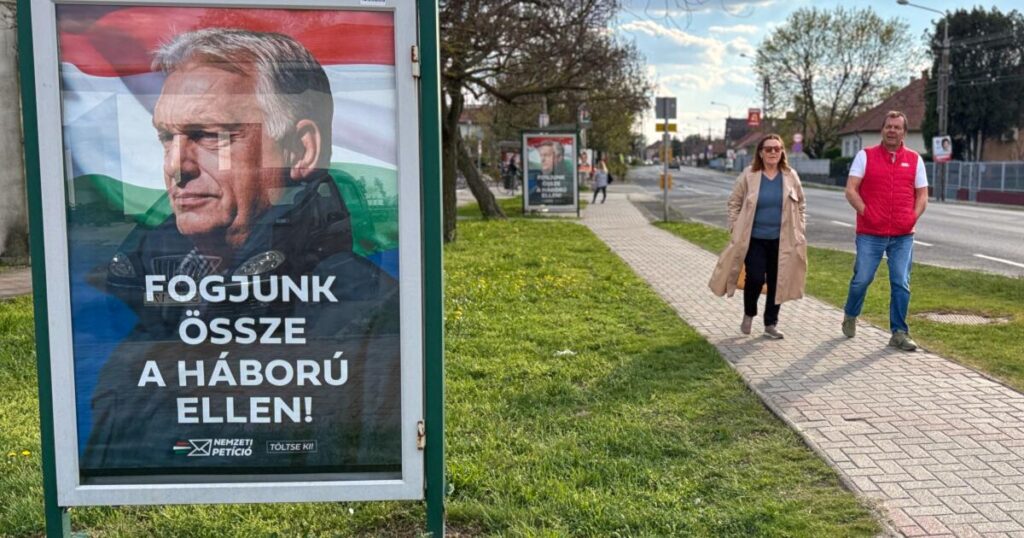
Orban has campaigned heavily on a myriad of dangers he says will threaten Hungarians if he doesn’t receive another term, especially the war in neighboring Ukraine, which he says threatens to bankrupt Hungary and even drag it directly into the fighting.
Despite the sluggish economy, many of Orban’s supporters believe that external factors — not government mismanagement — are at fault.
The government “is doing what it can for us, for the people,” said Varoczi, the bag seller.
Spike writes for the Associated Press.
The post Orban’s rural base still backs the Hungarian leader ahead of Sunday’s pivotal vote appeared first on Los Angeles Times.