As apartheid drew to a close in South Africa in the 1990s, the activist and writer Mfundi Vundla set out to imagine what Black success in the country could look like without white-minority rule — a sort of road map toward Black empowerment in the newly democratic nation.
The result was “Generations,” a television show that followed a Black middle-class family in Johannesburg and relied in part on the lessons Mr. Vundla learned during his 21 years in exile in the United States.
The show, which has been on air since 1994, became one of the country’s foremost cultural landmarks, shifting the narrative around Black South Africans from marginalization to aspiration.
Yet for all the optimism that Mr. Vundla portrayed in his show, he now says that the reality he has confronted in post-apartheid South Africa has been complicated. He has struggled to come to terms with loved ones who died while he was in the United States, watched with dismay as corruption took hold in the South African government and lamented the loss of job opportunities for young people in his home country. He was diagnosed with cancer in 2022.
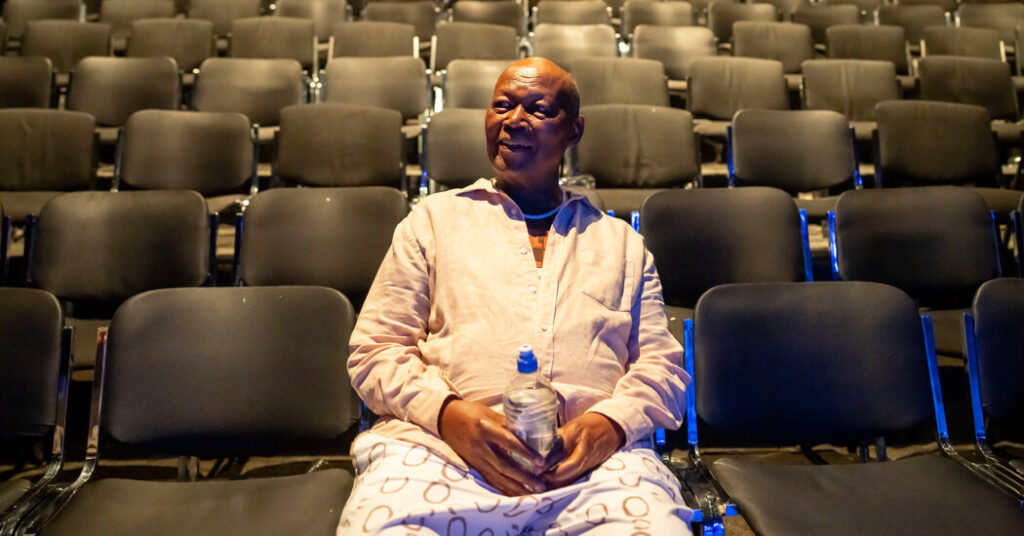
Those hardships have inspired Mr. Vundla’s latest work, “Man With No Surname,” a semi-autobiographical play running in Johannesburg through Sunday. The play explores the intersecting lives of a writer returning from exile and his uncle, a doctor who also fought against apartheid but is struggling with the guilt of having betrayed some of his fellow freedom fighters.
“I tell young people, ‘You better wake up because the country is being stolen from you,’” Mr. Vundla said in an interview. He added that opportunities available to him when he returned from exile in 1992 were no longer available “because the money is being stolen.”
Despite his frustration with corruption in South Africa, Mr. Vundla said he’s pleased with the broad progress he’s seen in the country. His play is in some ways a reflection of that journey. “It’s an attempt to affirm my pride as an African, triumphing against the evil of apartheid, reconnecting with home,” he said.
Mr. Vundla was born in the Western Native Township, a central enclave in Johannesburg that the apartheid government had designated for Black people. But Mr. Vundla’s family was one of tens of thousands that were eventually removed from the area by the government, and forcibly relocated to the sprawling township of Soweto, outside the city.
His parents had solid jobs for the time. His mother was a nurse and his father was a clerk at a gold mine. But they lived a hard life in Soweto. The family of 13 squeezed into a three-room house. It was so cramped that they had to move furniture at night to make space on the floor for everyone to sleep, Mr. Vundla said.
They lived adjacent to a middle-class white neighborhood, he said, which allowed him to see the disparities of apartheid and awakened his mind to racism.
With a father who was a trade unionist and official with the liberation party, the African National Congress, Mr. Vundla was highly engaged in the anti-apartheid struggle at a young age. While attending Fort Hare University, he disseminated banned political literature and worked as an underground organizer — activities that got him expelled from the university in the late 1960s.
Through his political connections in South Africa, he secured a scholarship to attend the University of Massachusetts Amherst. With little more than the $200 given to him by a South African anti-apartheid organization, Mr. Vundla arrived in the United States in 1970 for what he thought would be a few years of study.
In Massachusetts, he continued to fight against apartheid, meeting with U.S. lawmakers like Senators James William Fulbright and George McGovern. When Mr. Vundla attempted to return to South Africa, he said the apartheid authorities revoked his passport, essentially leaving him exiled in the United States.
Mr. Vundla immersed himself in Black American culture, earned degrees in politics, English and education and watched with fascination as Black Americans pursued their dreams, celebrated their music and congregated in public without fear — something that was restricted in South Africa.
Those portrayals of Black freedom would eventually inform “Generations.”
The show starred Black professionals wearing business attire that countless Black South Africans tried to mimic; it showed a Black woman reading a newspaper over breakfast with her husband in a fancy house; and there were Black people closing business deals over glasses of expensive whiskey. (This reporter, who hails from a rural village, learned how to order food at a restaurant and use a knife and fork by watching “Generations.”)
“As a storyteller, we learned the importance of having to curate new identities,” said Mandla Dube, a South African filmmaker. “What he did was revolutionary at the time.”
Mr. Vundla’s background in television started in Hollywood, where he worked on dramas and with writers such as David Milch, he said.
But his origins as a storyteller began in the theater. His first production was a play he produced in New York in 1981 based on an essay written by another South African in exile about the lives of widows.
A lot has changed since then, he said. He was diagnosed with esophageal cancer four years ago, and is now in remission. The life-or-death battle forced him to embrace his vulnerabilities and accept the reality that the struggle against apartheid had been imperfect.
That imperfection is a central idea of “Man With No Surname,” he said. Honesty about the past and present is what brings out the play’s core theme: Liberation.
“It is my healing,” he said.
The post He Changed How Blackness Was Viewed in South Africa. Now He Gets Personal. appeared first on New York Times.