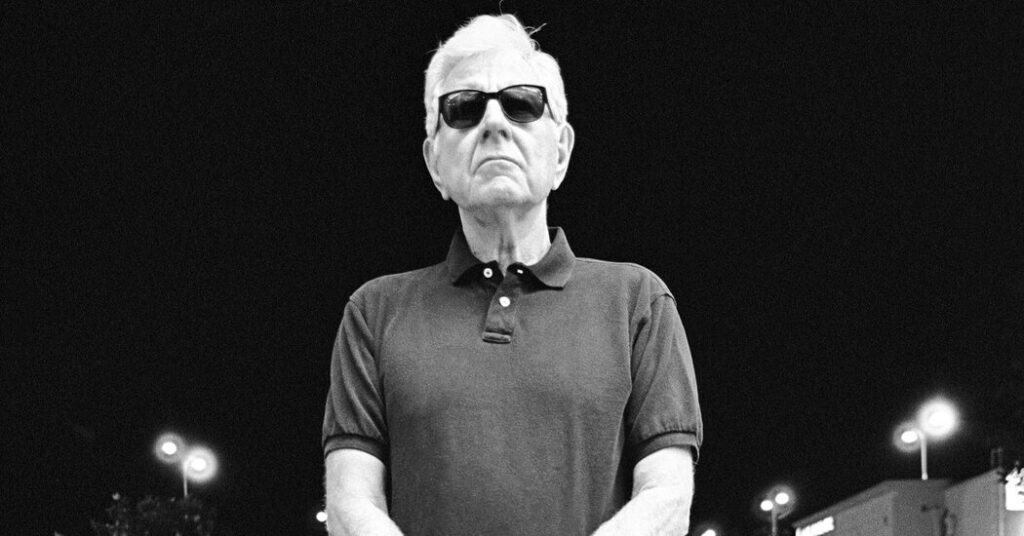
Rodolfo F. Acuña, the founder of one of the first and largest Chicano studies programs at an American university and the author of a pioneering history of Mexican Americans, who was known nearly as much for his gusto for political confrontation as for his scholarship, died on March 23 in the Granada Hills section of Los Angeles. He was 93.
He died in hospice care, his wife, Guadalupe Compean Acuña, said.
Born in East Los Angeles to Mexican immigrant parents, Dr. Acuña earned a Ph.D. in Latin American history from the University of Southern California in 1968. His consciousness about his heritage and activism were shaped by the 1960s civil rights movements, especially the drive by Chicanos for cultural and political power in the American Southwest.
Dr. Acuña was hired by San Fernando Valley State College (now California State University, Northridge) in Los Angeles in 1969 as its first professor of Mexican American studies, at a time when rising numbers of Latino students were entering higher education. His yoking of scholarship with activism irked some academic peers, who protested what they called his lack of objectivity, but he excited generations of students.
His 1972 book, “Occupied America: A History of Chicanos,” is a foundational text of Chicano studies that is still in print and still assigned to students. Its controversial thesis is that people of Mexican origin in the American Southwest remain subject to “internal colonialism” more than a century and a half after the United States seized California and other territory from Mexico.
“I contend that Mexicans in the United States are still a colonized people, but now the colonization is internal — it is occurring within the country rather than being imposed by an external power,” Dr. Acuña wrote.
The historian Ramón Eduardo Ruiz, the author of 15 books on Mexico and Latin America, credited Dr. Acuña with “opening the national debate on the Chicano experience.”
Besides teaching, Dr. Acuña, who was typically found in jeans and sunglasses that he wore indoors, jumped into political causes with both feet. He supported a student hunger strike at the University of California, Los Angeles, to save Chicano studies from the budget ax, and he vociferously opposed California voter initiatives for English-only education and restrictions on undocumented immigrants.
“I don’t consider myself an intellectual,” he told an interviewer in 2014. “When I received my Ph.D., my father asked me, ‘Si eres doctor, que curas?’ ‘If you are a doctor, what do you cure?’ My strategy has always been to take my cause of the moment to the edge of the cliff and be prepared to go over the cliff if necessary.”
His anger was often directed at his own university. He accused other academic departments of shortchanging Latinos in their curriculums, sent caustic letters to the university president about the same issues, and once barged into a private meeting about a revision to the humanities program that he claimed would dilute the role of minorities’ power.
The Los Angeles Times in 1981 quoted an unnamed administrator at his university as saying, “Rudy has asked at least half a dozen faculty members to step outside and fight since he got here.”
In 1991, Dr. Acuña was turned down for a position in the Chicano studies department at the University of California, Santa Barbara, which would have been a step up professionally. Three out of six department professors opposed his hiring. One reviewer called his scholarly output meager; another dismissed him as a “polemicist and pamphleteer.”
Their criticisms emerged in a lawsuit that Dr. Acuña filed against the regents of the University of California, claiming discrimination based on his age, race and politics.
In a 1995 jury trial, which received wide attention, the judge threw out the racial and political bias charges but allowed Dr. Acuña to proceed with his claim of age discrimination. One opponent of his hiring had noted: “Dr. Acuña, at age 59, has never trained doctoral students. Many younger scholars would think him obsolete.”
The jury ruled in favor of Dr. Acuña, but it was a Pyrrhic victory. The judge awarded him $326,000 in back and future pay (almost $700,00 in today’s money) but denied his request to join the Santa Barbara faculty, ruling that he had shown so much hostility toward his would-be colleagues that an appointment was “both impractical and inappropriate.”
In court records, Santa Barbara’s associate vice chancellor, Julius Zelmanowitz, who was Jewish and owned a Mercedes-Benz, said Dr. Acuña had assailed him for driving a “Nazi staff car.” Two Latino professors in the Chicano studies department said they were called sellouts for opposing his hiring.
Dr. Acuña vowed to appeal the ruling but finished out his teaching career at Cal State Northridge. He used the settlement from his lawsuit to create a foundation to aid people facing employment discrimination.
Rodolfo Francisco Acuña was born on May 18, 1932, in Boyle Heights, a Los Angeles community with a large population of Mexican Americans. He was one of two children of Francisco and Alicia Elias Acuña. His father was a costume designer for entertainers, including Liberace.
Rudy, as he was known, graduated from Loyola High School, a Jesuit-run Catholic school in Los Angeles, in 1951. He served in the U.S. Army in Korea and Germany, where he married Irmgard Kienast. He enrolled under the G.I. Bill in Los Angeles State College (now California State University, Los Angeles), from which he received bachelor’s and master’s degrees in history.
In the 1960s and ’70s, American history was taught primarily by white professors from books written by white scholars, and the role of Mexican Americans was a minor one in the story of the westward expansion of the American frontier.
Chicano studies, like other ethnic studies programs that spun out from the dynamo of the civil rights movement, met a need for a more complex picture of America.
Dr. Acuña taught at high schools and community colleges before he was recruited as the first professor of Mexican American studies at the campus that became Cal State Northridge.
In the early years, he wrote more than 40 course outlines for his new department, now known as Chicano and Chicana Studies. It says it is the largest program of its kind in the country, with 25 full-time professors.
His other books include “Anything but Mexican: Chicanos in Contemporary Los Angeles” (1996) and “Corridors of Migration: The Odyssey of Mexican Laborers, 1600-1933” (2007).
His marriage to Ms. Kienast ended in divorce. Besides Ms. Acuña, whom he married in 1984, he is survived by his sister, Norma Barton; two sons from his first marriage, Frank and Walter; a daughter from his second marriage, Angela; and four grandchildren.
Dr. Acuña’s writing and teaching was sometimes a target of political conservatives.
In 2012, public schools in Tucson, Ariz. removed “Occupied America” and other books of Chicano studies from classrooms under a state law aimed at shutting down Mexican American curriculums. Conservatives said the books fostered resentment of white people.
Students and parents in Tucson protested, saying the courses had raised student achievement. In 2017, a federal court ruled that the state had passed the law with racist intent. After further years of litigation, the same court, in 2025, overturned Arizona’s ban on ethnic studies.
Trip Gabriel is a Times reporter on the Obituaries desk.
The post Rodolfo Acuña, 93, Forthright Scholar at Forefront of Chicano Studies, Dies appeared first on New York Times.