Prime Minister Benjamin Netanyahu of Israel said on Thursday that he had ordered his government to start direct talks with Lebanon focused on disarming Hezbollah, the Lebanese militant group, signaling openness to diplomacy a day after the Israeli military escalated its offensive in the country.
But Mr. Netanyahu also ruled out a cease-fire in Lebanon, saying Israel was continuing to strike Hezbollah. Iranian and American officials have disagreed over whether Lebanon was part of the fragile cease-fire deal reached between their countries this week.
Lebanon has offered for weeks to hold direct talks with Israel, but Israeli officials rebuffed those overtures and demanded that their Lebanese counterparts take decisive action against Hezbollah, which last month launched attacks against Israel in solidarity with Iran.
Mr. Netanyahu also said the negotiations would center on establishing peaceful relations between Israel and Lebanon. Hezbollah, which is also a political party with significant sway in Lebanese politics, has long resisted disarmament as well as normalized relations between the two countries.
President Joseph Aoun, Prime Minister Nawaf Salam and Parliament Speaker Nabih Berri, the three Lebanese heads of government, did not immediately respond to Mr. Netanyahu’s statement.
The Israeli government has nominated Yechiel Leiter, its ambassador in Washington, to represent it in negotiations with Lebanon, according to two people familiar with the decision, including an Israeli official. They spoke on condition of anonymity to discuss sensitive information.
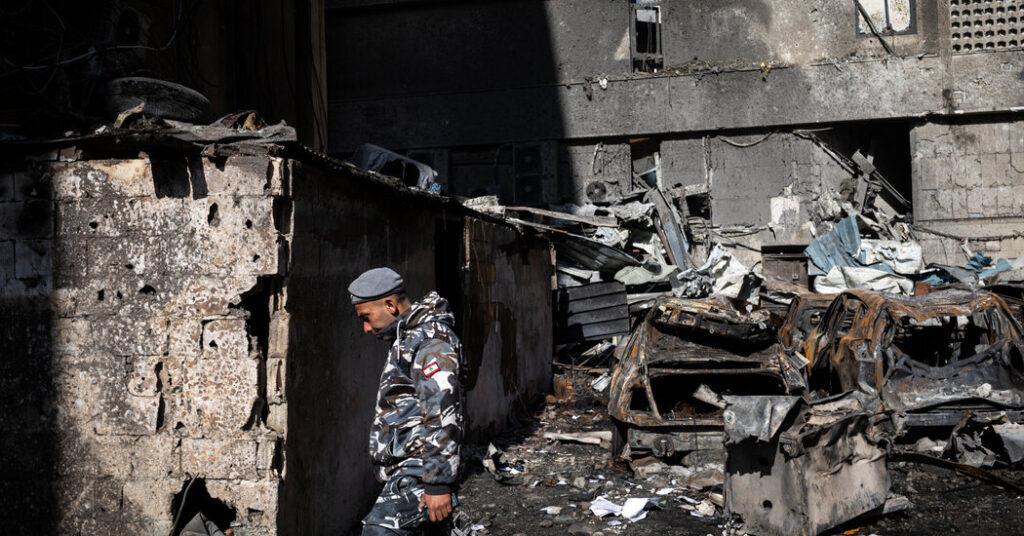
On Wednesday, Israel carried out the biggest bombardment of Lebanon in its monthlong war against Hezbollah, which started after the militant group launched rockets and drones into Israel on March 2 in retaliation for the killing of Ayatollah Ali Khamenei, the Iranian supreme leader.
Israeli jets pummeled the Lebanese capital, Beirut, and other parts of the country, with many strikes hitting densely populated areas without warning. The Israeli military said it had targeted more than 100 Hezbollah command centers and military sites in the span of just 10 minutes.
Residents had no time to flee, as munitions rained down on crowded neighborhoods that some once considered safe.
After Wednesday’s wide-scale attack, Vice President JD Vance said Israel had offered to “check themselves a little bit in Lebanon because they want to make sure our negotiation is successful,” referring to the planned talks between Iran and the United States in Islamabad, Pakistan this weekend. He did not clarify how Israel intended to exercise restraint.
On Thursday, Mr. Salam, the Lebanese prime minister, said his cabinet decided to request that security forces bring weapons in Beirut under the government’s control, a thinly veiled reference to Hezbollah’s arms. Over the past year, Mr. Salam has called to bring weapons across Lebanon under the government’s control, but Israeli officials claimed on Wednesday that Hezbollah had repositioned in areas of Beirut away from its stronghold on the city’s outskirts.
Mr. Netanyahu said Israel appreciated Mr. Salam’s statement.
Although Lebanon and Israel do not have formal relations, representatives from their governments last met in December in southern Lebanon under the auspices of a U.S.-led committee monitoring a previous cease-fire reached in 2024.
Aaron Boxerman and Euan Ward contributed reporting to this article.
Adam Rasgon is a reporter for The Times in Jerusalem, covering Israeli and Palestinian affairs.
The post Netanyahu Says He Ordered Talks With Lebanon About Disarming Hezbollah appeared first on New York Times.