Hello! The Supreme Court has gotten a lot of criticism lately for deciding important questions on its emergency docket without explaining its reasoning. Something similar is going on, a recent study found, in the justices’ decisions about whether to disqualify themselves from cases in which they may have a conflict of interest.
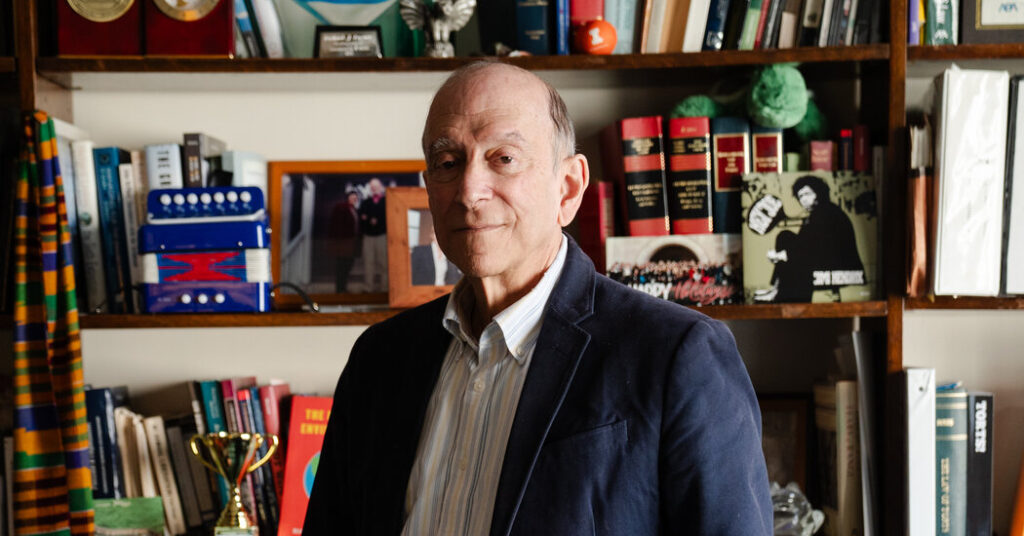
The study was prepared by Richard Lazarus, a law professor at Harvard and a keen student of the court. He founded an institute devoted to the work of the court, has published studies of its practices and has argued before it. He is also a close friend of Chief Justice John Roberts.
That made his latest project, about the shortcomings in the ethics rules announced by the Supreme Court in 2023, a little tricky.
In the study, Lazarus does not quarrel with the rules governing recusals. What is missing, he wrote, is “some bare assurance that the guidelines are not mere lip service.”
The rules require justices to disqualify themselves if their impartiality could reasonably be questioned. Among the reasons for disqualification: financial conflicts, family members’ involvement in cases, bias toward a party, and having heard the case as a lower-court judge.
The study drew lessons from a comprehensive survey of the practices of state supreme courts, some of which allow appeals of individual justices’ decisions not to recuse and all of whose members are subject, in theory at least, to discipline for failing to recuse when they should have.
Lazarus called those procedures non-starters at the Supreme Court. He suggested more modest steps. One was the creation of a formal ethics office at the court that the justices could consult. The other, the focus of this item, was a little sunlight. In the absence of unusual circumstances, he wrote, justices should “release formal written statements explaining their reasons for recusing or not recusing.”
Practicing What He Preached
Lazarus included his own statement, in a long footnote on the first page of the study.
“Prudence warrants disclosure of the fact that the chief justice and I have long been friends, beginning as first-year law students, and roommates for several years after law school,” Lazarus wrote.
Justices have friendly relationships with many of the lawyers who appear before them. But Lazarus wrote that he took nothing for granted when he was preparing to argue before the court.
“I did not view in any of those cases our friendship as reason for recusal, but out of an abundance of caution I always notified all counsel of record in writing of our friendship and the counselor to the chief justice of my participation in the case,” he wrote. “No one in any of those cases, correctly in my view, sought the chief’s recusal based on my participation.”
Two Case Studies
In his analysis, published last month in The Iowa Law Review, Lazarus praised two members of the court for their decisions to disqualify themselves from recent cases, apparently based on their relationships with people involved in them.
In one, Justice Neil Gorsuch stepped back from an environmental case in 2024 just days before it was to be argued. He did not give a reason, and the court’s clerk said only that the justice had done so “consistent with” the new ethics rules.
The move followed a letter from House Democrats urging the justice to recuse based on his ties to Philip F. Anschutz, a billionaire and a Republican donor who stood to profit from the ruling in the case.
Justice Gorsuch had represented Mr. Anschutz and his companies when he was still a lawyer. He also benefited from Mr. Anschutz’s support when he was being considered for a seat on an appeals court, and once served as a keynote speaker at an annual party at Mr. Anschutz’s ranch.
A few weeks later, Justice Amy Coney Barrett recused herself from a case on a religious charter school, also without giving a reason, though it was widely assumed to have been prompted by her own friendship with a law professor involved with the school. Without her vote, the court deadlocked 4-4, leaving a ruling blocking the school in place.
“Justices Gorsuch’s and Barrett’s examples here are actually some of the better ones of justices clearly taking their recusal responsibilities seriously,” Lazarus wrote.
“Gorsuch and Barrett both would have done better still,” he added, “had they taken the further step of explaining their reasons, rather than remain silent. That silence underscores the court’s need for procedural reforms to accompany its new code of ethics.”
A ‘Strikingly Stumbling’ Court
In general, Lazarus wrote, “the court’s approach and that of its individual justices has been strikingly stumbling, including in high-profile, politically salient cases.”
He gave examples. Justice Clarence Thomas, he wrote, “has essentially ignored, without explanation,” calls for his recusal from cases arising from the Jan. 6, 2021, attack on the Capitol, despite his wife Virginia’s role in the efforts to overturn the 2020 election.
Justices Thomas and Samuel Alito, Lazarus added, “have dismissed claims of bias in a highly personal, cavalier, hostile and conclusory way.”
Justice Alito refused to recuse himself, for instance, from two cases arising from the Jan. 6 attack after reports that flags displayed outside his houses appeared to support the “Stop the Steal” movement.
“My wife is fond of flying flags,” the justice wrote in letters to Democratic lawmakers. “I am not. She was solely responsible for having flagpoles put up at our residence and our vacation home, and has flown a wide variety of flags over the years.”
Over the years, Lazarus has published illuminating studies on the rise of the specialized Supreme Court bar, on the chief justice’s strategic decisions in assigning majority opinions, and on the court’s astonishing habit of quietly revising its decisions years after they were issued. That last study prompted the court in 2015 to start disclosing its after-the-fact editing.
“As the court has recently acknowledged by finally agreeing to be fully transparent in the correction of errors in the court opinions,” Lazarus wrote in the new study, “such transparency ultimately does not undermine the court, but promotes its essential rigor and integrity. Unnecessary secrecy invariably creates the contrary impression.”
A Partisan Divide
For now, disclosure of the reason for recusal, like recusal itself, is left to each justice’s discretion. Judging by the lists of orders issued on Monday mornings so far this year, the justices’ practices track a partisan divide.
When Justices Elena Kagan and Ketanji Brown Jackson, both Democratic appointees, noted that they had recused from several cases, they provided a brief explanation as to why (“prior government employment,” say, or “prior judicial service”).
When Chief Justice Roberts and Justices Alito, Gorsuch and Brett Kavanaugh, all Republican appointees, similarly disqualified themselves from a number of cases, they did not say why.
Lazarus’s footnote on the first page of the his study made one other important point.
“As with all my legal scholarship related to the court,” he wrote, “the chief neither reviewed, nor even knew about the existence of this article, prior to its publication.
Other Legal News
Mailbag
Partisanship in Judicial Elections
I grew up in Minnesota, where judges do not overtly affiliate themselves with a party. Wisconsin is the same way. Illinois, however, has full-party affiliations for its judicial candidates. I recall helping a friend canvas for a judicial candidate one evening in Illinois and was surprised that many people didn’t care that the bar association gave a high grade to one candidate and a poor grade to another — they only looked at party affiliation when choosing a judicial candidate.
Have there been studies about judicial bias, fairness and effectiveness in states where judicial candidates run on a party’s ticket versus those that have no party affiliations? — Christopher Glenn
That’s an interesting question. Let me give a little background before answering it. Electing judges at all, with or without party labels, is a distinctively American practice that strikes most of the rest of the world as profoundly strange. But most states elect at least some of their judges.
A few thoughts about party labels. First, the absence of an explicit label does not mean the candidate isn’t viewed by the public as affiliated with one party or the other.
You mentioned Wisconsin. Last year, a liberal candidate for the state Supreme Court, Judge Susan Crawford, won in a nominally nonpartisan race. But the contest might as well have been partisan: President Trump endorsed her opponent, Judge Brad Schimel, and Elon Musk spent $25 million to support him, partly through his super PAC.
Judge Crawford’s victory was widely perceived to give the liberals a 4-to-3 majority.
On Tuesday, Judge Chris Taylor won a seat on the court. She was not formally associated with a political party, but she talked during her campaign about her time working for Planned Parenthood and her fear that the federal government was interfering in state elections. Her victory widened the court’s liberal majority.
Second, some political scientists say that a party affiliation actually provides better transparency, giving valuable information to voters about how judges are apt to rule in politically salient cases. The alternative, they say, is unrealistic: to require voters to research candidates’ qualifications or to take the word of a bar association, which may have its own ideological or elitist inclinations.
It is not easy to study the quality of judicial work, but one social science metric can be helpful: the rate of positive citation of judges’ opinions by other judges. A 2021 paper in The Journal of Public Economics found that states that moved from partisan to nonpartisan judicial elections saw an increase in the quality of decisions.
I’d love to hear your questions on the law, the courts or whatever is on your mind. Send them my way at [email protected].
What I’m Reading
-
“Last Branch Standing,” by Sarah Isgur. A breezy, entertaining, anecdote-rich and not always convincing defense of the court from a well-sourced former Trump Justice Department spokeswoman who is now the editor of Scotusblog.
-
“Scientific Education Among U.S. Judges,” a study by Christa Laser in The American University Law Review. It found that federal judges’ undergraduate degrees were most commonly in political science, history, business, economics and English. Only 7 percent majored in anything remotely scientific.
-
“Major Questions,” a new newsletter on the Supreme Court from Jesse Wegman, who spent a dozen years on The New York Times’s editorial board writing vivid, biting takes on law and politics.
Closing Argument
Did Drake Consent to Be Defamed by Kendrick Lamar?
Here’s a rare opening line in a judicial opinion that makes you want to keep reading: “This case arises from perhaps the most infamous rap battle in the genre’s history.”
Judge Jeannette A. Vargas, of the Federal District Court in Manhattan, was considering a libel suit filed by Drake against his own record label for releasing a diss track by Kendrick Lamar. The judge concluded last October that the challenged song, “Not Like Us,” which accused Drake of pedophilia, conveyed opinions rather than facts, and so could not be the subject of a libel suit.
The song, part of a series of back-and-forth attacks by the rappers, “is replete with profanity, trash-talking, threats of violence, and figurative and hyperbolic language, all of which are indicia of opinion,” Judge Vargas wrote.
Context matters, too, she added. No listener would think that the song, she wrote, “is the product of a thoughtful or disinterested investigation, conveying to the public fact-checked verifiable content.”
And the judge hinted at another ground for dismissal — that Drake had brought the trouble on himself. In his own song, “Taylor Made Freestyle,” the judge wrote, “Drake challenged Lamar to make the pedophilia accusations.”
Drake, born Aubrey Drake Graham, appealed to the U.S. Court of Appeals for the Second Circuit, saying Judge Vargas had “effectively created an unprecedented and overbroad categorical rule that statements in rap diss tracks can never constitute statements of fact.”
Last Friday, the Floyd Abrams Institute for Freedom of Expression, a group at Yale Law School devoted to promoting free speech, and Lyrissa Lidsky, a law professor at the University of Florida, filed a brief supporting Lamar that picked up on the judge’s hint that Drake had opened himself up to the attacks. They put it in a doctrinal context. Four Yale law students worked on the brief, and they seemed to know their way around the rappers’ oeuvres.
If the appeals court has any doubts about whether “Not Like Us” is protected opinion, the brief said, it could dismiss the Drake case on a foundational common law defense to libel suits: “One who consents to defamation cannot later seek redress in court.”
The brief used an analogy. “Suppose a self-assured boxer challenges the world champion to a prize fight, is knocked out on live television, and, with bruised ego and body, files a lawsuit for battery,” it said. “That lawsuit would fail at the outset for a simple but important reason: The challenger consented to the fight.”
Adam Liptak is the chief legal affairs correspondent of The Times and the host of The Docket, a newsletter on legal developments. A graduate of Yale Law School, he practiced law for 14 years before joining The Times in 2002.
The post Supreme Court Secrecy Includes Reasons for Recusal appeared first on New York Times.