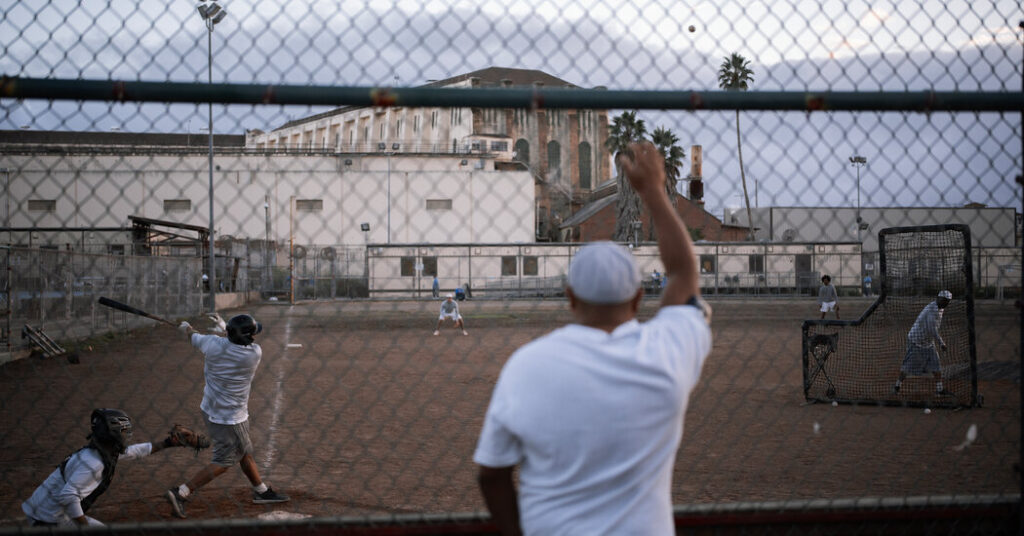
After spending a season with a prison baseball team called the San Quentin Giants last summer, I wrote a story about the prison’s program and its crew of incarcerated players and coaches. The responses were overwhelming: People across the country wanted to know how to support the team. One reader in Maine even sent me a package of baseball bats that he’d hand-carved in his garage.
Someone else who read the story was Jesse Gabriel, a Democratic lawmaker in California. He was surprised to learn that there wasn’t a formal policy around sports programs in California prisons, so last month, he proposed a bill, called the Second Chance Sports Act, to create one.
Under the bill, California would recognize organized sports as an official form of rehabilitation, opening the door for additional funding and resources. The bill would also help create teams like the San Quentin Giants in prisons across the state, funded in part by outside donations and coordinated by the California Department of Corrections and Rehabilitation, Gabriel said. A handful of professional sports teams are eager to help with the initiative, he added.
While legislation around criminal justice reform can be contentious in Sacramento, especially as the state faces a budget shortfall, the bill has drawn bipartisan support. On Tuesday, it passed through its first committee in the State Assembly uncontested.
“It’s just such a deeply intuitive approach to anyone who has played or coached sports,” Gabriel said in an interview. “Yes, it’s a really powerful tool to promote rehabilitation, but it’s also a way to successfully reintegrate these folks back into the community.”
The bill is part of a broader effort by California lawmakers to transform the state’s penal system with more progressive policies. Gov. Gavin Newsom has championed the effort, making San Quentin a model for arts, media and education programs, along with sports. Now other prisons are beginning to follow its lead.
Athletes at San Quentin have lobbied for such legislation since 2019. Branden Terrell, a former shortstop on the San Quentin Giants, says the baseball program is as much about preparing players for life after prison as it is about enjoying the game.
“You’re creating an alumni network of not just former players, but all the people that come in from the outside to play,” said Terrell, who now runs a rehabilitation clinic in Butte County. “They’re business owners, they’re managers, they’re supervisors. Those are the relationships that create opportunities.”
Next month, I’ll be going to San Quentin’s Field of Dreams for the first time since the article was published. While I’ve been inside the prison as a reporter, this time will be different — I’ll be playing against the Giants on my own men’s league team.
Eli Tan covers the technology industry for The Times from San Francisco.
The post San Quentin Uses Sports as Rehabilitation. It Could Soon Be a Model Elsewhere. appeared first on New York Times.