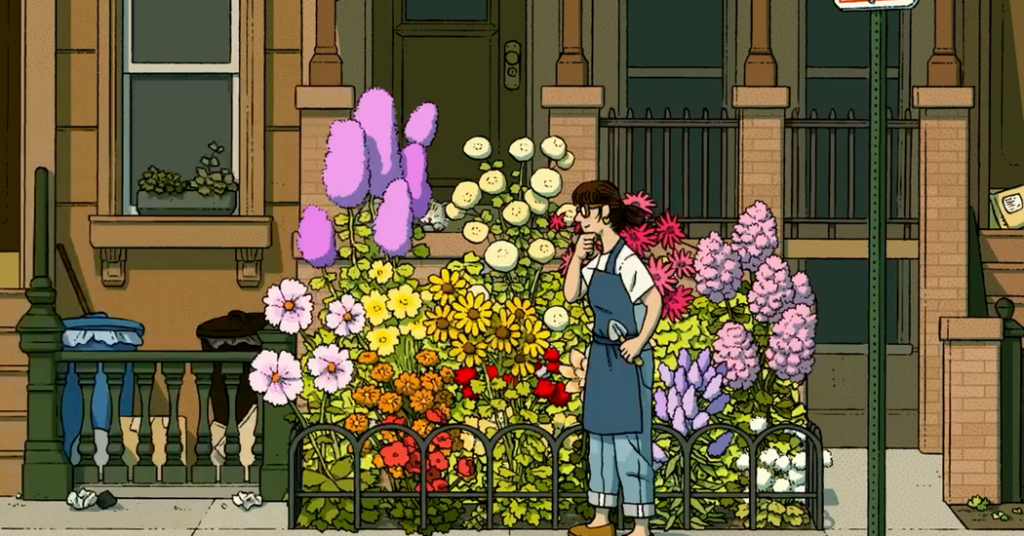
There are many reasons to start a garden. More time spent outdoors, especially among greenery, has been scientifically proven to boost your mental health, and handling microbe-rich soil is likely to have a positive impact on your gut. Of course, gardens are also a boon for the local ecosystem and community, on account of their contributions to biodiversity and their sheer beauty. But while we can all agree on their loveliness, we also know they require real work and know-how, and the idea of planting one from scratch might be daunting. To help ease the way, we asked five experts for their tips on getting started, whether you’re after a sprawling oasis or a more humble plot.
Refine Your Vision
“Do you plan on entertaining in the garden? Do you just want to look at it from the house? Do you want a pollinators’ garden with birds and bees and butterflies? Answering these questions is the first step because once you figure out what the use is, you can start designing around it,” says the Santa Monica, Calif.-based landscaper Art Luna. Not that you can’t tweak your idea along the way. Edwina von Gal, a Hamptons, N.Y.-based sustainable landscape designer, says it took her 40 years to realize that while she loved working in her garden, she’d failed to make room for a place to sit and enjoy it. She’s since added a deck off the side of her house with comfortable chairs and a table for meals.
Be Observant
While it’s good to be in touch with your desires, it’s even more important to know the conditions under which you’ll be working. Lindsey Taylor, a landscape designer and former garden editor who lives in Garrison, N.Y., says that if you’re a homeowner or a prospective homeowner, it’s essential to get a site survey before you start planning your garden. This will help you determine where your underground utilities like electric, wells and septic tank and field are, and save you time and money down the line. The British garden designer Juliet Sargeant recommends observing the space you have in mind for a full year, so that you can see it in all seasons, but even a month or two will go a long way. “Get to know the microclimates,” she says. “Where are the shady patches? Where are the wetter ones?”
Pay special attention to the sunlight and whether it’s direct or indirect. “Pick a sunny day and see where the sun sets, where it rises, where it’s overhead and where it’s the strongest,” says Luna. You can even take pictures of the space throughout the course of a day and compare the shots, says Sargeant. “Our eyes are really good at tricking us, and you might think, ‘Oh, that’s a sunny spot.’ But [with pictures], you’ll see the shadows and how they move.”
Test the Soil
“It’s really about the soil. The soil. The soil. The soil,” says Ron Finley, an artist and activist in South Los Angeles who works to establish shared vegetable gardens in food deserts. If you test yours for texture, drainage and pH, says Sergeant, you’ll get a sense of what plants will thrive — astilbes and hemerocallis like heavy soil, while salvias or eremurus bulbs will grow in sandier soil. Note that it’s much harder to retrofit the soil to the plants.
You can find a simple soil-testing kit at your local nursery, but it’s easy to glean certain clues yourself. “Make a fist with your soil — if it sticks together and it’s all clay, it’s not going to drain great,” says von Gal. Sergeant’s advice: “Dig a hole and fill it with water. After it drains once, fill it again to see how long it takes the saturated soil to drain. You can look up the exact times, but if the water is still sitting there a day or two later, you’ve got a drainage problem,” in which case you’ll want to add organic matter to change its composition. Once you have and are simply trying to improve the health of your soil, make like Finley, who’s constantly composting. “There’s no waste around me,” he says.
Think Local — and Social
Von Gal is a big believer in prioritizing native plants. She cites research showing that a garden with at least 70 percent native varieties supports a healthy bird population, which is, in turn, a key indicator of a healthy ecosystem. Determining your area’s Level IV Ecoregion, a classification system established by the E.P.A., will help clarify the terrain type and what plants are native to it. Von Gal also recommends going for a walk and keeping an eye out for places that might indicate what your area’s natural ecology looked like before cultivation.
Neighbors can be good resources — if a weed grows in their yard, it’s likely to grow in yours — as can the people at nurseries and botanical gardens, which, Taylor points out, may have gardening clubs that you can join. Like any hobby, says von Gal, “gardening introduces you to this whole world of other people who care,” so don’t be shy.
Channel Your Inner Draftsman
Luna finds it useful to sketch what he wants his garden to look like. Taylor recommends drawing on top of a photograph of one’s green space using tracing paper. To avert overcrowding, she advises, consider the size your plants will be once they mature. Start with the more structural elements, like trees and shrubs — “they tend to get overlooked because they’re sort of the boring things, but they give your garden shape,” says Sargeant — then add in perennials and more ephemeral flowers. Drafting this plan before you go to the nursery, which Sargeant likens to a “sweetie shop” (and buyers to “honeybees” rushing toward the nearest blossoms), will help you prevent feeling overwhelmed and making impulsive purchases.
Invest in Tools
Along with plants, you’ll need tools to tend them, but not too many. A list of basics: a three-pronged weeder, pruning shears, loppers and a hori hori knife. Luna gravitates toward Japanese tools such as his beloved Kaneshin Bonsai Master set for their slimmer profiles and thoughtful designs. Whichever you choose, offers von Gal, “never put a tool away dirty, no matter how much of a rush you’re in. Plus, wear something with good pockets.”
Set the Scene
“Location is everything. But the bottom line is, you can build the location, too,” says Finley, who’s known for his creative use of space and, in 2009, converted his home’s empty 50-foot swimming pool into a garden and office. If you have your heart set on a particular plant but need more sunlight to grow it, lean a mirror or other reflective material against a wall or fence. If the sunlight on your balcony is especially inconsistent, why not use a shopping cart like a planter and move it around to catch rays throughout the day? For more ideas, Finley’s turned to other traditions, like the German gardening method of hügelkultur, which involves building a mound to increase surface area when planting in a smaller area. “People always want to follow the rules,” he says. “Make your own.”
Express Yourself
Now’s your chance to plant, playing around with what goes where. Remember, says Sargeant, “your garden is an expression of you.” Finley, who used to work in fashion, says he’s drawing from a similar vocabulary: “Gardening is my graffiti. I’m working with colors, and I’m working with heights, and I’m working with textures.” In her designs, Taylor considers “movement, sound, fragrance, seasons, texture and flowers.”
As for putting the plants in the ground, Sargeant thinks this might be the simplest step of all. “People always ask, ‘How deep do I bury it?’ Actually, after using a trowel to make a hole, you just put it in the ground at the same level it is in the pot.” (For bigger plants, you may need to employ a garden fork or spade.) Afterward, simply firm up the soil around the base of the plant and give it a healthy drink of water. If planting from seed, Sargeant says, the first step is reading the instructions on the packet, which will dictate the optimal depth. “Because seeds are small, they need a well-prepared planting area with fine, crumbly soil or compost,” she adds. “Also, it’s best to moisten the soil before sowing, to avoid the possibility of washing [the seeds] away.”
Maintain and Refrain
Sergeant is a proponent of deep watering. When you give the plant enough water to wet the soil to the bottom of the root ball, it encourages the roots to grow downward in search of moisture, making for a stronger, more drought-resistant plant. You can check your work by “pressing your finger into the soil after watering — you’ll be surprised by how often it remains dry under the surface,” Sargeant says. When it comes to weeding, she recommends taking out individual weeds with as little digging as possible, explaining that “this sort of wholesale turning over of the soil that your grandparents used to do” is best to avoid. You can also try mulching, whether with wood chips or gravel, which can be effective weed suppressants. Von Gal, however, is not a fan of mulching. She notes that store-bought mulch can be pricey and deter the growth of all plants, not only that of undesirable weeds. Instead, she fills the extra surface area with more plants, a strategy she calls “green mulching.”
Ultimately, though, don’t get too caught up in the pursuit of doing everything the right way. “Your garden is not going to be a magazine cover, nor should it be,” Sargeant says. Even von Gal’s garden has what one of her friends calls a “corner of shame,” that one area she never gets around to, and that’s part of its charm. “Gardening is really a life skill. It’s for everyone,” says Finley, adding, “There are no mistakes, only lessons.”
The post How to Start a Garden appeared first on New York Times.