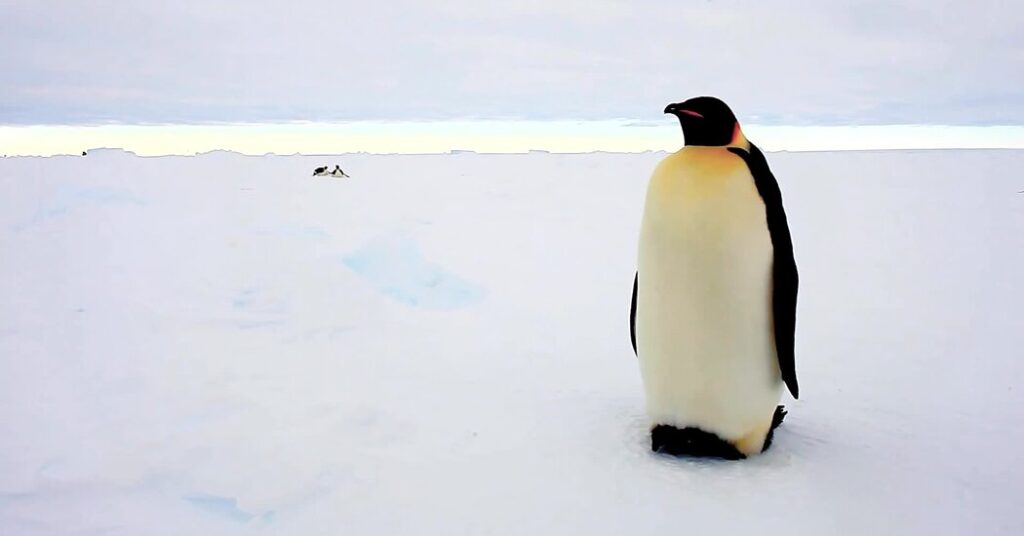
Emperor penguins, the world’s largest and perhaps most recognizable penguin species, have joined the list of wildlife endangered by global warming, the International Union for Conservation of Nature announced on Thursday.
In an update of its Red List, a comprehensive and authoritative listing of global species based on their extinction risk, the group also said that Antarctic fur seals had moved into the endangered category and that southern elephant seals had moved to vulnerable.
In the case of penguins and fur seals, the changes were largely driven by shifts in sea ice levels and food availability linked to global warming, researchers said.
For species in the Antarctic region, “this is the first clear evidence of climate change’s influence pop up in a big way,” said Kit Kovacs, a marine mammal researcher at the Norwegian Polar Institute who leads the I.U.C.N. seal project.
Here’s what to know about the updates.
Emperor Penguins
Scientists know of 66 emperor breeding colonies, exclusively in Antarctica, many of which were only recently revealed by springtime satellite imagery. Images taken between 2009 and 2018 showed an overall population decline of nearly 10 percent. Another recent study suggested that, between 2020 and 2024, seven colonies in the Ross Sea had declined by 32 percent.
“Looking further into the future, various studies predict quasi-extinction in many of the colonies,” said Philip Trathan, an emeritus marine ecologist at the British Antarctic Survey who assisted with the I.U.C.N. penguin assessment.
The penguin declines largely boil down to sea ice, which has hit record-low levels in the past few years. Emperor penguins rely on sea ice for breeding and to avoid water during their annual molt, when they essentially loose waterproofing and insulation. It also forms habitat for their aquatic prey.
The birds will not be able to survive without sea ice, which in turn depends on reducing greenhouse gas emissions, something that needs to happen “urgently,” Dr. Trathan said. In the meantime, he added, protecting the places where emperor penguins breed, molt and forage could help sustain the species.
Xiao Cheng, director of the Polar Research Center at Sun Yat-sen University in China, who was not involved in the I.U.C.N. assessment, agreed that “much evidence suggests that emperor penguins are experiencing increasing pressure.”
He added, though, that it’s premature to assume the fate of the species is sealed based on relatively short-term satellite observations. “While strengthening conservation actions is important, it is also important to carefully evaluate and maintain confidence in the species’ resilience,” Dr. Cheng said.
Emperor penguins are capable of diving to 1,750 feet in search of squid, fish and krill. Males handle egg incubation during the continent’s long, dark winter, forgoing food as they huddle together to conserve heat. Before Thursday’s update, they had been in the near-threatened category.
Antarctic Fur Seals
Once killed by the millions for their soft pelts, Antarctic fur seals quickly rebounded to a conservation status of least concern after a hunting ban was adopted in 1972.
Since 2014, however, populations have plummeted to fewer than one million adults from an estimated two million. The magnitude and speed of this decline was surprising, Dr. Kovacs said.
The main reason seems to be sharp shifts in the availability of krill, especially around South Georgia. As waters warm, krill are moving deeper and farther offshore in search of colder temperatures.
Disruption of the krill supply is catastrophic for breeding female seals, which depend on ample nearby supplies of the crustaceans to rear their pups, according to Jaume Forcada, a marine mammal scientist at the British Antarctic Survey who contributed to the updated assessment.
Krill distribution shifts are “unlikely to be reversible,” Dr. Forcada said, unless the world curtails greenhouse gases soon.
A number of other factors might also hasten the decline of fur seals, he added, including increasing levels of commercial krill fishing, competition for krill from recovering whale populations, plastic and other pollution, and disease outbreaks.
“However, there are no good data to assess these threats and assigning causality remains a challenge,” Dr. Forcada said.
Southern Elephant Seals
Southern elephant seals are 8,800-pound behemoths that take their name from the inflatable, trunk-like proboscis that males use like a megaphone in their competition for breeding privileges with large harems of females. But this gregarious lifestyle made the species, previously listed under least concern, especially susceptible to avian influenza, Dr. Kovacs said.
Since the virus first emerged in southern elephant seals in 2023, it has caused “huge and profound” losses to three of four major populations, she said, resulting in overall declines of more than 30 percent.
The high mortality might have been exacerbated by climate change, Dr. Kovacs said. In general, viruses and other pathogens do not proliferate well in the cold, so animals that live in polar regions have historically enjoyed some protection. As temperatures warm, though, diseases are finding their way to wildlife populations with no prior immunity, she said.
The situation underlies the cumulative nature of threats to wildlife, according to Dr. Kovacs.
“Everyone talks about one issue at a time,” she said. “But many are impinging on animals at the same time, and many are related to climate change.”
The post Emperor Penguins Are Now Endangered, a New Assessment Finds appeared first on New York Times.