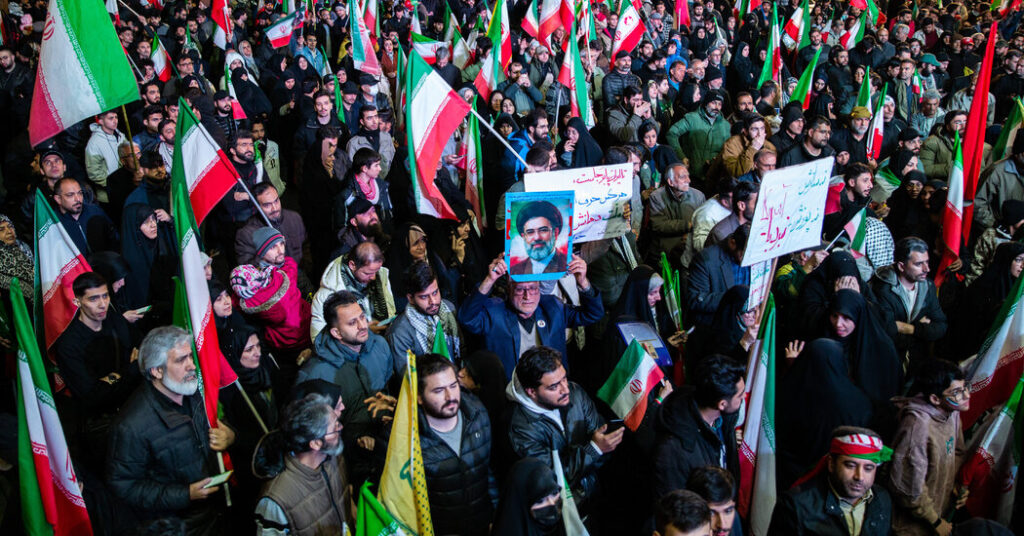
Hours after the United States and Iran agreed to a cease-fire — ending, for now, the airstrikes, destruction and immediate fear that Iranians have faced for six weeks — many in Iran said they were grappling with a confusing brew of emotions.
“Right now, it feels like a kind of limbo — I don’t know how it will end, but the war was heading in directions that I found frightening,” Iraj, a Tehran resident, said on Wednesday. “I just know that I feel better today compared to yesterday.”
Asked about how he felt about the cease-fire, Mohammad, who also lives in Tehran, said he was unhappy — because Iran’s authoritarian government was still in place, he implied. “But I didn’t want the war to reach a stage where it would seriously harm all of our lives,” he said. “I’m worried that the economic and cultural situation of society will become worse than before.”
Communicating via text messages and voice notes, sent during an ongoing internet shutdown, Iranians reflected on what they had been put through, and what they might face next. Like Mohammad and Iraj, they all asked to be identified by their first names only or not at all, fearing reprisal from the government.
Many expressed concern about the country’s economic ruin. Schools, hospitals, homes, bridges and roads have been destroyed, as have major companies that employed tens of thousands and fueled Iran’s domestic economy.
Iraj worried that popular grievances, which led to a wave of protests in January, would soon pile up again in the absence of government action to address such complaints. “We still don’t have proper mechanisms for protest, and there are many dissatisfied people,” he said.
But he said he had never liked the United States and Israel, and still felt the same way. “I hope other people also come to understand that they are not saviors,” he said.
Iranians opposed to the government said they were dismayed that it had survived, despite the killings of its top leaders and statements from U.S. and Israeli leaders, earlier in the war, that they wanted drastic political change in Iran.
In the weeks before the bombing began, some Iranians had expressed hope that foreign intervention would lead to the toppling of the regime.
Several people reached on Wednesday said they feared that in the weeks and months to come, the government would flex its power at home to reassert its authority.
In recent days, Iran carried out a string of executions of people who had been arrested during the January protests. A prominent human rights lawyer was detained last week, and dozens of people have been arrested, some of them for sending information to foreign media outlets.
A Tehran resident in his 20s said he worried that the government would now be emboldened to crush its opponents “even harder.”
Yeganeh Torbati is the Iran correspondent for The Times.
The post Stuck in ‘Limbo,’ Iranians Take Stock After Six Brutal Weeks appeared first on New York Times.