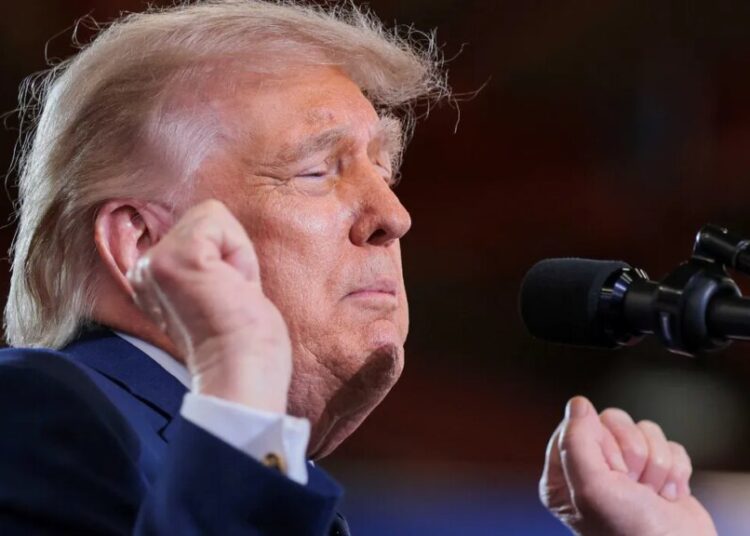
Israel said on Wednesday that it supported President Trump’s suspension of attacks against Iran for two weeks but added that the deal did not extend to Lebanon, where the Israeli military is locked in a grinding war with the Iran-backed militant group Hezbollah.
Israel’s strikes in Lebanon continued on Wednesday. With the Israeli military no longer stretched across multiple fronts — and with the Trump administration showing little sign of engagement on Lebanon — analysts say that Israel could intensify its offensive against Hezbollah.
The announcement by Israel was made by the office of Prime Minister Benjamin Netanyahu, contradicting an earlier statement from Prime Minister Shehbaz Sharif of Pakistan, who had said that the two-week suspension of hostilities would extend to Lebanon. There was no immediate comment from Hezbollah or from the Lebanese government.
For weeks, Israeli officials have publicly rebuffed overtures by Lebanon’s government to engage in direct talks about a cease-fire — a significant offer given that the two countries have no formal diplomatic relations. Hezbollah has mirrored Israel’s position, rejecting negotiations under fire and signaling that it is prepared to keep fighting.
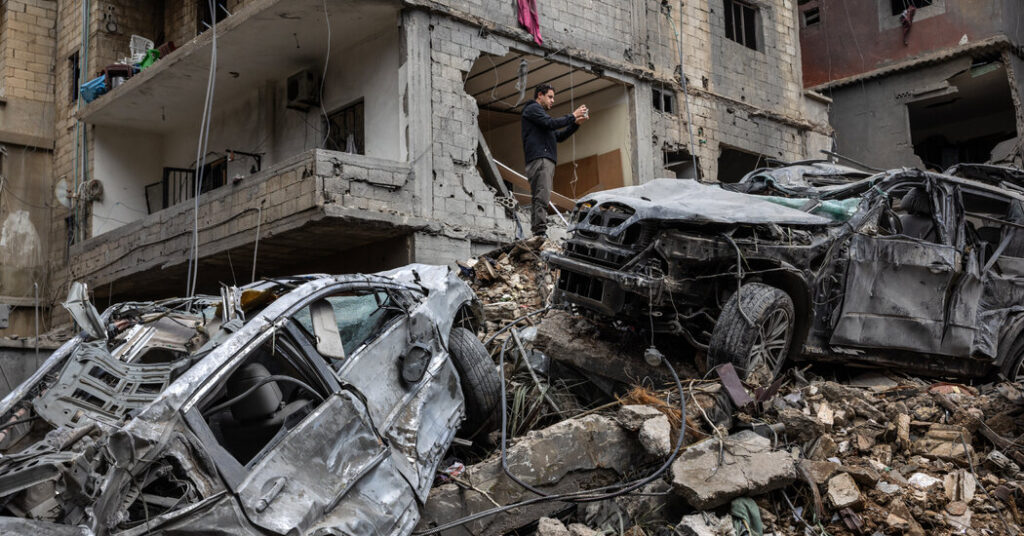
The war in Lebanon erupted soon after the United States and Israel launched strikes on Iran on Feb. 28. Within days, Hezbollah fired rockets toward Israel in retaliation for the killing of Iran’s supreme leader, Ayatollah Ali Khamenei. Israel responded with a large-scale bombing campaign in Lebanon. The Israeli military also issued sweeping evacuation warnings for much of the country’s south and for the densely populated southern outskirts of the capital, Beirut.
More than 1,500 people have since been killed and well over a million others displaced, according to the Lebanese authorities. The Israeli campaign has morphed into a large-scale ground invasion of southern Lebanon, and Israel has signaled plans to occupy much of the region even after the current invasion ends.
The Lebanese military on Wednesday warned displaced civilians to postpone their return to southern Lebanese towns and villages. “Doing so may expose their lives to the risk of ongoing Israeli attacks,” the military said.
The deepening humanitarian crisis has been compounded by the fact that the United States has placed Lebanon low on its list of priorities during Mr. Trump’s second term, analysts said.
With Israeli officials apparently showing little appetite for a political resolution, Mohanad Hage Ali, a senior fellow at the Carnegie Middle East Center in Beirut, said, “The Israeli toolbox has one tool.”
“There’s no politics in there,” he added.
Even as Israel’s bombing campaign and expanding ground invasion continue to degrade Hezbollah, analysts warn the conflict may endure, and with it the risk of civil instability in Lebanon. Most of the displaced are Shiite Muslims, the core of Hezbollah’s support base, whose presence in host communities is heightening sectarian tensions.
Ali Vaez, Iran project director at the International Crisis Group, said Tehran was now likely to double down on its support for Hezbollah, long a central pillar of its regional strategy, making a quick end to the fighting in Lebanon unlikely.
“This is a game of endurance,” Mr. Vaez said.
That prospect left Lebanese feeling little relief as they awoke on Wednesday to news of the cease-fire.
In the coastal village of Jadra, south of Beirut, Amir Hattoum, a father of two, is struggling to make ends meet. Displaced from Beirut’s southern suburbs, he is paying $500 a month in rent, which he says he cannot sustain. With only limited savings and airstrikes drawing closer, he is trying not to think too far ahead.
“I am living day by day,” Mr. Hattoum said. “It is exhausting.”
Euan Ward is a Times reporter covering Lebanon and Syria. He is based in Beirut.
The post Israel Says Iran Cease-Fire Does Not Extend to Lebanon appeared first on New York Times.