The Trump administration is expected to significantly scale back its plan to seek additional funding for the war in Iran ahead of what is likely to be a contentious fight over the request in Congress, according to U.S. officials and others familiar with the matter.
The total, which as of Tuesday had not been finalized, is likely to fall between $80 billion and $100 billion, said two U.S. officials, speaking like others on the condition of anonymity to discuss the negotiations. That sum would be less than half of the more than $200 billion that the Pentagon initially proposed to the White House last month.
It was not immediately clear when the administration would send its proposal to lawmakers, who ultimately will decide how much additional funding, if any, to approve.
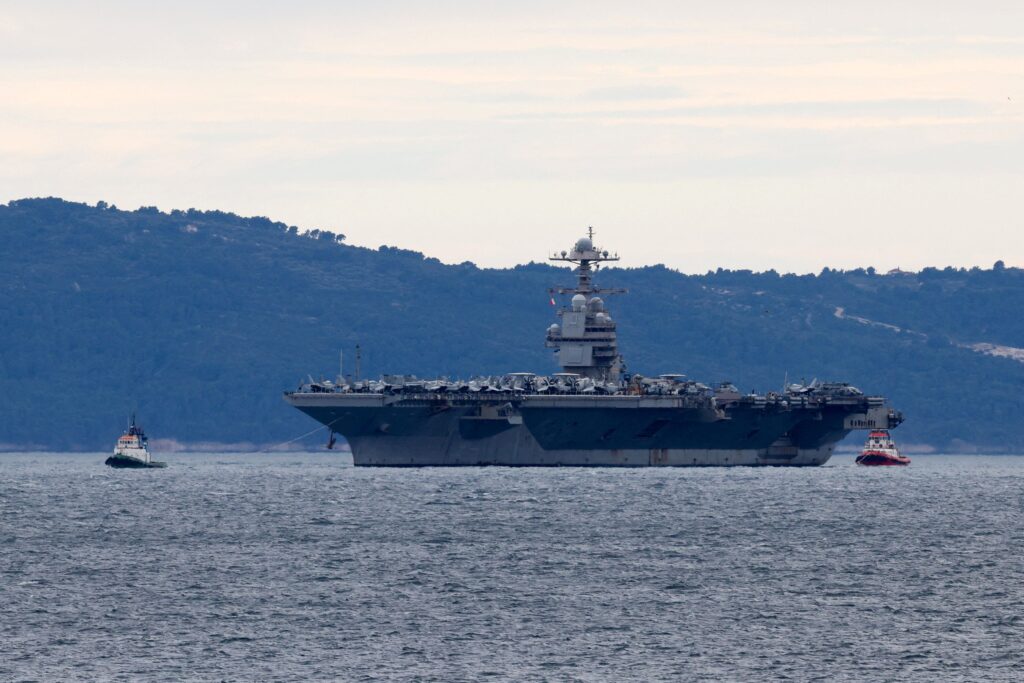
President Donald Trump said Tuesday evening that he had agreed to suspend U.S. attacks on Iran — pending Tehran’s immediate reopening of a vital shipping route for Middle Eastern oil — for two weeks while talks aimed at ending the conflict proceed. The Defense Department has spent tens of billions of dollars building up and sustaining its operations while burning through its finite supply of certain advanced weaponry.
Spokespeople for the Pentagon and the White House Office of Management and Budget did not respond to requests for comment.
The reduced dollar figure is largely a result of the administration’s record-breaking annual defense budget request, released last week, which calls for $1.5 trillion in total defense spending next year, the officials said. A portion of the request, $350 billion, would be spun off into a third bill meant to pass through a party-line process in Congress. That one-time funding would go toward energizing the United States’ defense-industrial base and building critical munitions for the military.
The original Iran war proposal that sought more than $200 billion in supplemental funding was written before the Pentagon knew how large the annual budget request would be, said one of the two officials familiar with the administration’s plans. The earlier proposal included tens of billions of dollars for the U.S. defense industry, requested investments now contained in the overall budget, the person said.
It is unclear whether the Iran war supplemental request and the annual budget request overlap.
The Trump administration’s pursuit of such a substantial sum of money, spread across three separate bills, could prove difficult for Congress, especially ahead of the November midterm elections.
The lower supplemental of $80 billion to $100 billion, if approved, would mainly pay for the cost of surging so many forces to the Middle East, recovering from battle damage sustained during the war, and for long-term contracts to quickly ramp up production of munitions, including some of those used to strike the more than 13,000 targets hit in Iran so far, according to both officials.
Erik Raven, a former Democratic clerk for the Senate subcommittee on defense spending, said that supplemental requests are meant only to cover “costs that could not have been foreseen in the Pentagon’s existing funding,” such as increased military pay or rising fuel costs — but not evergreen priorities.
Democrats see the Iran supplemental request as a rare point of leverage in their opposition to the war and have pledged to fight it. Republicans have mostly backed the conflict, which Trump began without the consent of lawmakers, though some GOP members expressed skepticism that the original $200 billion request would have been viable.
Late last week, Sen. John Curtis (R-Utah) wrote in an op-ed that he would not support an Iran war supplemental without “Congress having the opportunity to weigh in,” in a potential sign of tenuous GOP support for the war, which has now entered its sixth week.
The request would come as the Pentagon continues to surge resources to the Middle East. The military has burned through scarce munitions during the war, including more than 850 Tomahawk cruise missiles and 1,000 air defense interceptors, The Washington Post has reported. The rate of fire has concerned some officials in the Pentagon fearful that the military is eroding its readiness for potential future conflicts, according to people familiar with the matter.
Sen. Chris Coons (Delaware), the top Democrat on the Senate’s subcommittee on defense spending, said in an interview that the war was costing well over $1 billion a day, easily putting its total price tag at more than $40 billion so far.
Stacie Pettyjohn, who directs the defense program at the Center for a New American Security, a think tank, said that even the reduced supplemental request would be a test of the war’s popularity, though the need to restock America’s inventory of air defense interceptors caused by the conflict would pose a difficult choice for pro-military Democrats.
Still, the enormous request for defense spending could be a political liability for Republicans, too, she said.
“It is pretty eye-wateringly large,” Pettyjohn said.
The more than $80 billion expected to form the supplemental budget request would almost certainly surpass the core costs of the Iran war, said Travis Sharp, who studies defense spending at the Center for Strategic and Budgetary Assessments.
Dividing the administration’s total defense-related request into multiple bills may also add uncertainty to the defense budget, Sharp said. Last year, the process drew criticism from lawmakers, even among Republicans supportive of higher military spending, who complained that the Trump administration’s approach was confusing and at times error-prone.
The two officials familiar with the administration’s plans said that the aim is to try to pass the Iran supplemental before Congress takes its recess in August. The annual defense budget process would then follow, split into two bills.
Ellen Nakashima contributed to this report.
The post Trump administration expected to slash Iran war funding request appeared first on Washington Post.