There is an essential optimism to New Directors/New Films, and a touch of poetry in this festival’s timing, too. Each year in early spring, this compact event offers up a flush of fresh movies that, as its name suggests, contains a seductive promise. However fraught the state of the movie industry, New Directors insists that there are always filmmakers from across the globe producing inspired, inspiring work that demands attention, deserves respect and may earn your love. It’s making good on that promise this year with one of its best lineups in ages.
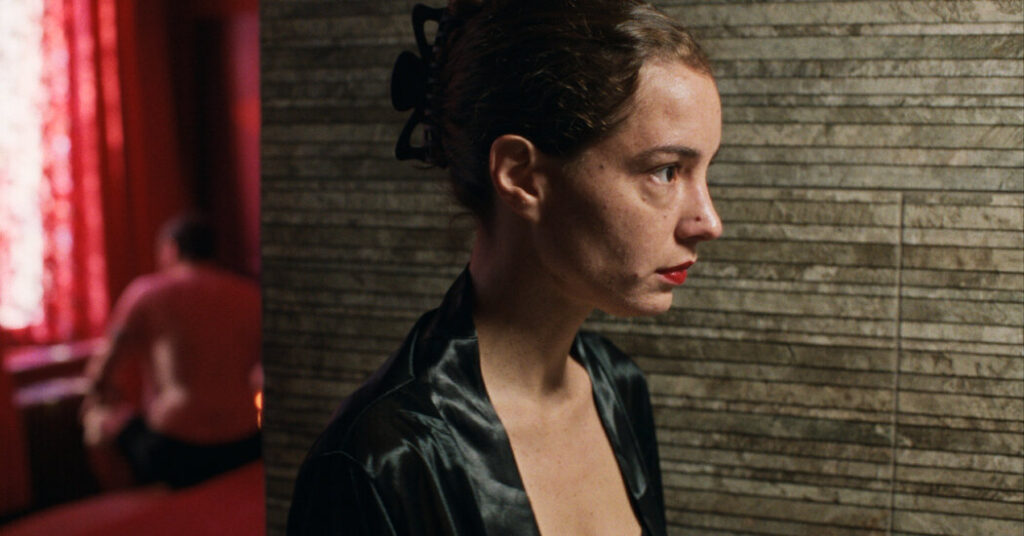
What’s especially welcome is that there are more than a couple of standout features on tap; rather, the overall program is consistently surprising and gratifyingly varied. Most of the titles are serious, a few are bleak, and comedies are in the mix, too. Some are boldly adventurous on a formal level and others are more daring in their subject matter while still others are more sneakily ambitious. Even a movie as outwardly familiar as Alexe Poukine’s “Kika” — a sensitive, nonjudgmental drama in a classic art-film vein about a Belgian social worker who turns to sex work to make ends meet — can knock you sideways.
Many festivals come with agendas, stated or implied; some promote national interests or regional concerns, or serve as identity-affirming enterprises. Since its founding in 1972, New Directors — a co-production of Film at Lincoln Center and the Museum of Modern Art — has largely adhered to a simple organizing principle. In its inaugural year, Vincent Canby, the film critic at The New York Times, noted that its programmers hadn’t imposed an “arbitrary theme,” but had selected “either the first or second feature by a promising new director not yet known in this country.” Those upstarts Christopher Nolan and Wong Kar-wai are among its many alumni.
Even as New Directors has stayed true to its origins, much in the festival ecosystem has since changed, including the introduction of big-footing events like Sundance. New Directors has had good years and bad, but partly because of all the competition it has, it doesn’t register in the larger world as a must-see event — never mind that I never skip it. That’s because year after year, New Directors comes through, despite droughts in the larger movie world and the creative sclerosis that can affect enterprises by major institutions. At its finest, New Directors offers proof that a successful festival doesn’t need an agenda or glittering stars; it needs to make you feel excited about film as an art and as a living, ever-evolving medium.
That’s true even when one of its selections is more familiar than not as is true of “Leviticus,” the opening-night selection. Directed by Adrian Chiarella, this moody, sometimes murky Australian horror movie centers on a socially awkward teenager (Joe Bird), who’s recently moved with his mother (Mia Wasikowska) to an unwelcoming industrial town. There, amid dark shadows and grim surroundings, Niam’s life and his budding romantic relationship with another boy (Stacy Clausen), are sadistically upended by a creepy, violently anti-gay Christian sect. Chiarella sets up the premise more persuasively than he develops it, but he holds you with his grasp on genre fundamentals and some sensitive performances.
One of the most striking aspects of this year’s program is how many of the filmmakers are embracing storytelling fragmentation. At first blush, for instance, the filmmaking in “Kika” seems less radical than the movie’s open-minded attitude toward outré sex work. Yet the director Poukine’s choices, including her use of some productively disorienting narrative ellipses — time can leap forward in an eye blink — accentuates the destabilization that comes to define the life of its titular heroine (a nuanced, appealing Manon Clavel). Equally impressive is how fluently Poukine slides from realism to expressionism in a tough, touching scene in which Kika looks deep inside herself while keening in a room as red as blood.
The most obviously sensational part of Manon Coubia’s “Forest High” is the beauty of its staggering natural setting. Set in the French Alps, this subtle, unexpectedly affecting drama doesn’t have an obvious overarching story, yet it nevertheless says plenty about life and what gives it meaning. Divided into discreetly connected sections, it follows three women of varying ages who all work as caretakers in a mountain refuge where passing hikers can rest during their treks. There, as seasons and personnel change, and as the melting snow gives way to fields of green, Coubia — with intimacy, expressive silences and slow-growing emotional force — turns each woman’s inner and outer worlds into a harmonious whole.
The silences are heavier and way weirder in “Agon,” a bold and formally audacious feature debut from the Italian writer-director Giulio Bertelli. It also tracks three women, in this case competitors preparing for a fictional Olympics — in fencing, shooting and judo — as they face both the usual hurdles and uncommon ones. The performers are all convincing and effective, and include the charismatic judo gold medalist Alice Bellandi. Yet even as Bertelli brings you into each woman’s head space while he’s mapping their personal and public struggles, his analytic approach underscores the larger forces inexorably pressing in on them. Here, souls are risked as bodies are pushed to the limit, by turns exalted, abused, commodified and dehumanized.
There are moments in Rosanne Pel’s queasily amusing, at times gleefully button-pushing, German-set “Donkey Days” when it’s hard to know whether to shriek with laughter or disgust. Both are reasonable responses to the perfectly imperfect Anna (an excellent Jil Krammer). A raging narcissist with a facility for torpedoing her life, Anna never seems more alive than when she battles with her sister, Charlotte (Susanne Wolff), who holds herself in similarly high regard, and with their impossible mother, Ines (Hildegard Schmahl). With compassion, unforced realism and whiplashing tonal shifts, Pel exults in three difficult women who, even at their most appalling (yet funny), are also staking a claim on your affections.
As its title suggest, “Two Seasons, Two Strangers” has a bifurcated story, though the results prove more complicated than they first seem. One day, a screenwriter, Li (a very sympathetic Eun-kyung Shim), puts pencil to paper and composes a story about another woman, Nagisa (Yuumi Kawai), who has a romantic encounter during a summertime seaside trip. Sometime later, the writer sets off on her own journey during a winter trip to the country, a voyage that serves as a kind of mirror to her fictional tale. With agreeable emotional restraint, shocks of beauty and appreciable attention to textures of everyday life, the Japanese writer-director Sho Miyake delicately explores the border between life and art, inspiration and creation.
In her ambitious documentary “Do You Love Me,” the Lebanese filmmaker Lana Daher pieces together a tragic portrait of her country using an overwhelming trove of found material. The movie opens with a statement that alludes to its organizing principle: “In Lebanon, contemporary history is not taught in schools.” As if in answer to that, Daher lets loose a dizzying torrent of still and moving images that she’s gleaned from every imaginable source, including newsreels, home movies as well as fiction and nonfiction films. The result is a heart-heavy, shattering portrait of a country that she seems to be holding together shard by shard.
Other movies to seek out at this year’s festival include the sly, often low-key funny and absorbing “Chronovisor,” from the American team of Kevin Walker and Jack Auen, about a Columbia University professor (Anne-Laure Sellier) on the hunt for a preposterous invention. In this model of low-budget resourcefulness, the filmmakers remind you what independent cinema can do with an outrageous premise, cheap sets cleverly wreathed in obscuring shadows and a whole lot of phone calls, while also making you eager to see their next movie. In “Panda,” the Chinese director Xinyang Zhang at once announces his gifts, demonstrates his debt to Jia Zhangke and stages one of the more unforgettable dog scenes in memory. Cue the gobbling customers, the flashing knife, the errant digit and the cunning pooch — it’s a howl.
New Directors/New Films runs through April 19 at Lincoln Center and the Museum of Modern Art. For more information, go to filmlinc.org.
Manohla Dargis is the chief film critic for The Times.
The post This Film Festival Should Be Better Known appeared first on New York Times.