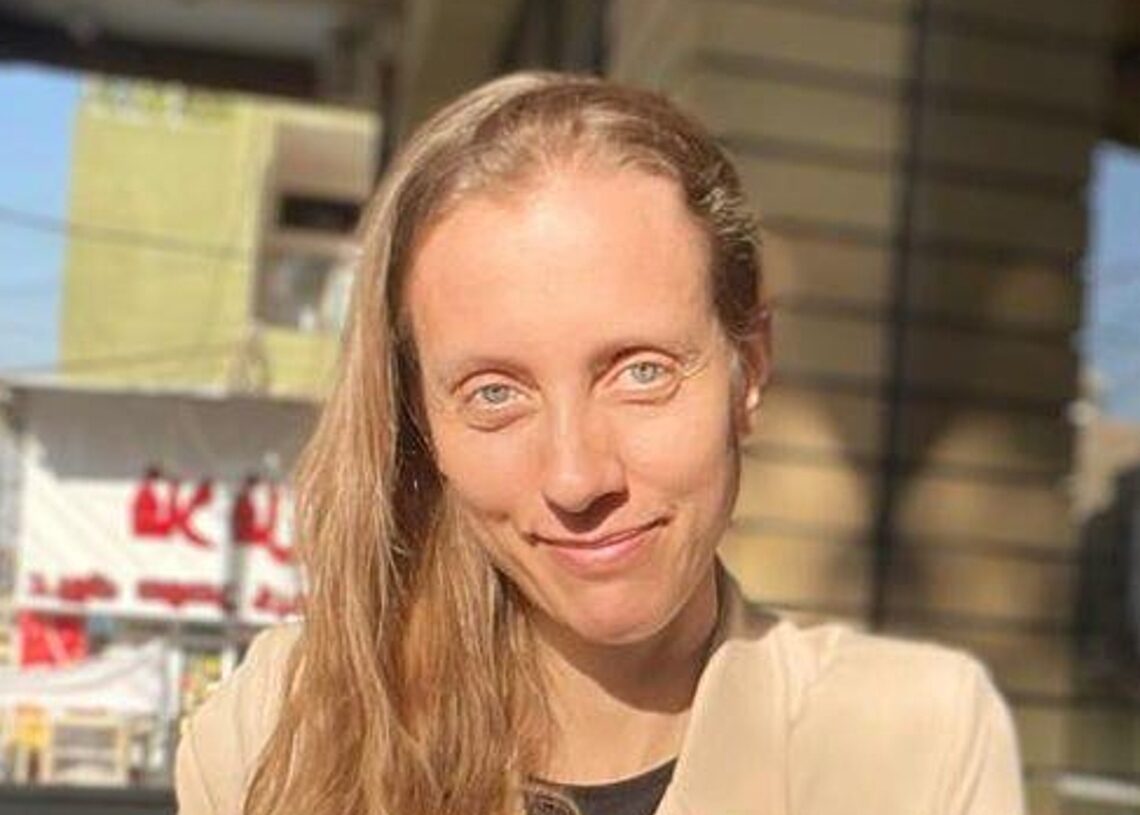
BAGHDAD — The Iran-backed militia that kidnapped U.S. journalist Shelly Kittleson in Baghdad freed her Tuesday in a prisoner swap with Iraq, Iraqi officials said.
“In appreciation of the national positions of the outgoing Prime Minister, we have decided to release the American detainee, Shelly Kittleson, on the condition that she leaves the country immediately,” Abu Mujahid al-Assaf, a security official with Kataib Hezbollah, wrote on Telegram. “This initiative will not be repeated again in the coming days. We are in a state of war resembling that imposed by the American enemy against Islam, and in such situations, many considerations are set aside.”
Her release was confirmed by two Iraqi officials. A third Iraqi official said she was in good physical condition upon her release. Like others, they spoke on the condition of anonymity to share details about a sensitive situation.
Secretary of State Marco Rubio announced Kittleson’s release late Tuesday, and thanked the Iraqi government for its cooperation.
“This resolution reflects the Trump Administration’s steadfast commitment to the safety and security of American citizens, no matter where they are in the world,” Rubio wrote in a statement posted to X. “Under President Trump, the wrongful detention or kidnapping of U.S. nationals will not be tolerated. We will continue to use every tool to bring Americans home and to hold accountable those responsible. We are relieved that this American is now free and are working to support her safe departure from Iraq.”
The FBI and State Department, which coordinated U.S. efforts to free Kittleson, did not respond to requests for further comment. The White House declined to comment.
“Shelly is an innocent woman and a well-known and respected journalist,” said Alex Plitsas, a nonresident senior fellow at the Atlantic Council. Plitsas has served as Kittleson’s American point of contact while she reports from abroad. “We are waiting for official confirmation of her pending release and look forward to that moment.”
Kittleson, a freelancer who has reported from the Middle East for several U.S. outlets, was kidnapped in Baghdad last week. She was believed to have been held at Jurf al-Sakhar, Kataib Hezbollah’s stronghold some 40 miles south of the capital, where a rescue operation would have risked significant bloodshed.
Before Kittleson’s release, a senior official with Kataib Hezbollah told The Washington Post on Tuesday that she would be freed as part of a prisoner exchange. An Iraqi security official said Iraq would release several members of Kataib Hezbollah accused of targeting U.S. interests in Iraq and the Persian Gulf region.
Kataib Hezbollah, considered the most powerful militia in Iraq, is legally part of Iraq’s Popular Mobilization Forces, formed a dozen years ago to fight the Islamic State. But in practice, the Shiite Muslim group is armed and controlled by the supreme leader of Iran. Amid the U.S.-Israeli war on Iran, U.S. forces in recent weeks launched airstrikes on Jurf al-Sakhar and killed militia members, people familiar with the situation told The Post. After Kittleson’s abduction, they said, the strikes stopped.
Her release came hours after President Donald Trump threatened to destroy Iran if its leaders didn’t meet his deadline to reopen the strategically vital Strait of Hormuz. “A whole civilization will die tonight, never to be brought back again,” he wrote on social media Tuesday morning. “I don’t want that to happen, but it probably will.”
Before Tuesday, Kataib Hezbollah had not publicly claimed responsibility for Kittleson’s kidnapping, offered proof she was alive or made demands in exchange for her release. The United States designated the group a foreign terrorist organization in 2009.
Kittleson was designated a hostage by the U.S. government, according to two U.S. officials.
Press freedom advocacy groups cheered Kittleson’s release Tuesday.
Mark Schoeff Jr., the National Press Club’s president, said that he was “relieved” by the news but that said she never should have been kidnapped in the first place. “It happened at a time when traditional protections for the media are under continual attack,” he wrote in a statement. “Journalism is not a crime, and journalists must not be targeted for their work.”
Reporters Without Borders wrote in a statement that it was “overjoyed” that Kittleson was freed. “Shelly’s abduction underscored the very serious risks facing even the best-trained and experienced journalists,” the group wrote.
The family of Austin Tice, The Post contributor who has been missing since he disappeared in Syria in 2012, also expressed relief about Kittleson’s release. “We were very glad to hear the good news that Shelly Kittleson was released in Baghdad and hope she will soon be fully recovered from this nightmare,” they wrote. “The press has done a good job of giving attention to this matter; hopefully they will also give respectful space for her to reenter. We pray for more good days. May they come soon.”
Nover reported from Washington. Jeremy Roebuck, Adam Taylor and John Hudson in Washington contributed to this report.
The post U.S. journalist Shelly Kittleson, kidnapped in Iraq, is freed in prisoner swap appeared first on Washington Post.