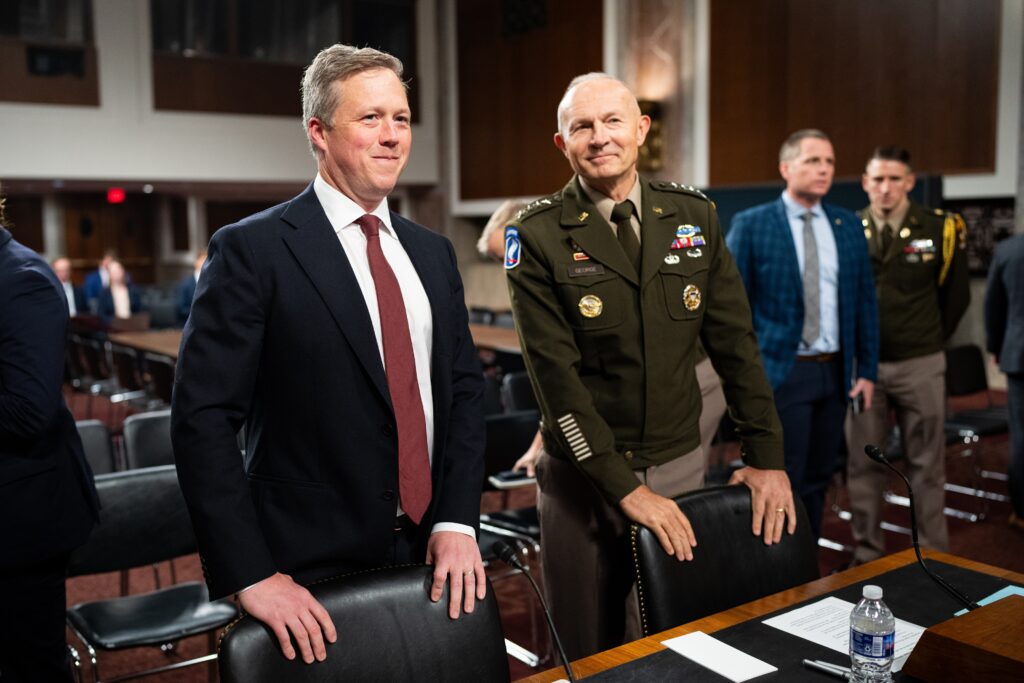
Army Secretary Dan Driscoll has no plans to resign or otherwise leave his role at the Pentagon, he said in a statement to The Washington Post on Tuesday, after a series of internal clashes with Defense Secretary Pete Hegseth that have caused other U.S. officials to question how long the two senior political appointees can coexist.
Driscoll’s statement follows last week’s abrupt ouster of the Army’s top officer, Gen. Randy George, and two other senior military leaders — and as Hegseth’s top spokesman, Sean Parnell, has privately told colleagues that he is interested in Driscoll’s job should it become open, according to officials familiar with the matter.
Hegseth and Driscoll have disagreed on numerous issues, including Hegseth’s moves to block the promotions of several Army officers, said these people, who like some others spoke on the condition of anonymity to discuss the men’s relationship.
“Serving under President Trump has been the honor of a lifetime and I remain laser focused on providing America with the strongest land fighting force the world has ever seen,” Driscoll said in his statement to The Post, which has not previously been reported. “I have no plans to depart or resign as the Secretary of the Army.”
The White House, in a separate statement, appeared to back Driscoll, who is close friends with Vice President JD Vance, while touting the Army’s role in the Trump administration’s weeks-long war with Iran.
President Donald Trump has “effectively restored a focus on readiness and lethality across our military with the help of leaders like Secretary Driscoll,” said Anna Kelly, a White House spokeswoman. “The extraordinary talent of the United States Army is on full display as our warfighters meet or exceed all of their benchmarks under Operation Epic Fury and Iran’s military capabilities diminish more every day.”
Parnell, Hegseth’s spokesman, declined to address questions about his interest in the Army secretary job and disputed assertions that there is any tension between Hegseth and Driscoll. In a statement, he said that Hegseth “maintains excellent working relationships with the secretaries of every military service branch, including Army Secretary Dan Driscoll.”
Other officials who’ve observed the men’s dynamic said that characterization is inaccurate. They noted that friction between the two dates back at least a year, to last spring, when Driscoll’s name was floated within the Trump administration as a potential replacement for Hegseth. The defense secretary was struggling at the time to gain his footing amid a number of controversies and other upheaval that consumed much of his first year in the role.
Trump has stuck with Hegseth despite those troubles, telling reporters recently that the former Fox News personality and mid-ranking officer in the Army National Guard was “born for this role.”
Defense officials aligned with Hegseth have touted Parnell as a viable candidate for Army secretary.
As Pentagon spokesman and aide to the secretary, he has championed Hegseth’s disdain for the news media and was tasked with overseeing a review of how the chaotic U.S. evacuation of Afghanistan five years ago ended.
Before joining the administration, Parnell ran for a House seat in Pennsylvania in 2020, narrowly losing, and for Senate the following year. He was endorsed by Trump, but suspended his campaign amid a bruising legal dispute with his estranged wife. Parnell denied any wrongdoing.
One senior Pentagon official, citing Parnell’s combat experience as an infantry platoon leader in Afghanistan about 20 years ago, told The Post that Parnell would excel as Army secretary. Driscoll, this official asserted, has focused too much on his political future instead of the service secretary’s role to manage the training and equipping of soldiers.
Army officials declined to address the assertion, referring questions to Hegseth’s team and the White House.
Three people familiar with the situation interviewed for this report disputed the suggestion that Driscoll, who worked in venture capital and ran an unsuccessful congressional campaign in 2020 before joining the Trump administration, has performed poorly in the role. One said that Driscoll, who led an Army cavalry scout platoon during the Iraq War, has “made a ton of institutional changes and stayed out of things that the military shouldn’t touch, especially with culture wars.”
The New York Post reported Friday that Parnell could replace Driscoll if the job becomes available.
Driscoll has been concerned enough about his deteriorating relationship with Hegseth that he sought assistance in the fall from Vance, a close friend dating back to law school, three people familiar with the matter said.
Last week’s dismissal of George, the Army’s top general, had been months in the making, officials said. Hegseth voiced interest last year in removing him, but Driscoll found ways to short-circuit those discussions, the officials said.
“There have been multiple instances where Secretary Hegseth has tried to remove George, and Driscoll has said, ‘No, he’s done nothing wrong. He’s good,’” one official said. “Driscoll has been very clear that merit should speak for itself.”
It is not clear whether Vance ever intervened on Driscoll’s behalf. The vice president’s office declined to comment.
In his response to questions from The Post, Parnell said that Hegseth and Vance, who served in the Marines during the Iraq War, are “fully aligned in executing President Trump’s America First agenda” and that the two “work seamlessly together and share a strong mutual respect.”
George’s ouster is the latest in a series of removals targeting senior military leaders as Hegseth seeks to consolidate power at the Pentagon.
The general was asked to retire early during a phone call with the defense secretary on Thursday, officials said. Within minutes, Hegseth’s decision leaked to CBS News, which was first to report on George’s dismissal, effectively forestalling any effort by Driscoll to save the general’s career before the decision was publicized, officials said.
Hegseth last week also ousted Gen. David Hodne, who last fall became head of the Army’s new Transformation and Training Command in Austin and Maj. Gen. William Green Jr., the head of Army chaplains. Like George, neither officer could be reached for comment.
In many cases, the firings and forced removals carried out by Hegseth have occurred without explanation, though he has long criticized senior military leaders who championed diversity initiatives or exhibited what in his view was a lack of loyalty to Trump. A disproportionate number of those targeted by Hegseth have been women and minorities.
George, 61, rose to the top spot in the Army in September 2023 under President Joe Biden, after serving numerous combat tours in Iraq and Afghanistan and earning a Purple Heart. The nonpartisan role typically spans four years across presidential administrations.
George was long seen as a target for firing not only because he was selected to lead the Army by the previous administration, but because he had served as the senior military assistant to Biden’s defense secretary, Lloyd Austin. He had also spoken favorably of diversity training for military personnel, telling lawmakers during his confirmation hearing that it is one component in a broader effort to build cohesive teams.
George and Driscoll appeared to connect with one another over their shared desire to overhaul the Army for future conflict. Driscoll was enthusiastic about an effort George had launched during the Biden administration to continually experiment with and adopt drones and other emerging technology. The two traveled together to Ukraine last fall in part to gather lessons learned from the war, officials said.
Hegseth has shown a particular interest in removing Army generals who had worked under retired Gen. Mark A. Milley, the Joint Chiefs chairman during Trump’s first term in office, who clashed with the president repeatedly.
Amid the purge, George’s survival at times prompted others to question whether he was doing enough to shield the Army from politics.
The wife of one Army general removed last year told The Post that she and her husband felt disrespected by George and other senior officials. The spouse, speaking on the condition of anonymity due to concerns about her career, said she hopes that George is “treated with more respect and dignity during this difficult time than was shown to my husband.”
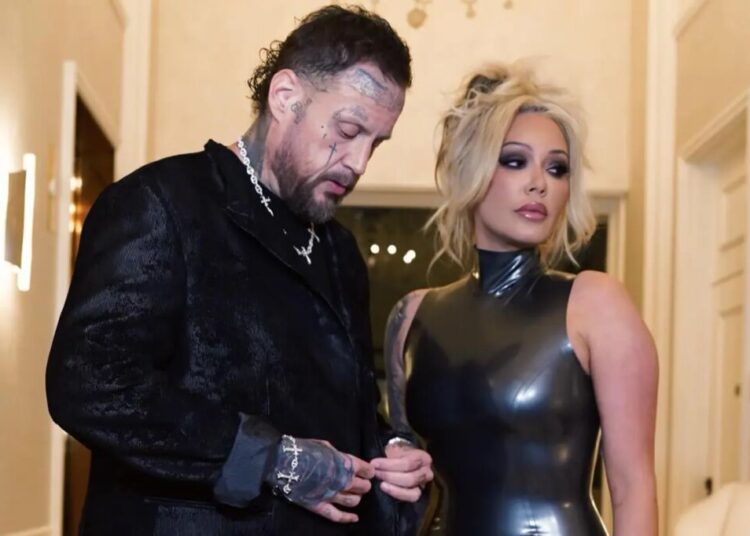
What precisely precipitated George’s ouster now remains unclear. In the last weeks of his tenure as Army chief of staff, he encountered at least two hotly politicized issues: Hegseth’s decision, first reported by the New York Times, to block the promotion of two Black and two female officers who were up for promotion to one-star general, and the controversial appearance of Apache helicopters outside the Tennessee home of musician Kid Rock, an enthusiastic Trump supporter.
George sought a meeting with Hegseth to discuss the blocked promotions but was rebuffed, officials said.
The incident involving Kid Rock led to an investigation, with the Army grounding two helicopter crews involved. Hegseth soon rescinded the suspensions and squashed the probe.
George, with more than 40 years in the Army, favored letting the investigation play out, two people familiar with the matter said.
“It shouldn’t be a surprise,” said one official, “that a man who enlisted at the age of 18, later commissioned as an officer, and spent his entire adult life in the military would be committed to standards and discipline.”
Driscoll has not commented publicly on either incident.
The post After clashes with Hegseth, Army secretary says he isn’t going anywhere appeared first on Washington Post.