Even as the Iran war is driving up energy costs and wreaking havoc on share prices, companies are pushing through major deals.
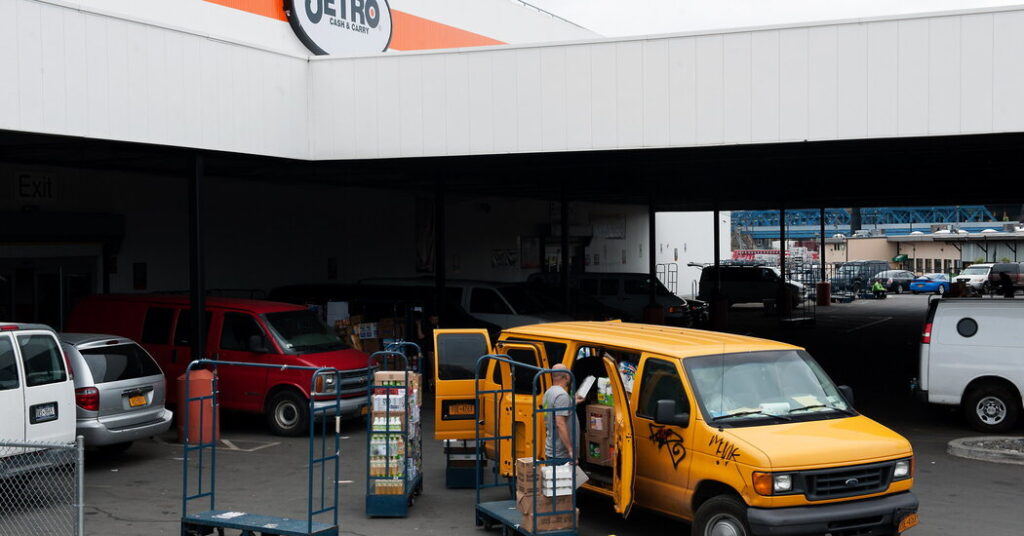
Last month, McCormick & Company said that it would pay $45 billion to acquire Unilever’s food unit; while Sysco, the food distributor, announced a $29 billion deal for Jetro Restaurant Depot, a cash-and-carry wholesaler that caters to small restaurants and bodegas.
The giant food deals were among the $464 billion worth of mergers and acquisitions announced during the first three months of 2026, according to data service firm Dealogic. It was one of the strongest first quarters of dealing-making in the past five years.
On Tuesday, billionaire Bill Ackman’s investment firm offered to buy Universal Music in a deal that would value the music label — home to Taylor Swift and other superstars — at $64 billion, about 78 percent above Universal Music’s share price at the end of last week.
“In some ways, deal-doing and valuations in the markets have defied logic,” said Anu Aiyengar, the global head of mergers and acquisitions at the investment bank JPMorgan Chase.
Bankers and lawyers say this year’s strong start shows that companies are willing to brave the market volatility as they seize on the increased willingness of federal antitrust enforcers to clear deals. Sometimes, that approval follows the dropping of employee diversity programs or agreement to pay billions of dollars in fees to the federal government.
The Trump administration has “been very open to deal making,” said Andrew Calder, a partner at the law firm Kirkland & Ellis. “But obviously this administration has its own political priorities in the context of the deal environment.”
Corporate America had high expectations that a Republican president, backed by a Republican-controlled Congress, would undo the strict antitrust scrutiny that the Biden Administration brought to deals.
After a rocky few months following the rollout of President Trump’s tariffs last April, 2025 was a boon for mergers.
The year ended with more than a trillion dollars’ worth of deals announced, the most since 2021, which saw $2.5 trillion in U.S. mergers and acquisitions amid low interest rates and federal pandemic stimulus.
Last year’s deal making was driven in part by a series of megadeals, such as the $55 billion buyout of Electronic Arts, led by Saudi Arabia’s Public Investment Fund, and Kimberly-Clark’s $40 billion acquisition of Kenvue, the maker of Tylenol.
Trump Administration: Live Updates
Updated
- Vance heaps praise on Orban and highlights the prime minister’s ties to Trump.
- The federal government pulls out of civil rights settlements backing trans students.
This year’s big mergers so far have been fueled in part by a drive for growth. McCormick’s deal with Unilever aims to strengthen sway with retailers as consumers continue to turn away from packaged food. The transaction would more than triple McCormick’s revenue, adding Hellmann’s mayonnaise and Knorr bouillon cubes to its array of spices.
For Sysco, which supplies food to businesses worldwide, its acquisition of Jetro is an entree to the cash-and-carry business. Sysco is paying $29 billion for Jetro, funded largely in debt, a bit less than its entire market value.
The deal will test regulators’ appetite for consolidation in the food industry. Sysco called off its $3.5 billion merger with rival U.S. Foods a little more than a decade ago after the Federal Trade Commission sued to block it. Already, a trade group representing independent restaurants has raised alarms that Sysco’s latest move could lead to higher prices.
Rather than overcoming traditional antitrust concerns, company advisers say there are new avenues for gaining approval from the Trump administration.
Chief executives with deals pending approval are making personal visits to Mr. Trump; and their advisers are suggesting ways to stay in his good graces — for example, by donating to the newly launched Trump accounts for children.
U.S. Steel was able to finalize its sale to Japan’s Nippon Steel last year after granting the federal government an equity stake, or “golden share,” in the new company. A cohort of investors, including Oracle, promised to pay the U.S. Treasury $10 billion as part of a deal to acquire U.S. TikTok, which legal experts called an unprecedented fee.
Ad giants Omnicom Group and Interpublic Group agreed last year to abstain from political boycotts to win approval of their $13.5 billion tie-up. A number of companies have dropped diversity, equity and inclusion programs as they await deal approval from the Federal Communications Commission.
But as companies find a smoother path for deals at the federal level, some states have stepped up their scrutiny.
Democratic attorneys general from 12 states and the District of Columbia have sued to block the Justice Department’s decision to clear software company Hewlett Packard Enterprise’s acquisition of the information technology firm Juniper Networks. The Justice Department had sued to block the deal early in Mr. Trump’s second term, but it was approved after pleas from the companies’ lobbyists to political officials. The suit claims that the lobbyists negotiated the settlement over the head of Gail Slater, who was then the Justice Department’s top antitrust official,
A number of state attorneys have also vowed publicly to stymie deals, including Paramount’s $110 billion acquisition of Warner Bros. Discovery and Nexstar’s acquisition of rival TV broadcaster Tegna.
The latter closed in March shortly after the F.C.C. granted a waiver on limits over local broadcast ownership. A federal judge has since imposed a 14-day pause on the deal in response to legal objections.
“While people have a lot of confidence about what’s going to happen at D.O.J. and F.T.C., I think the politicization of antitrust at the state level has become problematic and slowed down a number of transactions,” said Melissa Sawyer, the co-head of global and mergers and acquisitions at the law firm Sullivan and Cromwell.
Globally, deal approvals have become similarly complex, particularly as geopolitics and the race for technology dominance risk overshadowing some deal reviews.
“The number of agencies and people and jurisdictions that you need to think about are significant,” said Ms. Aiyengar of JPMorgan. Still she noted, “most people are taking the approach that if a deal really makes sense, I’m going to figure out a way.”
Lauren Hirsch is a Times reporter who covers deals and dealmakers in Wall Street and Washington.
The post Companies See Opening for Deals Despite Market Volatility appeared first on New York Times.