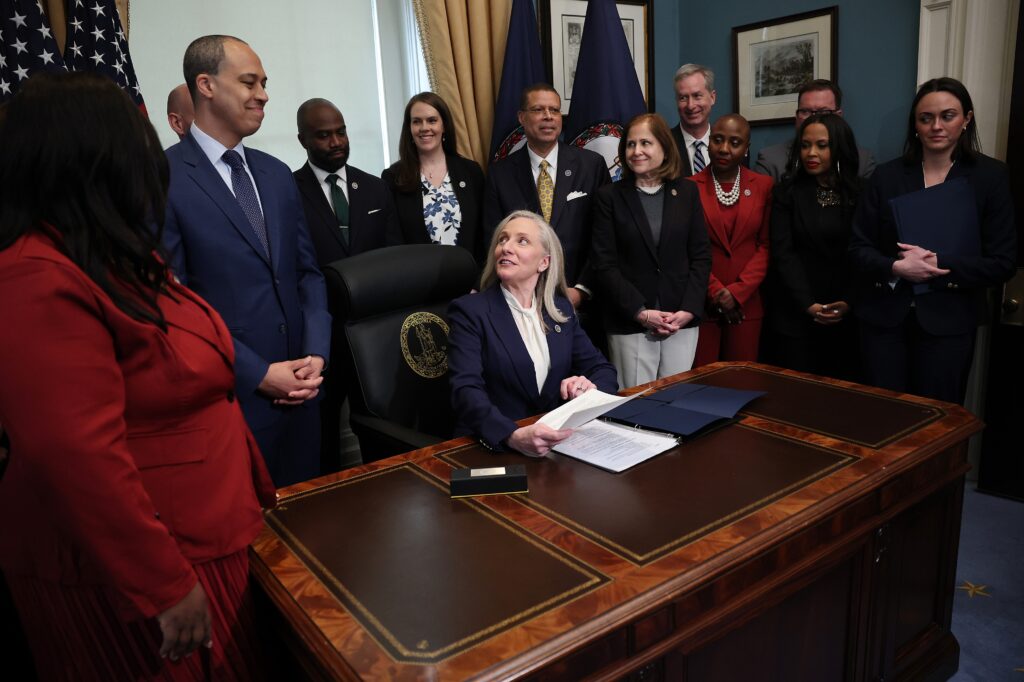
The moderate version of Gov. Abigail Spanberger (D) has gone missing, and Virginia voters have noticed. After running a centrist campaign, the new governor tacked to the left in office and now rates as historically unpopular. What would it take to right the ship?
Spanberger has a 47 percent approval rating in a new Post-Schar School poll, which doesn’t sound bad. Yet she won in November with 58 percent, and her 46 percent disapproval rating is worse than anything her recent predecessors faced this early in their tenures.
The honeymoon ended quickly because Spanberger allowed herself to become the face of a hyper-partisan power grab that she knew to be wrong. The governor signed off on a proposed map that will give her party a 10-1 edge in the state’s congressional delegation if voters approve an April 21 referendum. There are currently six Democrats and five Republicans, which is fair in a blue-leaning swing state.
This has turned off independents and repulsed moderate Republicans who helped her win three competitive congressional races. Spanberger has come across as a hypocrite, one of the characteristics voters most dislike about politicians. Commercials and mailers highlight her past support for the 2020 constitutional amendment she’s now trying to unravel and previous condemnations of the tactics she’s now employing.
Republicans started this race to the bottom with a gerrymandered map in Texas. But voters might have reasonably expected Spanberger to rise above this kind of partisan hackery, as Indiana Republicans did last year and Maryland Senate Democrats continue to do.
Yet this is not the only explanation for Spanberger’s spiral. One of her first acts after being inaugurated was an executive order to dissolve all partnership agreements between state law enforcement agencies and federal immigration enforcement. This sop to her base undercut her centrist credentials while undermining public safety.
Unified Democratic control in Richmond, with a large majority in the House of Delegates, has also turned out to be more of a curse than a blessing. Liberals in the General Assembly sent Spanberger a stack of legislation that risks making the state more expensive and less competitive. No wonder only 31 percent believe her policies will make Virginia more affordable.
Behind the scenes, the governor has been fending off some disastrous ideas, including tax hikes. Now she’s facing a deadline next Monday to decide whether she’ll sign bills that passed during the legislative session.
Among them is a measure that would compel local governments to engage in collective bargaining. City and county leaders across the commonwealth, from both parties, have been pleading with Spanberger to veto this bill because it will inevitably lead to significant property tax increases across Virginia if she signs it. The governor has been noncommittal.
Spanberger is not even three months into a four-year job. There’s plenty of time for a successful reset, but it will require more spine than she’s shown so far.
The post Why Abigail Spanberger became unpopular and how she can fix it appeared first on Washington Post.