We’ve seen this pattern before.
A U.S. missile strike. An initial statement emphasizing precision. Then, later, reports that civilians — including many children — were among the dead. In Afghanistan, through the early and mid-2000s, these reports came so often they formed a grim pattern. Each incident is explained as an anomaly, but over time, the pattern itself became the story.
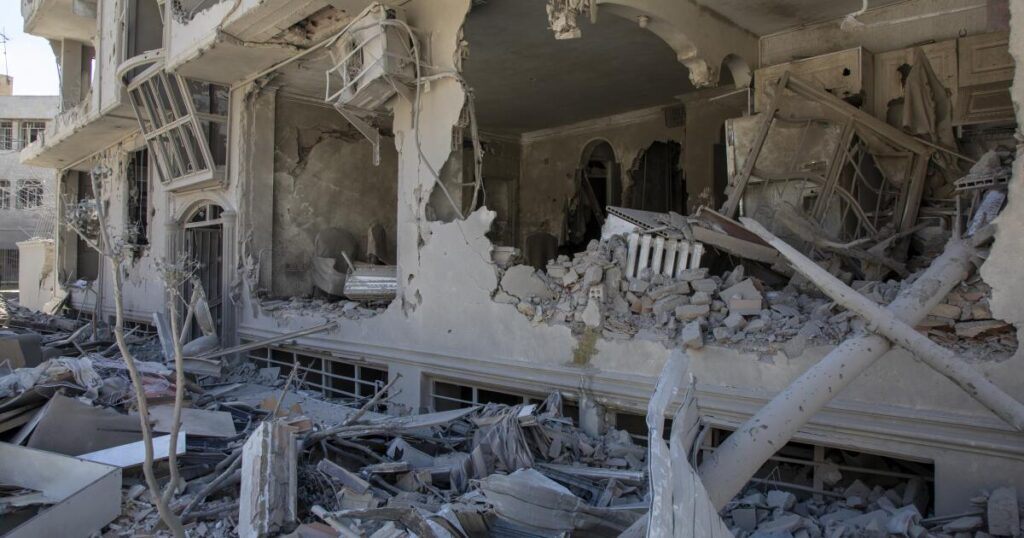
Now similar reports are emerging from Iran. A new investigation alleges that a Feb. 28 strike by the U.S. hit an elementary school and sports hall in the southern city of Lamerd, with children once again among the dead. U.S. Central Command has since denied carrying out any strike in or near Lamerd that day, calling the reports false.
Independent verification is difficult because Iran shut down its internet, but Americans should nevertheless be concerned, especially after at least 175 people including many children were reported killed in a U.S. strike on a different school in Minab that same day. The cycle is familiar, with allegations of civilian harm followed by official denials, and no independent access to quickly verify the facts.
I was a civilian protection advisor to the chairman of the Joint Chiefs during the first Trump administration. I worked inside the Pentagon with military professionals who took the issue of civilian harm seriously. They saw avoiding civilian casualties as a matter of military discipline and their own humanity. I know what it looks like when civilian protection works. This isn’t it.
Over more than two decades of armed conflict, U.S. efforts to reduce civilian harm have moved in fits and starts, with periods of progress followed by setbacks and recurring mass casualty events. Pressure often came from civil society, public outrage and negative headlines, but also from within the armed forces. Senior commanders came to see civilian casualties not just as “collateral damage,” but also as operationally counterproductive.
That recognition led to real changes including tighter rules, better intelligence practices and eventually the creation of systems within the Pentagon meant to track, investigate and learn lessons to reduce harm. By the time U.S. troops were withdrawing from Kabul in 2021, those lessons were just beginning to be institutionalized across the armed forces.
What is happening now is undoing that progress. Safeguards built over years are being torn down, and it is unclear whether senior military leaders are willing to push back.
One major incident of harm to civilians can be a mistake. But when reports come in about multiple strikes on a variety of places where families and children gather, it raises a question about whether something larger is at work. It could be failures of intelligence or targeting decisions, or that the level of risk to civilians now being accepted has risen.
There are warning signs that in this policy environment, the U.S. military will not be led to correct its course. Defense Secretary Pete Hegseth publicly dismissed what he calls “stupid rules of engagement” and emphasized making the military “more lethal.” At the same time, Hegseth has weakened or sidelined efforts designed to reduce civilian harm in war. Those signals matter because they shape what military lawyers, analysts and commanders understand to be expected of them. In short, they shape the military’s culture.
We don’t know all the facts yet about the Minab school strike or the disputed one at the sports complex in Lamerd, but we’ve seen enough to know that the attacks can’t be written off as isolated mistakes. Before and since the start of the U.S. war on Iran in February, there has been little sustained public debate and no congressional hearings about the risks of American military action in Iran, including the inevitable civilian casualties that result from using powerful explosive weapons in populated areas. During the war in Afghanistan, each deadly strike on a wedding party or family compound did more than take civilian lives. It fueled anger at the U.S. and magnified skepticism that our military was trying to minimize civilian harm in any way.
Americans are entitled to clear answers about who and what is being targeted, what its military is doing to protect Iranian civilians and how possible violations of the laws of war are being investigated. This is basic public oversight that should accompany the use of military force. When incidents are openly disputed, as in the Lamerd strike, the need for impartial and transparent investigations becomes more, not less, important. If the U.S. military was acting lawfully, it should show it. But if it wasn’t, the public deserves to know that too.
The United States has long claimed to fight according to international law and to benefit from doing so. But that means little if the rules are mocked and actions don’t match reality. Waiting to recognize these patterns of civilian harm, and to correct them, will once again cost lives.
Sarah Yager is Washington director of Human Rights Watch and previously served in the Department of Defense.
The post Americans deserve answers about civilian casualties in Iran appeared first on Los Angeles Times.