The Trump administration has spent the better part of a year quietly negotiating agreements with poorer nations as it seeks to scale back and reimagine U.S. foreign assistance for efforts like HIV and tuberculosis prevention through a new “America First” global health strategy.
To date, 28 deals have been negotiated with foreign governments, mostly throughout Africa. But in a break with precedent, the administration has refused to disclose their full terms publicly.
The veil of secrecy has frustrated partner countries and angered transparency advocates, who worry that billions of dollars in U.S. funding — money that’s intended to help combat disease — is being leveraged by the Trump administration as it seeks controversial concessions on unrelated policies in return.
Public Citizen, a government watchdog group, has brought a lawsuit demanding access to some of the administration’s global health agreements, arguing that the State Department’s failure to produce the records in response to a Freedom of Information Act request is “unlawful.”
The agreements’ public disclosure is essential “to understanding the new foreign aid structure” being built by the State Department and what the United States “expects, or extracts, in return,” said Peter Maybarduk, director of Public Citizen’s access to medicines group.
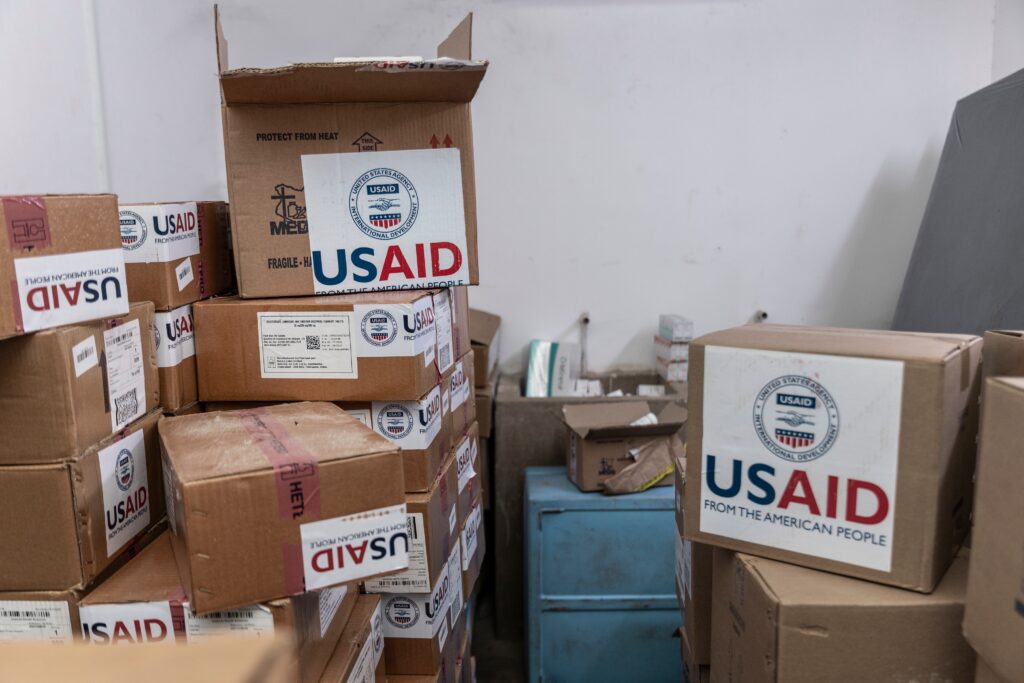
The State Department, which has led the overhaul of health-related foreign aid since last year’s dismantling of the U.S. Agency for International Development, said it does not comment on ongoing litigation but that it takes its transparency obligations “very seriously.”
In a statement, the agency vowed to disclose the terms of its agreements “once negotiations with all partner governments are complete,” saying its approach is consistent with applicable law and intended to protect “sensitive” conversations.
The State Department did not address questions about how many negotiations may be ongoing and when those talks might conclude, but said it was “fully on track” with a plan developed last year.
In some foreign capitals, frustration has been building for months, according to diplomats and U.S. officials who spoke on the condition of anonymity to discuss the process.
In Zimbabwe, for instance, President Emmerson Mnangagwa halted his country’s negotiations with the Trump administration late last year after the government determined that the “lop-sided” talks risked undermining Zimbabwe’s sovereignty, according to correspondence reviewed by The Washington Post.
The U.S. Embassy in Harare confirmed in February that Zimbabwe had withdrawn from negotiations and that the United States would begin “winding down our health assistance in Zimbabwe.”
In neighboring Zambia, where a deal was expected to be signed in December, talks have become a political pressure point for the government amid reports that the Trump administration is seeking to leverage the aid money as it seeks concessions on a separate agreement related to the mining of critical minerals. The Trump administration is pushing for greater access to critical minerals in Africa, such as copper in Zambia, to challenge Chinese dominance of a resource that is vital for building modern technology like electric vehicles and data centers.
The State Department has rejected those accusations, though officials have acknowledged the administration is taking a new approach to global health.
“I can say unequivocally, we are not seeking anything at Zambia’s expense or against Zambia’s laws or interests,” Nick Checker, a senior State Department official for Africa, said at a summit in Washington last month.
“But, how we negotiate this and what we expect from them will be fundamentally different from approaches of the past that failed to deliver for either Zambia’s sustainable future or for the American people,” Checker added.
Posted — then deleted
The global health agreements are part of a new strategy that is designed, officials say, to reduce overall U.S. spending on such initiatives and push partner countries to spend more themselves to break a cycle of dependency. Under the Trump administration, agreements worth $12.7 billion in U.S. assistance have been signed so far, requiring recipient countries to invest $7.8 billion, according to the State Department.
“Our foreign assistance programs are deeply broken,” Secretary of State Marco Rubio wrote in an introduction to the administration’s “America First” global health policy last year. “Our health foreign assistance programs in particular have become inefficient and wasteful.”
Even among critics of the administration, there is widespread agreement about the problems of waste and dependency in global health assistance. But numerous experts say the negotiations, which have been led by Trump political appointees with little background in complex global health deals, have been conducted largely behind closed doors with no outside input and little congressional oversight.
Public Citizen’s Maybarduk said that the strategy seems to be “divide and conquer the partners of the United States.” The Trump administration, he said, “is treating its negotiating partners as hostiles, and treating health aid a bit like conflict, as though every bit of U.S. negotiating advantage must be preserved through secrecy.”
There have been five signed agreements publicly released by the U.S. government thus far, though it appears that was done accidentally. The documents — outlining deals with Kenya, Uganda, Mozambique, Nigeria and Ethiopia — were published on an obscure government website in March, but a few days later, the zip file that contained copies of the agreements’ text was deleted. It was later republished without those documents.
The State Department, in its response to questions, said that the five agreements released on its website were posted in error.
“We took them down to treat all partner countries consistently and will repost them — along with the rest — once the full set of agreements is finalized. That is a process fix, not a cover‑up,” the agency said.
Curtis Bradley, a professor at the University of Chicago Law School who has studied laws on public disclosure of such agreements, said there appeared to be no legal requirement to publish all the agreements at once. “There is nothing in the statute about this,” he said.
A handful of other agreements have circulated after being leaked. The Kenyan government publicly released the terms of its agreement with Washington after a legal challenge there said the provisions — the deal granted the U.S. wide access to Kenyan citizens’ health data and biological specimens — were unconstitutional.
What’s in the deals?
The five agreements temporarily posted to the State Department’s website offer a glimpse into how the deals may differ from one country to the next.
The documents show that, overall, U.S. funding will decline significantly in each country over a five-year period, but the rate at which it declines, and the amount by which each country is expected to boost its own health spending, varies significantly.
Some countries, such as Nigeria, are being asked to rapidly increase their share of health spending, the documents show. Others, such as Mozambique, have less ambitious spending pledges, but the documents show they could face an abrupt U.S. funding cutoff if those lower targets are not met.
The State Department said the circumstances are different for each country and that the deals reflect how “both sides are putting skin in the game to ensure lasting impact.”
Some countries that signed health agreements with the United States were in unrelated, contentious negotiations with Washington around the same time. Rwanda and the Democratic Republic of Congo, for example, had recently signed U.S.-brokered peace deals when they agreed to the health pacts, leading to concerns that traditionally apolitical health funding was being used as a political pressure tool.
At least nine countries, including several with major HIV epidemics like Eswatini, have concurrently held negotiations with the Trump administration to receive third-country nationals deported from the United States.
Critics of the administration’s approach say the blurring of lines between U.S. global health policy and other aims risks undermining efforts to fight diseases like HIV and that the lack of information released publicly added to the perception the deals were being used as a pressure tool.
“Until the Trump administration,” said Maybarduk, “health was not something to hide.”
The post Trump administration’s secrecy on health deals alarms experts, governments appeared first on Washington Post.