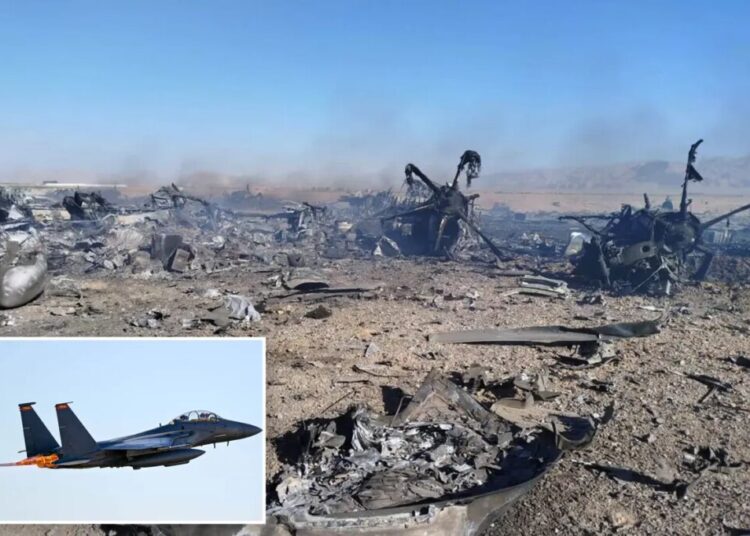
After celebrating the recovery of a lost airman from the mountains in Iran on Saturday night, President Trump began Easter morning with a blistering threat to Iran that he would begin bombing its electric grid and bridges starting Tuesday morning, using an obscenity to punctuate his demand that the government in Tehran reopen the Strait of Hormuz.
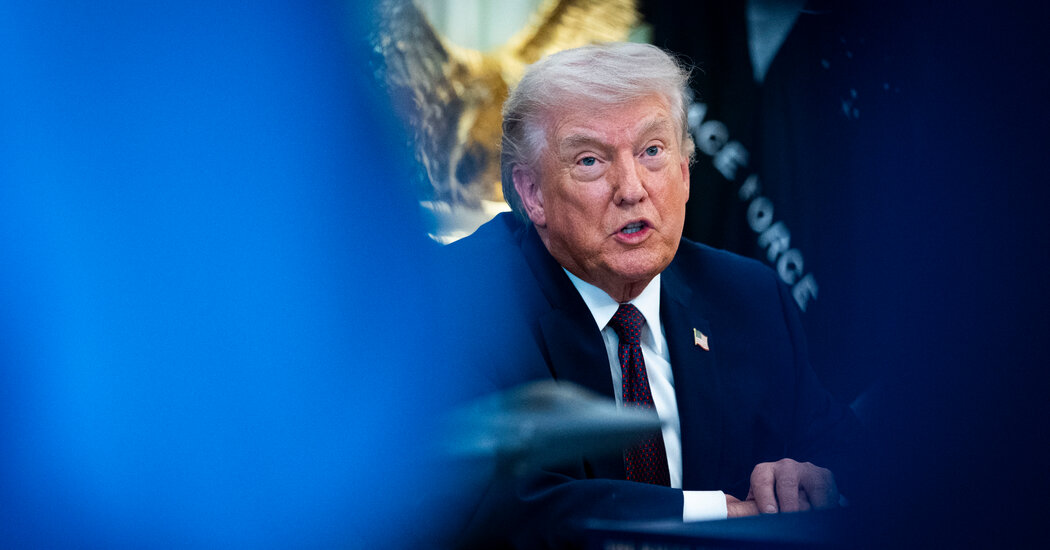
Mr. Trump has never shied away from threats and occasional vulgar language on social media, but this post would have stood out on any day, much less on what most Christians consider the holiest day of the year. “Tuesday will be Power Plant Day, and Bridge Day, all wrapped up in one, in Iran,” he wrote a little after 8 a.m. “Open the Fuckin’ Strait, you crazy bastards, or you’ll be living in Hell — JUST WATCH. Praise be to Allah.”
The president has swerved in the past week between claiming that the strait is not his problem, because the United States barely purchases oil flowing through the 21-mile wide passage, and threatening to go after civilian infrastructure if Iran continues to restrict which ships can pass — and to charge $2 million tolls to those few ships it lets through.
On Sunday morning he was back in threatening mode, with a vengeance.
Senator Chris Murphy, Democrat of Connecticut, called Mr. Trump’s comments “completely utterly, unhinged” in a post on X. “He’s already killed thousands,” Mr. Murphy wrote. “He’s going to kill thousands more.”
Under the Geneva Conventions, striking power plants and bridges that are used primarily by civilians is off limits; they are not considered military targets. Administration officials are already beginning to make the argument that hitting them would not be a war crime because they are also crucial to the missile and nuclear programs. But that loophole could apply to almost any piece of civilian infrastructure, even water supplies.
Mr. Trump’s vehemence may well underscore to the Iranians how powerful a tool control of the strait remains, perhaps their most effective surviving weapon after the loss of their navy, their air force and much of their arsenal of missile and launchers. The strait is not only the passageway for about 20 percent of the global oil supply, it is critical for fertilizer and for helium, which is critical to the manufacture of semiconductors.
Mr. Trump is considering a ground operation to open the strait. But it would be complex — and may well require taking the Iranian shoreline of the strait and perhaps part of the Persian Gulf. Iran has many options to harass shipping — including laying mines and speedboats that can be used to launch shoulder-fired short-range missiles — that might make passage risky enough that shippers will not try to run through the narrow passage.
Mr. Trump has called on European nations, China and India, all of which depend heavily on oil that moves through the strait, to join in an international coalition to keep it open. But because none of those countries were consulted about Mr. Trump’s decision to attack Iran, and some believe the war to be illegal or unwise, they have not yet agreed to participate in what would be a high-risk effort to keep it open.
David E. Sanger covers the Trump administration and a range of national security issues. He has been a Times journalist for more than four decades and has written four books on foreign policy and national security challenges.
The post In New Threats, Trump Seems Emboldened by a Successful Rescue appeared first on New York Times.