President Donald Trump, presiding over a deeply unpopular war with widespread economic fallout and facing some of the lowest approval ratings of his second term, deployed two of the oldest tricks in the presidential playbook this week.
So far, neither his speech to the nation nor his Cabinet shakeup, have significantly improved his prospects.
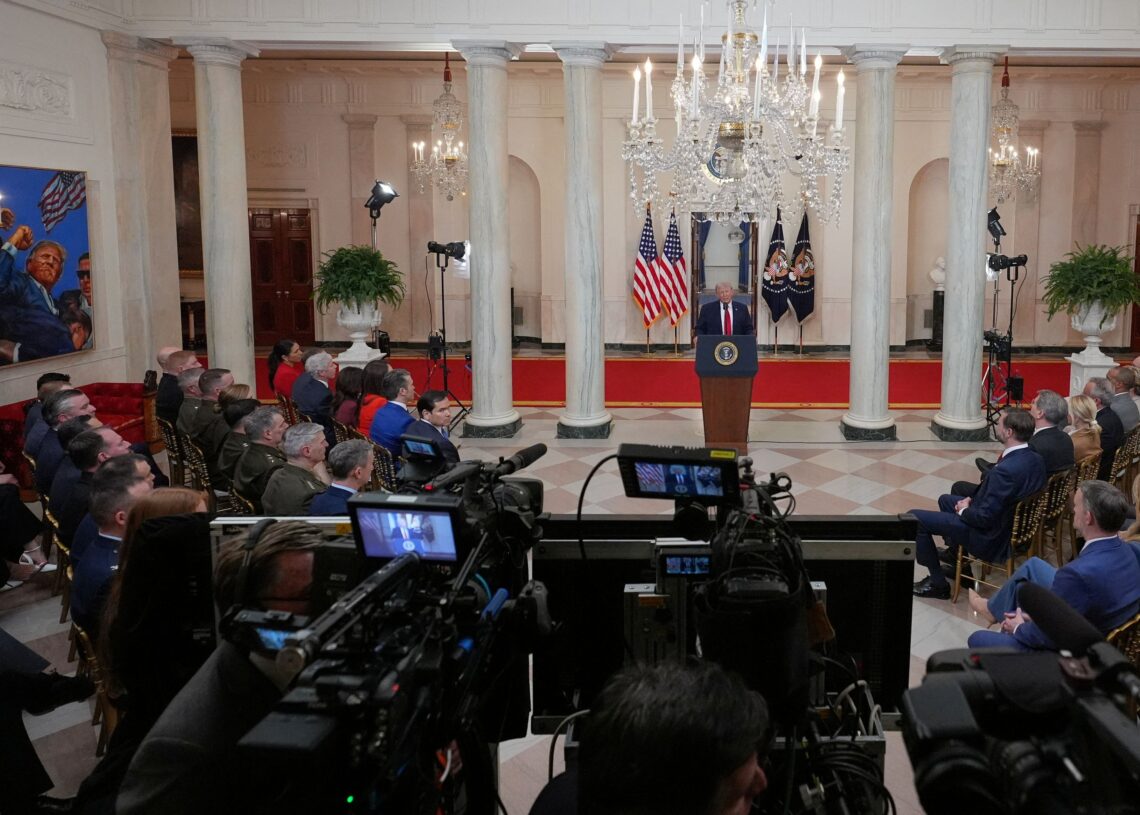
His promise in a speech Wednesday of a swift end to the U.S.-Israel attack on Iran did not appear to shift American perceptions of the war or its economic aftereffects. Oil prices spiked and stock markets slid as investors responded to Trump’s threat to bring Iran back “to the stone ages” and the lack of a plan to open the Strait of Hormuz, a way station for 20 percent of the world’s oil and liquefied natural gas.
“Markets wanted something different,” wrote Paul Donovan, the global chief economist for the Swiss financial services firm UBS Wealth Management. Donovan warned that even a short-lived escalation from the United States could provoke a response from Iran, threatening more infrastructure in the Gulf region. “That could extend the economic damage of the war well beyond any reopening of the Strait of Hormuz.”
The firing of Attorney General Pam Bondi leaves the Justice Department — and the administration — still facing the fundamental dilemma of how to square Trump’s demands for prosecution of his political foes with the realities of the criminal justice system.
Additional firings could still be in the offing — speculation in Washington has centered on Director of National Intelligence Tulsi Gabbard, whose past skepticism about war in the Middle East puts her out of the step with administration policies.
But firing top officials is a step Trump had appeared reluctant to take. Shake-ups can contribute to a perception of chaos, which has hurt Trump politically in the past. And while they can sometimes help an administration recapture the news cycle, they also can lead to prolonged fights over finding and confirming a replacement official.
Trump’s speech Wednesday night contrasted with his initial approach to explaining his war aims. In February, when the attack on Iran began, he posted short videos on social media explaining his justification and conducted quick interviews with individual journalists. In contrast, when he struck Iran’s nuclear sites in June, he quickly addressed the nation from the White House to tell Americans about operation “Midnight Hammer.”
“The White House has not used the full power of the bully pulpit until now, and I think that’s reflected in the public support for the war,” said Alex Conant, a Republican political strategist. “Trump has been very focused on prosecuting the war, not winning public opinion.”
Conant said Trump was trying to drive home the point that America’s involvement in Iran will be short and surgical — and ultimately beneficial: “You’re asking people for a little bit of patience and promising them that this isn’t going to be another Iraq or Vietnam.”
A White House spokesman said the President has been transparent about the trade-offs required to thwart Iran’s nuclear ambitions. Trump and his allies have stressed that doing so was something the President has campaigned on for a decade.
“President Trump has always been clear about short-term disruptions from Operation Epic Fury, and the long-term benefits from neutralizing the Iranian terror regime’s ability to leverage the Strait of Hormuz as a chokehold for global energy markets,” said White House spokesman Kush Desai. “As the U.S. Military continues to make astonishing progress meeting Operation Epic Fury’s clear objectives, both Americans and our global partners can look forward to a safer, more prosperous future ahead.”
A large swath of the country has a differing opinion on that progress. Nearly 6 in 10 Americans oppose the conflict in Iran across five recent surveys interviewing over 10,000 Americans, according to a Washington Post analysis of polls. A Pew Research Center poll in mid-March found 59 percent of respondents said they believed the U.S. made the “wrong decision in using military force in Iran,” while a Fox News poll found 58 percent oppose “the current U.S. military action against Iran.”
Former House speaker and Trump adviser Newt Gingrich conceded that the president “has taken a major gamble,” but argued the U.S. can still extricate itself from the conflict and repair the economy before the midterms. “There’s plenty of time. If you have the best campaigner in modern history and you have the machine, and they have more money than they have ever raised. When this is over, he believes he’ll be on top.”
Democrats have already begun to hammer vulnerable Republicans with ads linking rising gas prices to the war in Iran. The line of attack will test the limits of Trump’s political salesmanship. The average cost of a gallon of gasoline in the U.S. just shot past $4 — a politically potent issue with voters that will prove hard to message away.
Trump has framed the conflict as a necessary step to prevent Iran from obtaining nuclear weapons, but the case is colliding with strains inside his “America First” coalition, a movement that has long been skeptical of foreign entanglements and costly overseas conflict.
The strikes on Iran marked the second major military action by the U.S. in as many months, following an operation to capture Venezuelan President Nicolás Maduro. Iran’s supreme leader and more than a dozen other leaders were assassinated in a matter of days in what the president said would be a swift and overwhelming operation.
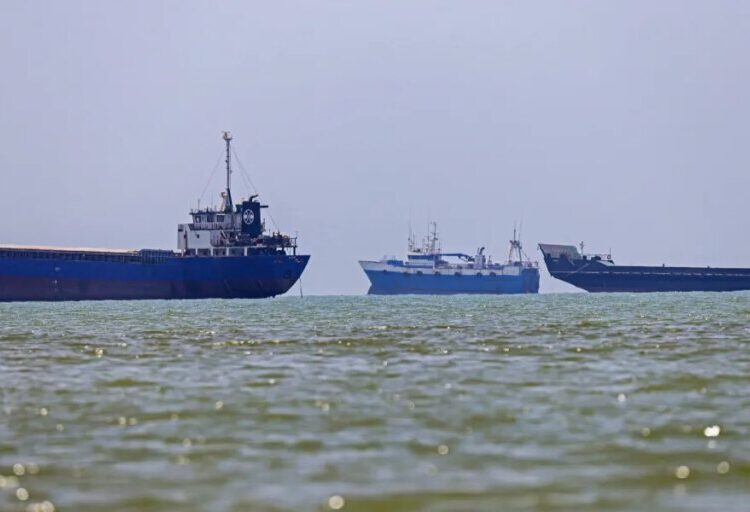
But the toll — in dollars, global economic turmoil and military casualties — has continued to rise. Iranian leaders blocked off the Strait of Hormuz. Tanker traffic has diminished to a trickle, upending global energy markets and frustrating U.S. allies. Trump has pressed those countries to use military force to secure oil shipments, a demand that risks further straining relations with partners already uneasy about the conflict.
U.S. oil prices spiked more than 11% following Wednesday’s speech, which did little to assure consumers that price relief was on the way. Trump did not present any plan to reopen the strait, claiming that it would reopen “naturally” when the war ends. He also predicted that a conclusion of the conflict would immediately drive down gas prices. Energy analysts have predicted it will take months to restore Middle East oil operations to prewar levels.
Markets largely recovered from a morning slide following Trump’s speech, with the Dow Jones Industrial Average closing down 61 points.
The United States has sent thousands of service members to the Middle East, and 13 have been killed.
Allen Laidacker, an 81-year-old retired welder in Statesville, N.C., said he still supports Trump, despite prices that have ticked up for him and his wife, who are on fixed incomes.
“What’s killing us now is the price of groceries,” he said, adding that he thinks Trump will help the economy.
Trump claimed during the speech Wednesday that the U.S. “has never been better prepared economically” to confront the threat of Iran, stating that there was no inflation. But the economy was shakier than it appeared heading into the war with Iran, according to March economic benchmarks. One report from the Commerce Department showedthat underlying inflation remained stubbornly elevated in January.
Laidacker said he believes America and the rest of the world are safer if Iran doesn’t have nuclear weapons. Still, selling Republican policies to people who are not Trump supporters will be hard.
“I think in the long term it’s going to hurt him a little bit,” he said. “I agree with everything he’s doing, but I do think it’s going to lower his approval rating.”
Trump on Wednesday encouraged Americans to take the long view of the conflict.
“The Korean War lasted for three years, one month and two days,” he said. “The Vietnam War lasted for 19 years, five months and 29 days. Iraq went on for eight years, eight months, and 28 days.”
“This is a true investment in your children and your grandchildren’s future,” he said.
The post Reeling from war in the Middle East, Trump reaches for a reset appeared first on Washington Post.