For most of last year, the Federal Reserve found itself in wait-and-see mode as it assessed the economic fallout from the sweeping policy changes imposed by President Trump that rewired global trade and upended the labor market.
The U.S.-Israel war with Iran has thrust officials at the central bank back into a similar limbo that is likely to mean a standstill on interest rate cuts barring a dramatic deterioration in the labor market.
The Fed sees signs of fragility in the labor market but no deep cracks that require immediate attention. Friday’s data is expected to substantiate that view.
But the dilemma for the central bank centers on what comes next. The conflict in the Middle East has already snarled supplies and lifted commodity prices, such as those for gasoline and fertilizer. Shipping costs have also moved up.
Overall inflation in the coming months will be higher as a result. Consumers, facing higher expenses for some goods, are also expected to pull back on spending to some extent.
A prolonged conflict would amplify the economic impact. Officials are concerned about the extent to which consumers retreat, given that consumer spending fuels roughly two-thirds of the country’s economic growth. Businesses, still working through last year’s tariff shock, have slowed hiring. They have yet to shed workers in droves, though anything that further squeezes their profit margins could change that.
But growth and the labor market are not policymakers’ only concerns. They are also worried about inflation, which has been running above their 2 percent target for roughly five years. That fear has complicated whether officials can avoid reacting to the forthcoming pickup in prices, a strategy they have pursued in the past on expectations that a resulting hit to growth will outweigh any lasting inflation issues.
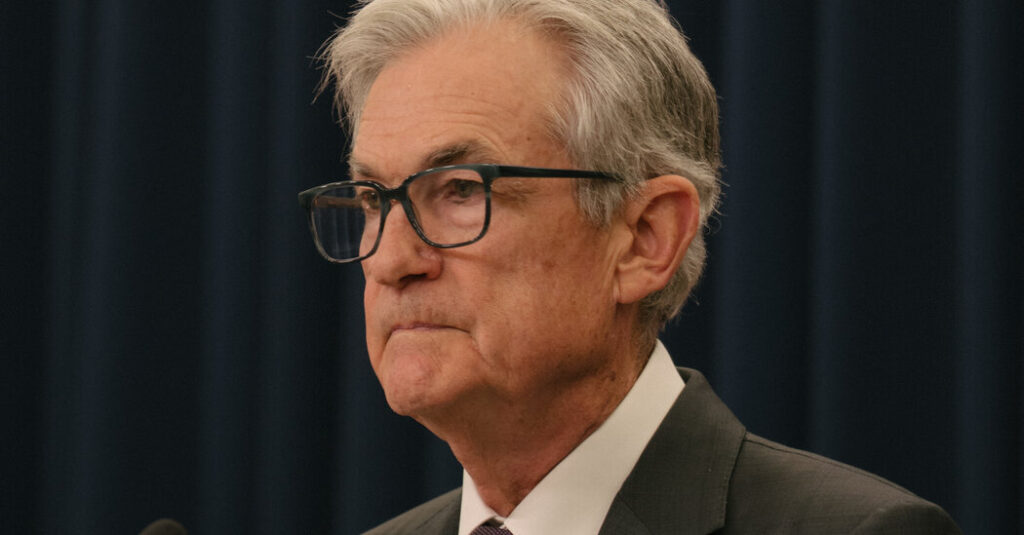
“You can have a series of these supply shocks and that can lead the public generally — businesses, price setters, households — to start expecting higher inflation over time. Why wouldn’t they?” Jerome H. Powell, the Fed chair, said at an event this week.
Despite this risk, Mr. Powell did not convey any immediate urgency to take action, saying instead that the Fed’s policy was “in a good place for us to wait and see how that turns out.”
John Williams, president of the Federal Reserve Bank of New York and a close ally of Mr. Powell, echoed that view this week as he warned that the conflict “could result in a large supply shock with pronounced effects that simultaneously raises inflation — through a surge in intermediate costs and commodity prices — and dampens economic activity.”
While Mr. Williams acknowledged that some of this had “begun to play out already,” he said he expected the burst in inflation stemming from the war to prove short-lived.
He forecast that the unemployment rate would tick down from its current level of 4.4 percent and for inflation to end the year around 2.75 percent. The Fed’s preferred inflation gauge, the Personal Consumption Expenditures price index, stood at 2.8 percent as of January.
Colby Smith covers the Federal Reserve and the U.S. economy for The Times.
The post The Iran war has forced the Fed back to wait-and-see mode. appeared first on New York Times.