India began counting its population this week, setting off a yearlong process of tallying some 1.4 billion people. The results will shape how India is governed and who benefits from its welfare system over the next decade.
This is India’s first census since 2011, delayed five years by the Covid-19 pandemic. It is also the first since the United Nations estimated in 2023 that India had surpassed China to become the world’s most populous nation.
The results, expected next year, will have enormous consequences. They will inform policymaking, affirmative action policies, the number of lawmakers representing each region and the redistribution of wealth. The census is also a massive logistical challenge because of India’s large, diverse population and vast geography.
Here’s what to know about India’s census.
How do you count over 1.4 billion people?
India’s census is one of the world’s largest administrative undertakings. It will cost $1.2 billion, involving more than 3 million workers going door-to-door to gather data. They will scour more than 640,000 villages and 9,700 towns and cities, from dense residential blocks to remote communities.
A two-phase approach will make the task more manageable. The first phase, happening between April and September, aims to make a comprehensive list of houses and the people in them. This phase will focus on household sizes, housing conditions and amenities like water, electricity, sanitation and internet access.
A second phase will count individuals. Workers will collect information on each person such as their name, age, sex, date of birth, marital status, education, occupation, religion, caste, disability and migration history. This phase will happen in February 2027, except for regions expecting snowfall in winter, which will be surveyed this September.
The final data will be published in 2027, but officials have not specified which month.
How long has India been doing this for?
India has carried out a census every 10 years since 1881, when it was under British rule, even during major disasters. The 2021 census was postponed because of the Covid pandemic, breaking that streak.
How will this one be different?
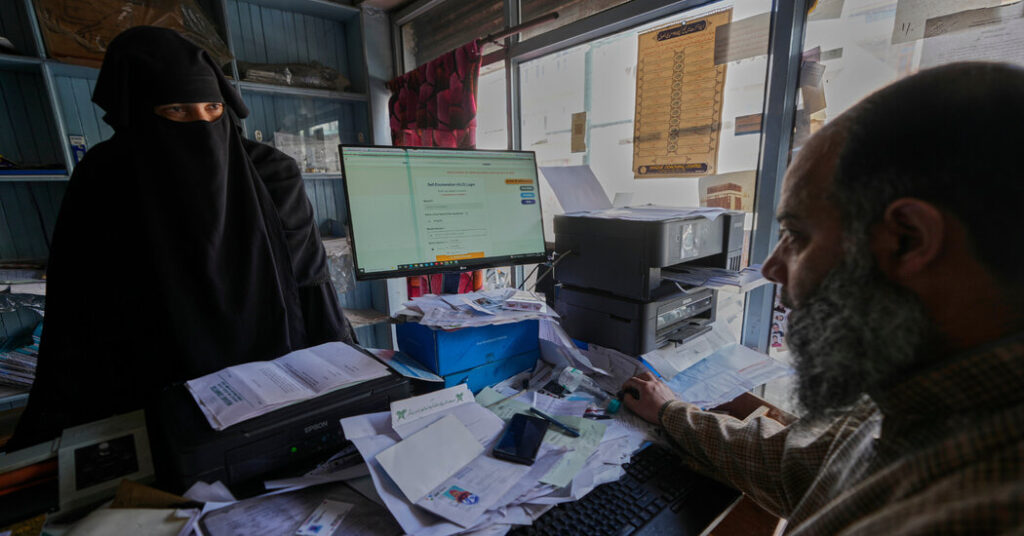
The current effort is India’s first fully digital census. Workers will use mobile devices to collect data with an app, eliminating the need for paper forms.
This census is also the first to allow residents to log their own information online. The website for self-entry runs in 16 different languages. While census workers will still visit everyone to verify the data, residents can save the time it would take for a full interview.
This will also be the first census to ask people about their caste since 1931, when India was under British rule and had not yet been partitioned from Muslim-majority Pakistan, giving it vastly different demographics. Caste data was collected in a separate 2011 survey, but the results were never made public.
For the first time, the government is also expected to separately count the nomadic and seminomadic tribal communities which make up about one-tenth of India’s population. Previously, these historically marginalized communities were grouped in broader categories, making it difficult to direct policies at them.
Why is caste data so important?
Including caste in this year’s census has reignited one of India’s most contentious debates. Supporters say it will provide an updated picture of inequality in the country. Critics say that it will entrench rigid identities and intensify the political competition over payments and quotas dictated by caste.
The Indian government, led by Prime Minister Narendra Modi and his Hindu nationalist Bharatiya Janata Party, initially opposed a caste census. It reversed its stance after pressure from opposition leaders like Rahul Gandhi of the Congress Party.
The data collected this year will influence how India’s affirmative action policy will seek to benefit lower castes over the next decade. The policy uses population data to reserve a fixed percentage of seats for historically disadvantaged groups in the government, in other elected bodies and in public educational institutions.
What will else will the results determine?
The census data could redraw India’s electoral map and redistribute political power.
Officials will use the data to align each state’s number of seats in Parliament with its population size. States with fast-growing populations would gain seats, at the expense of those with slower growth. Some states that were successful in enacting population control policies are wary of losing seats.
The census is also central to a 2023 law, yet to be implemented, that would reserve a third of the seats in Parliament and state assemblies for women.
Pragati K.B. is a reporter for The Times based in New Delhi, covering news from across India.
The post How Do You Count 1.4 Billion People? India Is Trying. appeared first on New York Times.