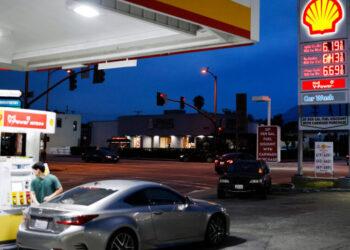
The conflict in the Middle East has sent gasoline prices in the U.S. soaring to their highest level in four years. That’s bad news for everybody, but the domestic consequences of the war are likely to ripple unevenly, and in the process undermine one of the country’s primary engines of economic growth.
Iran’s effective blockade of the Strait of Hormuz has starved the global economy of around 20% of the oil supply it is accustomed to, and Americans are witnessing the effect every time they go past a gas station. Average gasoline prices in the U.S. hit $4 a gallon on Tuesday, the first time that threshold has been crossed since 2022.
But expensive gas is a much bigger worry for some households than others. When gasoline prices spike, they drain real disposable income that would otherwise flow into the broader economy, forcing some families into making hard choices about where to put their money. By hurting lower income households’ spending power and leaving the finances of the wealthy relatively insulated, the war in Iran could add even more fuel to the country’s growing K-shaped economy, according to a Moody’s Analytics report published this week.
“While household consumption remains the primary driver of U.S. economic growth, the ongoing Middle East conflict and resulting surge in oil prices are testing its resilience,” the report’s authors wrote. “If the conflict is prolonged, the shock would even more meaningfully reduce household purchasing power and weigh on spending.”
The critical role spending plays
The U.S. economy is massively reliant on Americans being willing to spend money. At the end of last year, consumer spending accounted for 68% of GDP, according to the Federal Reserve. It’s why spending data is considered a critical economic indicator, and why markets are so closely attuned to releases detailing monthly retail spending and consumer confidence.
But spending’s outsized role could turn into a dangerously lopsided dependence. Analysts at Moody’s, including Mark Zandi, the firm’s chief economist, have repeatedly sounded the alarm that the bulk of spending comes from a relatively small share of consumers, specifically wealthy ones.
In a report last year, Zandi wrote that the U.S. economy is “largely powered by the well-to-do,” finding that only the top 20% of the country’s income distribution has spent enough to outpace inflation in recent years. By another metric, the 10% of Americans with the highest incomes accounted for nearly half of all consumer spending last year.
Moody’s has framed the divergence as evidence of a K-shaped economy, one where the highest-income earners are doing better than ever and seeing their wealth grow, while low and middle-income groups deal with stagnating wages and rising affordability concerns.
The problem of pricy gas
More expensive fuel could accelerate that trend. Low and middle-income earners spend larger shares of their wealth on essentials including transportation, food and housing, meaning their ability to spend in the economy gets squeezed faster when prices for the basics rise.
“Higher gasoline and utility costs act like a tax on households by reducing real disposable income,” Moody’s analysts wrote in the recent report. “As consumers spend more on essential goods and services, they will curb spending elsewhere.”
This effective tax arrives at a particularly precarious moment for many Americans, just as real wage gains are beginning to flatten and households are drawing down their savings to near-historical lows, according to Moody’s. Real wages declined 0.3% for low-income workers last year, according to the Economic Policy Institute, a reversal from post-pandemic trends when low and middle-wage gains were prominent.
A pricier fuel tax has already had a significant impact on household finances. In the month since the war began, Americans may have paid an extra $8.4 billion on gasoline, according to an analysis published Thursday by Democratic members of the Joint Economic Committee, a standing congressional body.
While the committee did not break down the cost burden by income group, the more Americans pay at the pump is likely to leave a bigger dent in their overall budget the less they earn. Households in the lowest fifth of incomes spent 18.3% of their wages on gasoline in 2021, more than double the average of 7.7%, according to an analysis by the American Council for an Energy-Efficient Economy, an advocacy group.
Higher for longer gas prices could also hurt wealthier Americans eventually. The Moody’s analysts warned that more expensive fuel will likely “erode some of the boost to household purchasing power” high-income groups would have had from fatter tax refunds this year.
Tax provisions in Donald Trump’s One Big Beautiful Bill Act last year paved the way for larger than usual refunds, primarily benefiting the wealthiest Americans. A recent analysis from Oxford Economics, a consultancy, projected returns this year to rise by $60 billion, but a prolonged period of high gasoline prices will be enough to “almost exactly” offset all of those returns this year.
The post The Iran war is effectively a ‘tax’ on US households that could accelerate the economy’s widening K shape, Moody’s says appeared first on Fortune.