In the first room of “The Coming of Age,” an exhibition at the Wellcome Collection that explores experiences and perceptions of aging, a series of 13 portraits depicts incredibly, unbelievably old people.
An engraving from 1635, titled “The Old, Old, Very Olde Man,” shows Thomas Parr, a sly-looking figure who claimed to be 152 at the time of his death, and whose implausible longevity was still being invoked in ads for anti-aging pills in the 1890s. Another engraving depicts a 19th-century couple, John and Sarah Rovin, who both look fantastic for their alleged ages (172 and 164). Though somewhat wrinkled and stooped, they are still on the move and wearing the same crafty, gloating expression as Parr.
Almost all of the reputedly ancient figures in the portraits had this air about them, as if they’d pulled off some sort of heist.
The wall text did not clarify whether they were knowingly lying or genuinely believed that they had outsmarted time. It was clear on one thing, however: “Certainly, no one has lived to be 164 or 172.”
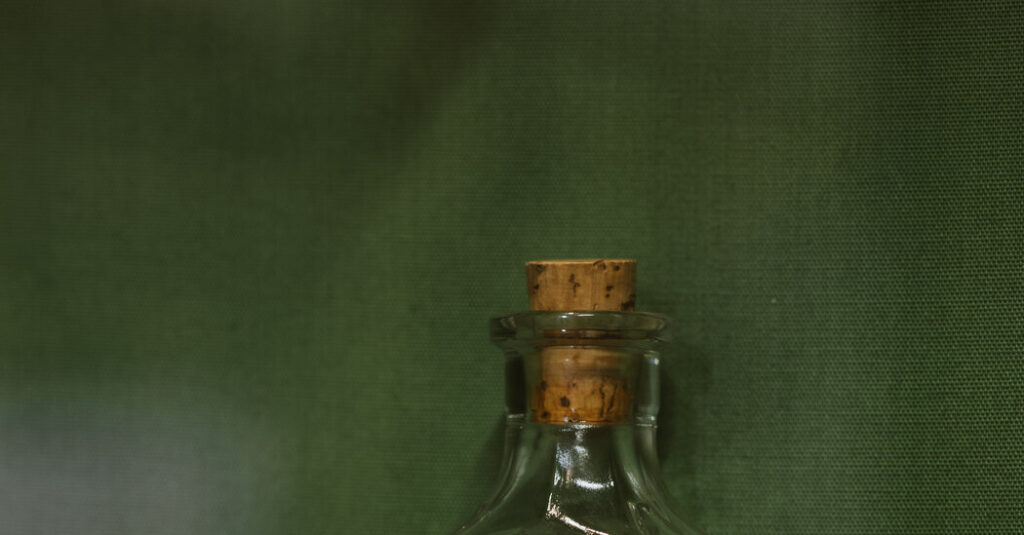
There is no getting around this, but that has never stopped people from trying. Among the more than 120 objects in the show at the Wellcome Collection — a London museum that makes connections between science, medicine and the arts — are various examples of the human desire to not only live longer but to do so without looking older: a glass bottle filled with water from a “fountain of youth” in Florida; a 1930s advertisement about the anti-aging properties of All-Bran Flakes; a “violet-ray” apparatus. (That’s a series of delicate glass instruments applied to the face, carrying high-frequency currents that produced a faint purple glow and would, the makers promised, restore your youth, for a small fee.)
That we do not stay young forever has never sat right, but the objections seem to be getting more aggrieved, and there is a growing conviction that we can probably buy our way out of the whole thing sometime soon.
The most visible spokesperson for this belief is Bryan Johnson, the tech millionaire who seems to view the aging process as an infringement on his bodily autonomy. Johnson, the founder of the “Don’t Die” movement, has publicly dedicated himself to achieving immortality, or, at the very least, a quest to “take his speed of aging to the lowest possible number,” as he says in a recent Netflix documentary, via a rigid diet and exercise program, relentless monitoring, experimental medical interventions and a single-minded focus on bedtime.
He has said in interviews that he has structured his “entire life around sleep” and advised his followers to think of themselves as “professional sleepers.”
An extract from the documentary played on a loop at the Wellcome Collection, giving details of his regimen, which costs him $2 million a year: He takes dozens of pills, eats vegetables by the pound while doing lunges, consults his doctor, asks his internal organs what they want, and goes to bed at 8:30 p.m., alone, no exceptions.
I couldn’t decide whether what he was doing was working. Johnson doesn’t look old — even his detractors must be able to see this — but he is not radiating youthfulness either. More than anything else, with his distorted musculature and glassy, bulging eyes, he looks like a figure out of a Mannerist painting: a Bronzino come to life. Bronzino, a court painter for the Medicis, depicted his wealthy patrons in a hyper-idealized, artificial manner, glacially aloof and with skin like marble, so that they seemed less like living people and more like timeless forms.
Nearby, a series of photographs and a film by the Finnish artist Maija Tammi give an insight into another mysterious, translucently pale creature: the hydra, a tiny freshwater organism distinguished by its remarkable regenerative abilities.
Hydras have no brains, hearts or eyes and could be considered as biologically immortal, since they do not age in any typical sense. Their cells renew constantly; they can regenerate even if their heads are removed.
Tammi’s film shows a hydra adrift under a microscope, its tubular body flexing and twitching as a voice-over asks what time means for something that never gets old. “Scientists throw birthday parties for the hydra,” it says. “What do they put on the cake?”
One of Tammi’s photographs, called “Immortal’s Birthday,” stages a scene of that party in an abandoned laboratory populated by taxidermy animals. Everlasting life seems horribly isolated, even if you don’t have a heart.
People are living longer now, but their lives aren’t like the image that the “Don’t Die” movement projects. Whether you “age well” depends not just on individual choices, but also structural forces like class, environment and access to care, which determine how long you live and how those years unfold.
Even if most people wanted to, they couldn’t afford to spend their days industriously preparing for bedtime. Longer lives can mean more years managing illness or being lonely.
It’s not something that we like to think about. Online and in the media, conversations about aging tend to be dominated by people like Johnson or by indignant analysis of what famous women have done to their faces.
Kim Kardashian says in an interview that she would “eat poop every single day” if it would make her look younger, and in response we get countless huffy think-pieces about “aging naturally.” An actress gets a face-lift that gives her the appearance of a cartoon lizard, and the internet turns on her like a school of fish.
We prefer not to dwell on the normal, difficult aspects of getting old, or consider what it will be like for us when the time comes.
This avoidance is stripped away in “Nursing” a print that the artist Paula Rego made shortly after placing her mother in a nursing home. A woman with her arms folded looks out at the viewer with rueful weariness, and perhaps a hint of hostility. She shares a chair with the sleeping figure of the artist’s mother, frail and birdlike, dependent on her grown-up, guilty, loving daughter.
The show ends with a kind of surreal lost-property office, filled with objects that prompt conversations about what it’s actually like to grow old today, and what it might be like in the future. A series of interviews plays on a loop, and in one, a doctor talks about his patients. “It’s interesting to me that we actually don’t prepare that well, psychologically, for our own aging,” he says. “It seems like we’re almost prejudiced against our own future self.”
The Coming of Age Through Nov. 29 at the Wellcome Collection in London; wellcomecollection.org.
The post The Age-Old Obsession With Living Forever appeared first on New York Times.