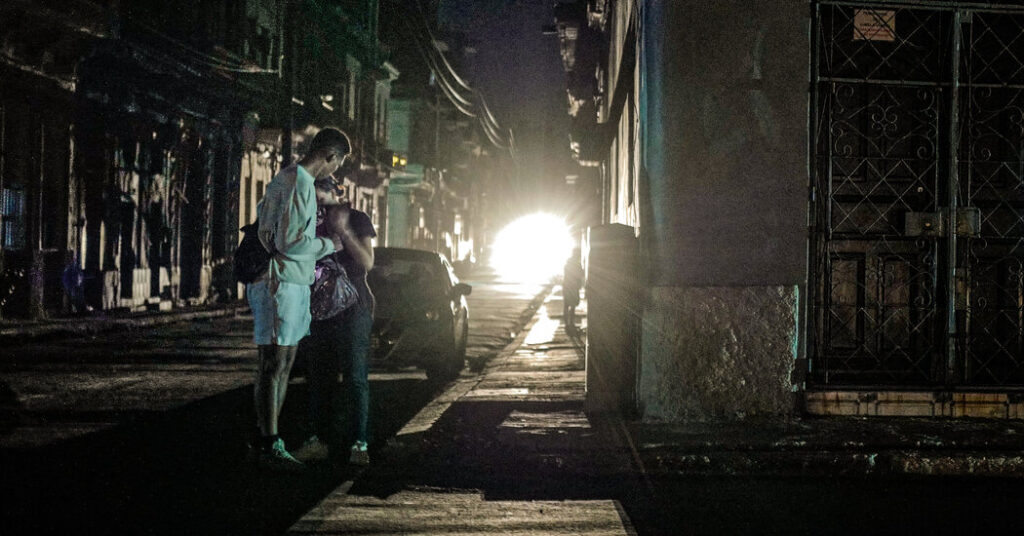
Cuba is undergoing its worst economic and humanitarian crisis in over a century. After nearly seven decades of authoritarian rule, much of the country’s population lives in extreme poverty, the power grid is collapsing, and people are fleeing the island in droves. Cuba is hurtling not toward socialism or capitalism but toward ruin.
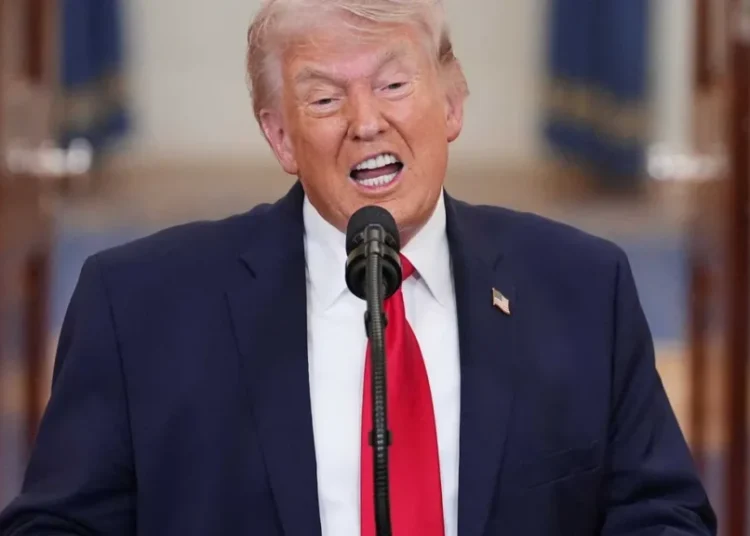
Atop those miseries the Trump administration has heaped the threat of war and blocked most oil shipments to the island, bringing transportation, food distribution and other basic services to a halt. Administration officials have made clear that 2026 is the year they intend to bring down the country’s Communist government. The only thing missing is a plan.
I spent more than a decade working on Cuba as a U.S. diplomat. In that time, I both enforced and unwound parts of the American embargo on the nation that has been in place since the early 1960s, depending on the administration in power and the mood of U.S.-Cuban relations. Before now, I have never seen a greater level of desperation and anger at the government within Cuba, nor a greater willingness by the United States to use the suffering of Cuban citizens as leverage in our long-running dispute with their leaders.
For too long, Washington and Havana have allowed outdated grievances to dictate their relationship. This hostile status quo has done nothing to advance American interests and has only deepened the hardship faced by ordinary Cubans. It’s time to stop holding both countries hostage to history, and to build a better path that delivers progress for citizens on both sides of the Straits of Florida.
When I first served as a U.S. diplomat in Havana, from 2002 to 2004, the country was still recovering from a protracted economic crisis that had set in after the collapse of the Soviet Union. Even as the popularity of Cuba’s leadership declined amid scarcity and repression, the Castro government retained bastions of support in the Communist Party, the armed forces and the security services. I saw how, for these groups, the Cold War remained very much alive, as it did for their rivals in the large Cuban American community.
By the time President Barack Obama assumed office, he viewed U.S. efforts to isolate and squeeze Cuba as Cold War-era anachronisms. He saw no reason to preserve a decades-long approach that had failed to deliver change or improve the lives of those we were supposed to be helping: the Cuban people.
I served on Mr. Obama’s National Security Council staff and participated in secret talks that led to the 2015 restoration of diplomatic ties between the United States and Cuba. Nobody on Mr. Obama’s team had any illusions about the intransigence of Cuba’s leaders, who could not imagine a future in which they were not in sole control of the country. We knew those leaders would negotiate to improve the relationship and even make some marginal concessions, but we also knew that they could be neither charmed nor bullied into accepting the need for serious reform.
So Mr. Obama sidestepped those in power in Havana and focused on the aspirations of Cuban citizens. Mr. Obama’s measures included changes to embargo enforcement that helped Cuba’s small but emerging private sector, facilitated the entry of U.S. companies, expanded internet access and boosted travel between the two countries. The steps Mr. Obama took shifted the ground under Cuba’s leadership by generating expectations of greater prosperity and freedom among Cubans that the stodgy state would be unable to meet without accepting a steady pace of reforms. We believed this approach would position Cuba for a democratic transition far better than a pressure-cooker strategy that would only entrench the Cuban government and further impoverish the island.
Although Fidel Castro, who by then had stepped down as Cuba’s president, didn’t block the negotiations, he never shed his skepticism of the United States, and he rebuffed Mr. Obama’s calls for broader economic changes. Regime hard-liners followed his example by slowing engagement with U.S. policymakers and investors. But there remained some optimism among Cubans that there was still a path toward normalcy.
Ten years later, we are in a very different place. President Trump’s first-term rollback of most of Mr. Obama’s policy shifts effectively closed the door on the kinds of gradual solutions we tried to advance. Tightened U.S. sanctions, the Cuban regime’s intransigence and the Covid-19 pandemic combined to push the Cuban economy closer toward collapse. Cuba’s leadership does not appear to have any objective beyond retaining its hold on power.
President Trump, for his part, clearly relishes the symbolism around “taking” Cuba and has eagerly embraced coercive rhetoric. It’s not clear what the administration’s underlying objective is other than regime change — something Cuba’s leaders will surely resist. On-again, off-again talks between U.S. and Cuban officials suggest that the Trump administration favors a negotiated outcome to the current standoff. But the president’s apparent appetite for military intervention to solve political problems, embodied by his ouster of Venezuela’s Nicolás Maduro, have left no doubt in Havana about his readiness to use force.
U.S. military intervention in Cuba could perhaps succeed in toppling the government. It would also be a grave mistake. An attack on Cuba could provoke a catastrophic humanitarian crisis, unmanageable mass migration to the United States and Mexico and an extended civil conflict or insurgency close to U.S. shores.
Even absent a U.S. invasion, a Cuba left to suffocate under stiff American sanctions could veer toward chaos rather than reform. Further economic collapse could prompt a Russian-style political transition, with Cuba’s oligarchy mutating into a permanent kleptocratic elite. A destabilized Cuba could also become a magnet for transnational gangs eager to turn a failing state into a hub for money laundering and organized crime.
This downward spiral can still be averted. Though there is no Cuban analogue to Venezuela’s Delcy Rodríguez, the Trump administration could use its considerable leverage to negotiate with Cuba’s consortium of leaders, pressing them to accept the need for fundamental political and economic change while also convincing them that they will have a place in a more open, more competitive Cuba. An agreement could allow Cuba’s armed forces to continue to serve their country should they drop their ideological mission and their domination of the economy. U.S. incentives to undertake economic reforms and promote Cuban entrepreneurship could help right the ship of the country’s economy.
In 2014, I witnessed an overwhelming desire by Cubans on the island and in the United States to leave the past behind and start fresh. There is an opportunity right now to marshal the collective strength of all those who are committed to building a successful Cuba. We only hurt our own cause, and that of the Cuban people, by continuing to obsess over defeating adversaries whose time has already passed.
Ricardo Zúniga, a career U.S. diplomat, served as President Obama’s principal adviser on the Western Hemisphere from 2012 to 2015.
The Times is committed to publishing a diversity of letters to the editor. We’d like to hear what you think about this or any of our articles. Here are some tips. And here’s our email: [email protected].
Follow the New York Times Opinion section on Facebook, Instagram, TikTok, Bluesky, WhatsApp and Threads.
The post The Only Thing Trump Is Missing in Cuba Is a Plan appeared first on New York Times.