I’ve had a close friend for many years who lives with the trauma of having been sexually abused when she was younger. She is open about this experience and how it has affected her life. I am very aware of it, and I believe I am empathetic. I’ve tried to be supportive.
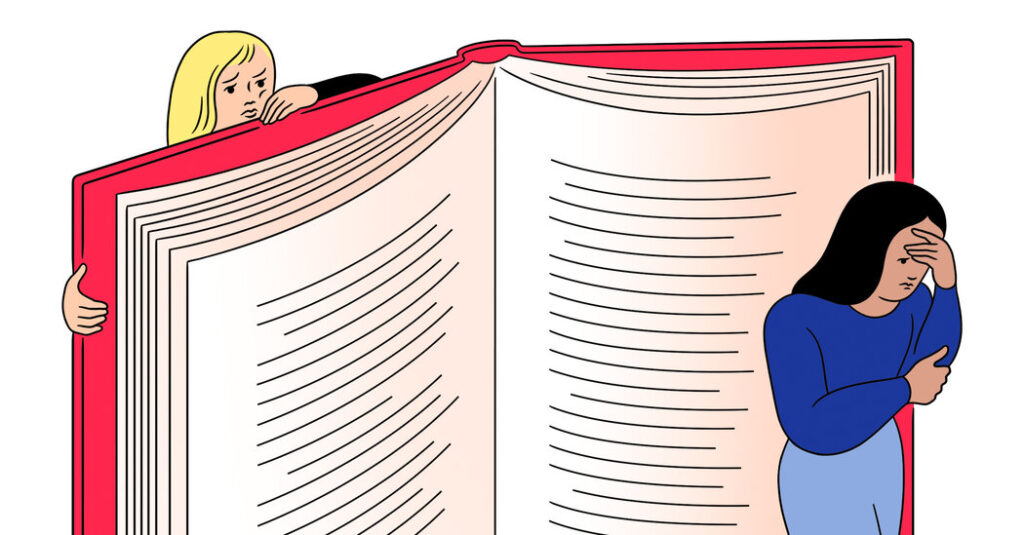
Some time ago, she wrote a book about her experience, which included details of the abuse. I congratulated her on this brave undertaking, but I told her that I didn’t think I could handle reading the book. I avoid reading or watching things with abusive or violent story lines as they are extremely upsetting to me, and at the time I was already struggling with multiple crises in my family.
She said it was OK. Later, however, she ghosted me. Recently she contacted me to say that anyone who won’t read her book is not her friend and that by not facing her trauma I am contributing to the greater problem in the world.
I don’t believe I need to know the details of the abuse in order to care about her and empathize with her experience. I don’t want to lose this friendship, but I don’t want to read the book, and this ultimatum doesn’t seem fair. Am I being a bad friend? — Name Withheld
From the Ethicist:
Obviously this isn’t just a book to your friend. This is a record of her victimization, and it’s deeply meaningful to her. You’ve recognized that and responded appropriately. Has she? Her decree that any friend of hers must read her memoir reflects a view of the relationship in which her needs alone set the terms. She says you’re not a friend; I’d say you’re a friend with boundaries.
Worse, she’s now bullying you. Someone who, feeling vulnerable and dealing with family crises, declines to read a painful account of sexual abuse is accused of being part of the problem? This reaction may be a symptom of her own wounds or an emerging personality trait. Yet it’s telling that you seem to be the only one mourning the estrangement. Hers is the real failure of empathy on display, and the bad friend here isn’t you. It may be time to turn the page.
A Bonus Question
My elderly relative is a psychologist. For the past several years she has gradually been losing her memory. She forgets appointments, doesn’t remember whether she has brought a coat to our house, repeatedly tells the same story and is not functioning in a normal fashion. Unfortunately she continues to see patients. Her son is a doctor and is aware of the situation but has not done anything about it. As a physician, I believe my relative cannot possibly remember the stories that patients have told her and she should stop treating them. I have taken an oath to “do no harm.” What is my responsibility? — Name Withheld
From the Ethicist:
Many years ago, a colleague told me of her brief experience with psychoanalysis. When, during her session, she noticed that her aging analyst had started to snore, she woke him up and informed him that he’d dozed off. He blinked and gave her a sage look. “Ah, yes,” he said. “That’s very significant.” She promptly terminated the analysis.
But patients shouldn’t have to be on their guard against failing clinicians, and they can be hurt by dysfunctional ones. A psychologist with a memory impairment has, ipso facto, a professional impairment; talk therapies require keeping track of an ongoing conversation. I agree that something should be done.
The oath you cite, however, covers your responsibilities to your own patients, not to those of other physicians. You should urge this relative’s son, who is better placed to get through to his mother, to help her grasp that she has to stop seeing patients. (You can volunteer to back him up, if it would help.) If the son refuses, file a report with the state licensing board. Those patients may not know they need protecting. That’s why someone who does has to act.
Readers Respond
The previous question was from a reader who was at odds with her husband over whether they should give their son a house in exchange for his going on weight-loss drugs. She wrote:
Several years ago, my husband and I purchased a house for our son, with an agreement that he would pay us back. He remodeled it from scratch and has been making his payments to us fairly regularly, though he misses occasionally when other priorities arise. We both agree that we would like to gift him the remaining balance on the house. The money he pays means much less to us than to him, and it would be beneficial for him to have that extra cushion. Our son, however, is morbidly obese, and my husband wants to condition the gift on his getting on a GLP-1 program, which would mean using about half his monthly savings to pay for the medication. I feel that a gift is a gift and you should not extort a grown man, even when it is in his best interests. Your thoughts? — Name Withheld
In his response, the Ethicist noted:
It’s not always wrong to attach conditions to a gift. Sometimes the conditions are intrinsic to what’s being given. … When you give a sibling money for a down payment on a condo, that money had better be put to that use. Nor would it be problematic to tell a relative with an addiction problem that you’ll provide an apartment so long as the person maintains their sobriety. The rationale is that the addict’s choices around substances aren’t fully free. … By contrast, your son is fully capable of judging the evidence and deciding what to do with his own body. His choice not to pursue treatment may be misguided, but it’s his to make, and the condition is unrelated to the gift. … So consider another gift, the kind where the condition is intrinsic to what’s being given: Offer to defray the costs of his treatment. You have the means, and this way you’d be giving him something without saying anything about how much you trust his judgment. He may still decline. If he does, you’ll need to make your peace with the fact that it’s his body and his life.
(Reread the full question and answer here.)
⬥
My parents offered me a house in exchange for losing weight. It didn’t work, because I was not mentally ready. My parents ended up giving me the house anyway and everything was fine. But every once in a while the weight conversation would come up. It was tense but respectful, and I knew it was out of love, but I still wasn’t ready. Finally I hit rock bottom with depression about how big I was, and my doctor convinced me it was time to deal with my weight. Two years later, I’ve lost 130 pounds and I feel amazing. The absolute hardest thing was taking the first step as I was petrified of failure. I believe my success was based on my doing it on my own terms, when I was ready, with no outside pressure or expectations. — Charles
⬥
I think the Ethicist is off base here. The parents have already given so much, and they are not threatening to withhold or retract anything they’ve given. They are talking about giving their son even more. Why shouldn’t they be allowed to attach conditions to the “more?” — David
⬥
Nothing good ever comes from a parent “helpfully” offering advice, money or treatment for their adult child’s weight issues. Even offering to pay for the son’s GLP-1 injections implies there’s something wrong with him. Yes, morbid obesity is a problem to be dealt with, but that is between the adult son and his doctor.— Tana
⬥
Aside from whether they are ethically right or wrong, conditions like the one these parents are thinking of imposing are usually ineffective and unenforceable. People lose weight when they decide to do so. Often even well-intentioned coaxing, bribing or nagging can have the opposite of the desired effect as the person feels pressured and may either retreat or become defensive. And if conditioning the gift on weight loss is unlikely to be successful, why do it? — Ann
⬥
Obesity is complicated. It’s physical, it’s psychological and it’s hard to get a handle on. Obese people live with stigma and judgment and disrespect all the time. Having your parents participate in all that judgment and disrespect under the pretense of “concern” makes it harder. I am on a GLP-1. It’s helped me a lot and I’m grateful to be able to take it. But if someone, especially my parents, had told me I needed to be on it, I would have been devastated. — Trish
The post My Friend Wrote a Book About Her Trauma. Do I Have to Read It? appeared first on New York Times.