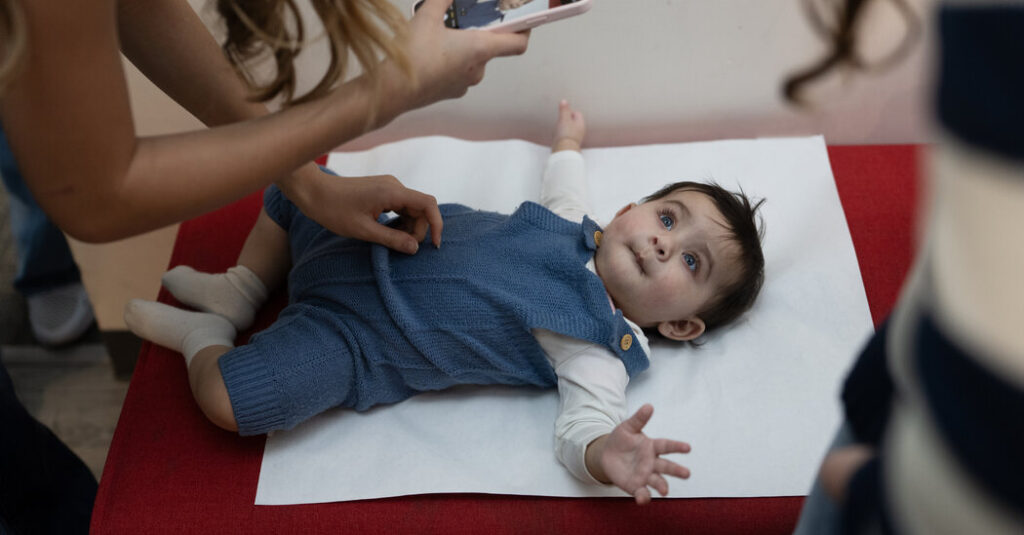
Five years ago, when the Supreme Court heard arguments over whether it should overrule Roe v. Wade, Justice Amy Coney Barrett asked a series of questions about safe haven laws, which allow parents to anonymously surrender newborn babies at hospitals or firehouses, without fear of prosecution.
Her point was that the laws eased some of the burdens of what she called “forced motherhood,” even in absence of a right to abortion. But if President Trump prevails in the birthright citizenship case, a mother contemplating taking such a step may want to consider another factor: Would her baby be a U.S. citizen?
Under Mr. Trump’s executive order, abandoned infants would not be entitled to citizenship under the 14th Amendment unless they were able to produce evidence that at least one of their biological parents was a U.S. citizen or lawful permanent resident. That would seem to leave parents seeking to invoke safe haven laws with a terrible choice, one that could leave their children stateless.
A 1952 law addressed this problem, though it is not clear whether it would survive a ruling in favor of Mr. Trump’s plan. The law conferred citizenship on children of “unknown parentage” under the age of 5 who were found in the United States unless it was proved, before they turned 21, that they had not been born in the United States.
Notably, the law did not exclude children later shown to have been born to people in the United States temporarily or unlawfully.
Adam Liptak is the chief legal affairs correspondent of The Times and the host of The Docket, a newsletter on legal developments. A graduate of Yale Law School, he practiced law for 14 years before joining The Times in 2002.
The post Under Trump’s Approach to Birthright Citizenship, ‘Foundlings’ Given Up for Adoption Could Be Stateless appeared first on New York Times.