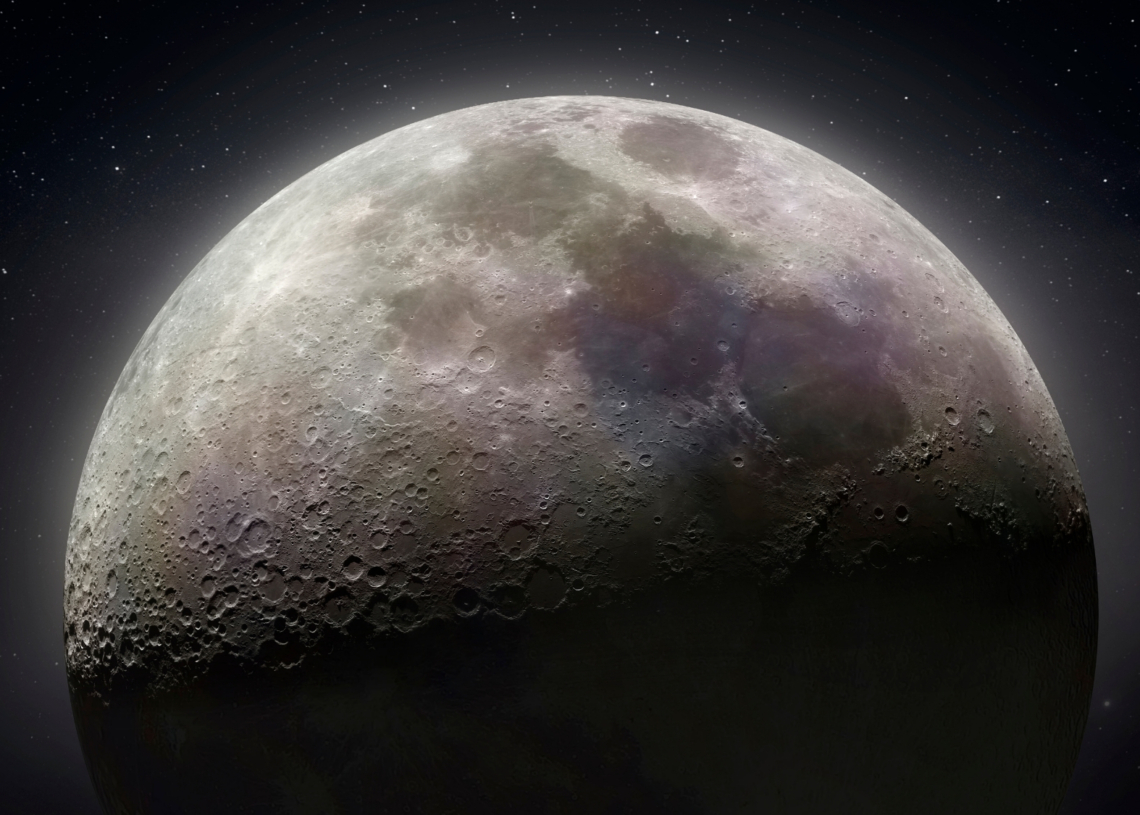
If you’ve spent more than five minutes on social media lately, especially that AI cesspool we collectively refer to as Facebook, you’ve probably seen some garbage that looks like this.
It’s a crystal-clear, iPhone shot of the moon hanging huge in the sky as it’s suddenly slammed into by a meteor that splashes across the surface like someone dropped a watermelon in a pool. People in the comments who don’t know any better go wild for it, calling it insane. They’re ooh’ing and ahh’ing at something that clearly isn’t real but is being treated with the grandeur of a monumental event.
It’s fake. Of course it’s fake. And it’s not even a convincing kind of fake if you know what the real thing looks like.
A lot of these viral clips, which you can find all over Instagram Reels, Facebook, TikTok, and YouTube Shorts, are either wholly generated by AI or show very obvious signs of digital manipulation in some form or another. There were massive shockwaves moving in front of clouds, mismatched audio, or explosions happening before the impact, all of which were pointed out by USA Today in August 2024, when a similar viral video was making the rounds, where else but on Facebook.
Facebook is the Internet equivalent of now-irrelevant grocery-store checkout-lane tabloids like Weekly World News. I can’t wait until some Singaporean Facebook group called “Cosmic Wonder” or something tries to revamp Bat Boy for a whole new generation of rubes.
USA Today writer Chris Mueller did his best to clear the air, but he made a fatal error: he brought facts to an emotional fight.
Those Viral Videos of Meteors Crashing Into the Moon Aren’t What They Seem
I’m not claiming to have a definitive argument to hurl at people who believe these videos are real, as I am just a common idiot who likes reading and writing science news. But, there is something to be said for breaking the argument down to its most basic element, which is this: if something as dramatic, as awe-inspiring, as flat-out awesome as a big, splashy, spectacular lunar meteorite impact so big that it could be visible with the naked eye from Earth, you wouldn’t be hearing about it exlusively from some random Facebook group or TikTok account. NASA and every observatory on Earth would be talking about it immediately, and you would be seeing massive headlines in legitimate news publications around the world.
What sucks is that real lunar impacts do happen, and somewhat frequently. But they don’t look like clips from a late 90s disaster movie. In real life, they kind of look like nothing at all, actually. Which probably explains why people go the opposite direction and turn a real event that unfolds unspectacularly into an enormous reality-bending spectacle. The real clips won’t generate the clicks necessary to make your content sell and turn a profit.
Astronomers using telescopes occasionally capture these impacts, and the footage is deeply underwhelming, even if you haven’t had your senses overstimulated by watching countless versions of the same fake meteorite impacts. For instance, in February 2023, a Japanese astronomer named Daichi Fujii was looking at the moon with a high-powered telescope when he just so happened to record the moment a meteorite slammed into it. Watch the footage from the embedded tweet below and stand slack-jawed and amazed at how deeply unimpressive it is:
私の観測史上最大の月面衝突閃光を捉えることができました!2023年2月23日20時14分30.8秒に出現した月面衝突閃光を、平塚の自宅から撮影した様子です(実際の速度で再生)。なんと1秒以上も光り続ける巨大閃光でした。月は大気がないため流星や火球は見られず、クレーターができる瞬間に光ります。 pic.twitter.com/Bi2JhQa9Q0
— 藤井大地 (@dfuji1) February 24, 2023
What It Really Looks Like When a Meteor Crashes Into the Moon
Did you miss it? You probably did because it’s incredibly easy to miss. There was no gigantic splash of moon dust. There was no massive crater. There was no dramatic smartphone camera zoom to capture the destruction. The impact was a tiny white blip on the lower right side of the moon, lasting maybe a second and a half before vanishing. You’ve probably held Fourth of July sparklers more spectacular than that. People have lost fingers to fireworks, more awe-inspiring in their beautiful destruction than that.
Just a tiny white flash. That’s it.
But what about the really big impacts? Surely, those are much more spectacular, right?
No. Not even close.
As NPR reported, back in September 2013, a research telescope near Seville, Spain, caught what was then considered the brightest meteorite impact on the moon ever recorded. Again, I urge you to watch the video, this time while ignoring the bright blue arrow that’s directing your vision toward the impact so you can try to find it yourself.
I bet you didn’t find it. It’s there, if you know what to look for. In this case, the giant arrow is telling you what to look for. But if you didn’t know any better, you’d think it was just a glitch, maybe a dead pixel on your screen.
Yes, it’s underwhelming, but that’s the reality of lunar meteorite impacts. What I find demoralizing is that the video was posted to YouTube 12 years ago and in that time has racked up 3.5 million views. Impressive, but absolutely demolished by the bulls—t meteorite impact video from Facebook that I posted at the beginning, which has racked up 8.2 million views in six months.
The moon has no atmosphere. There’s no fiery entry, no trailing blaze of glory until its ultimate demise on the moon’s surface. The energy converts instantly into heat and light at the moment of impact, producing a brief flash visible under only the right conditions. Even skilled observers with dedicated telescopes consider themselves extraordinarily lucky to capture even that tiny white flash.
And that’s the problem. We’ve trained ourselves to expect spectacle. Years of movies and now AI-generated slop have raised the bar so high that reality feels disappointing by comparison. So, people fill the gap with fake videos that look like how we feel it should behave, sickly crafting ourselves a bulls—t alternate reality because we refuse to accept the real one.
We can be adults about this and soberly assess that real footage of actual meteorite impacts on the moon is not terribly impressive. The fact that we can even capture this footage at all is impressive. It’s unbelievable that humans have evolved to a point where we witness these things regularly. But we can admit that it’s not as impressive as we want it to be, probably because decades of high-budget fiction have desensitized us to reality. But if everything has to look like a blockbuster to get our attention, then real scientific moments, actual rare observations captured by people who know what they’re doing, start to feel insignificant.
They’re not, though. They are incredible. If you’re one of the people who can’t tell the difference, that’s a side effect of hanging around in digital environments in which there is little that is real in the first place. We have two re-learn how to appreciate reality for what it is, rather than wishing it could be something that makes Michael Bay horny.
The post The Cold, Hard Truth About Those Viral Videos of Meteors Slamming Into the Moon appeared first on VICE.