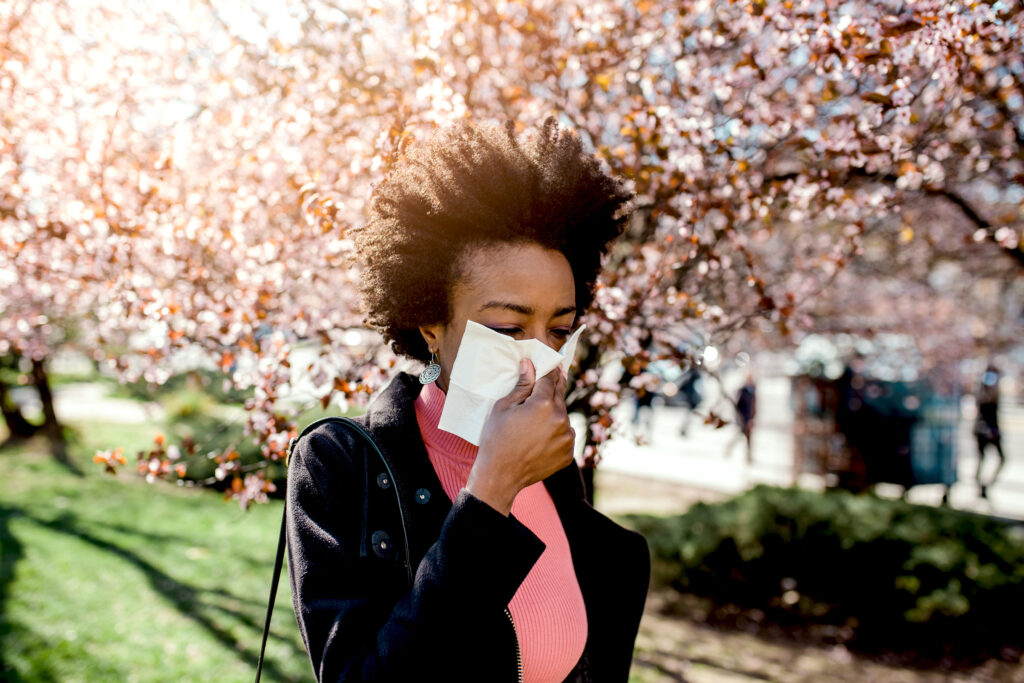
If you develop a stuffy nose, itchy eyes and scratchy throat each spring, you’re probably one of the 82 million Americans who have seasonal allergic rhinitis, also known as hay fever. Common, frustrating and sometimes even dangerous (particularly if you have asthma), spring allergies are triggered when temperatures rise and trees begin to release pollen into the air.
You may experience these symptoms earlier than ever this year: “There’s a lot of evidence that CO2 emissions and global warming may be leading to more pollen,” said Trisha Ray, clinical director in the Division of Allergy and Inflammation at Beth Israel Deaconess Medical Center, and possibly as a result of plants blooming for longer and producing more of the allergen, she explained.
Springtime allergy symptoms may either subside or keep rolling as the months go on. If you are also triggered by grass pollen, summer can be a nightmare, and fall — with ragweed and other types of allergens in the air — can be bad, too. However, taking steps to prepare now can make seasonal allergies more manageable.
“I always say it’s easier to play a good defense,” said Grace Koo, assistant professor of medicine in the Division of Allergy, Pulmonology and Critical Care Medicine at Vanderbilt University Medical Center. “It’s harder to catch up once the symptoms start rolling.”
Here, allergists share strategies to make spring allergy season less debilitating.
Stock your medicine cabinet
There are different kinds of allergy medications, including some available with a prescription, but the main over-the-counter options are oral antihistamines, nasal sprays and eye drops. “All of these medications work well together,” said Koo, so you might keep one of each in your medicine cabinet if you find they help ease your symptoms.
Oral antihistamines like cetirizine (Zyrtec), fexofenadine (Allegra) and loratadine (Claritin) block the body’s histamine response to ease symptoms such as sneezing and itching. “There are lots of thoughts about which one is better, but ultimately the one that you respond best to is what you should go for,” Koo said. Keep in mind that medications containing diphenhydramine (Benadryl), an older antihistamine, can cause drowsiness, and are not usually recommended for people over 65 because this age group may have a higher risk of adverse effects.
Nasal sprays — which can contain antihistamines (such as azelastine, brand name Astepro) or corticosteroids (fluticasone, brand name Flonase) — directly target nasal congestion and itching. Corticosteroid sprays, in particular, “are the single best drug that we have for the treatment of these types of symptoms,” said Thomas Casale, director of the Division of Allergy and Immunology at the Joy McCann Culverhouse Clinical Research Center at the University of South Florida. They’ve been shown to block allergic reactions and even ease eye symptoms, but they take around a week to start working and are most effective when you use them consistently.
Corticosteroid sprays are considered more effective, but antihistamine nasal sprays can be a good option for fast relief, since they start working quicker, said Danielle Qing, an assistant professor in the Department of Medicine, Division of General Internal Medicine at Mount Sinai.
Antihistamine eye drops and artificial tears also help moisturize and soothe itchy, watery eyes.
When taking over-the-counter medications, always follow the instructions on the package, and check with your doctor first if you take any other medications to make sure they are safe to use together.
Start medication before you have any symptoms
If your allergies are mild, you may be fine with taking medication once you notice symptoms or only on days when the pollen count is particularly high, experts said.
But anyone with significant allergies can benefit from a proactive approach, including by taking medication before allergy season begins and continuing it daily, no matter the forecast, because pollen levels can flare suddenly, said Ray, of Beth Israel Deaconess Medical Center. “It might just be that the next day, pollen counts are much higher, and then you’re miserable,” Ray said.
With corticosteroid nasal sprays in particular, “you really want to start using them consistently right now and continuing through the end of the problem season,” Ray said. That’s because it can take about seven to 10 days of regular use for these medications to start working.
Control the air in your home
Once pollen counts start to rise in your area, take measures to keep allergens outside “so you’ll be able to have relief on the inside,” Qing said. The best way to do this is to keep your windows closed and run fans or an air conditioner instead to circulate the air and keep cool.
Using an air purifier in your bedroom and any other room you spend a lot of time in can also drastically reduce the number of allergens circulating. Air filtration devices that have HEPA (high efficiency particulate air) filters may remove at least 99.97 percent of pollen, dust, mold and other airborne particles in your home at least 0.3 microns in size, according to the Environmental Protection Agency, so they can make a difference in indoor air quality.
If you already own a purifier, now’s the time to replace the filter so that you’re starting allergy season with a fresh one. Your product’s manual can tell you how frequently you should swap out the filter moving forward.
Establish a ‘coming back inside’ routine
All that pollen swirling around “might get sticky and attached to you,” said Scott Feldman, an associate professor of clinical medicine at the Perelman School of Medicine at University of Pennsylvania, especially when you spend long periods of time outdoors. Taking a shower, washing your face and putting on clean clothes helps remove pollen so that it doesn’t follow you inside, experts said.
Using a saline sinus rinse, such as a neti pot, can also be helpful “to flush out all the things that you were breathing into your nose,” said Koo, of Vanderbilt. Always use store-bought water that says “sterile” or “distilled” on the label, or tap water that’s been boiled and cooled, to avoid the risk of introducing dangerous pathogens into your sinuses.
Allergens can make their way indoors on other items, too. “Don’t hang your clothes outside during peak pollen periods,” said Casale, and wash pillows, blankets, rugs, stuffed animals and curtains periodically throughout the season, said Feldman, of the University of Pennsylvania, because allergens can linger on these fabrics, too.
Strategically plan your outside time
It’s not realistic to stay indoors all allergy season. But limiting outdoor exposure when your triggers are rampant may reduce your chances of having a strong allergic response, experts said.
Pollen can circulate at any time, but it may be lower between 4 a.m. and noon during spring and summer, while counts typically spike in the afternoon and evening, a 2022 study of hourly pollen levels in Atlanta found. So, if you want to exercise or do other activities outside, but are allergic to grass or tree pollen, do it early in the morning in spring and summer, Casale said. (If you’re susceptible to ragweed, you may want to adjust your schedule again in late summer and autumn, because those levels tend to be highest in the morning.)
In general, cloudy, humid days with low wind are better times to be outdoors if you have seasonal allergies, because in those conditions, pollen doesn’t spread as much, Casale said.
Ask about allergy immunotherapy
If seasonal allergies interfere with your day-to-day life, and you continue to experience symptoms even after following the strategies laid out here, it’s worth seeing an allergist for a formal diagnosis (if you don’t have one already). Hundreds of substances can trigger an allergic response, so even thought you might be pretty sure you have a tree pollen allergy, for example, you could also have year-round allergies to dust, mold or pet dander that need to be managed.
An allergist can determine if you might benefit from prescription medication or subcutaneous immunotherapy, often referred to as allergy shots. These injections target the immune system to desensitize it to specific allergens and can also help prevent allergies from developing in the future.
There’s also a similar, newer form of immunotherapy called sublingual immunotherapy, which can come as a tablet or drops. The former is approved by the Food and Drug Administration to treat some grass pollen, ragweed and dust mite allergies, while the latter is not FDA-approved but might be used off-label.
“The shots work extremely, extremely well, but they’re a very big time commitment,” Ray said. Most people attend weekly in-office appointments for six or seven months, then switch to monthly maintenance. “It takes, I would say, a solid year to see a benefit,” she added. But those benefits can be significant: Subcutaneous immunotherapy “is the closest thing we have to a cure for allergies,” Koo said.
Even if allergy shots aren’t right for you, it’s worth having a conversation with a professional to zero in on the best strategies to manage your triggers. Seasonal allergies don’t need to be severe to affect your quality of life, Qing said. “It’s just overall not a fun condition,” she said, “and it can be pretty debilitating sometimes.” Implementing the above tactics ASAP can be the difference between having to deal with symptoms all season long and enjoying the warmer weather relatively sniffle-free.
The post 6 ways to make allergy season less miserable appeared first on Washington Post.