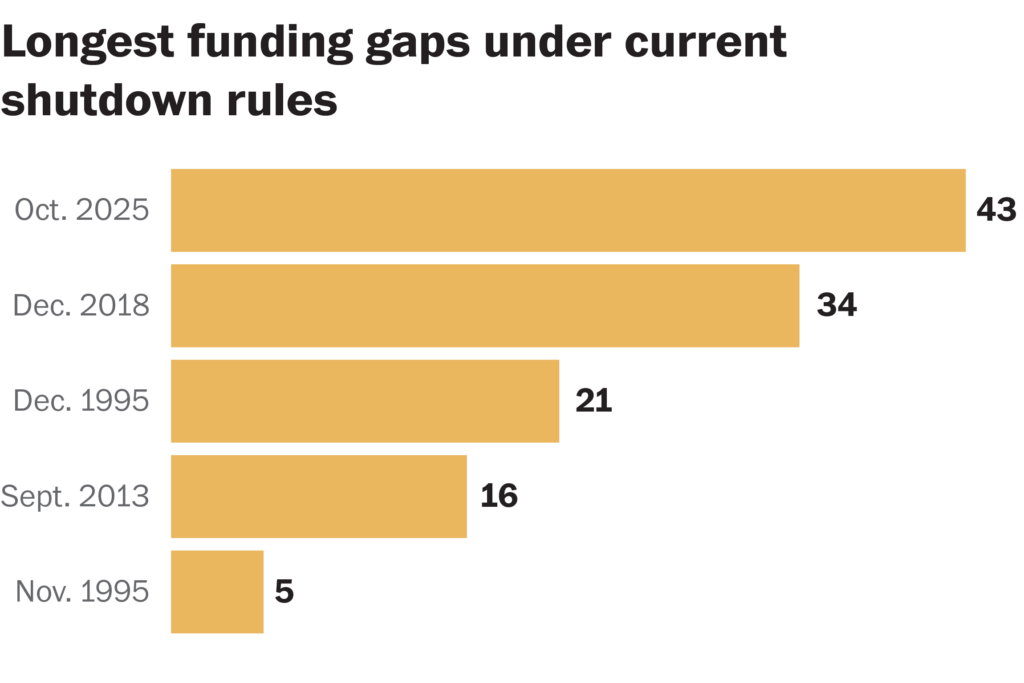
The partial shutdown of the Department of Homeland Security that began on Feb. 14 is now the longest in U.S. history.
It just doesn’t feel that way.
The public has mostly experienced the 46-day partial shutdown through hours-long TSA lines at airports but most of the agency’s operations have continued, with many employees forced to work without pay. In comparison, previous full-government shutdowns interrupted food aid, closed bathrooms at national parks, delayed airline passengers and stalled small business and farm loans.
The White House, Democrats and congressional Republicans have remained at an impasse for weeks while the agency has continued to operate without new funding — due in part to DHS money set aside in the GOP tax and spending law passed last year.
This shutdown revolves around congressional Democrats’ demandsfor accountability measures for Immigration and Customs Enforcement and Customs and Border Protection after federal agents killed two U.S. citizens in Minneapolis in January.
Democrats have sought new requirements that immigration agents don’t wear masks, adhere to an enforceable code of conduct that bars excessive use of force, get judicial warrants before entering homes and workplaces, and end raids at sensitive sites like schools and churches.
The White House has offered some concessions, but Democrats have said they do not go far enough. In lieu of an agreement, the Senate voted last week to fund DHS except for the part of Immigration and Customs Enforcement charged with arresting and deporting undocumented immigrants. House Republicans rejected that plan, passing an eight-week funding extension for DHS that GOP leaders argued could buy more time for negotiations. Senate Democrats have said that option is “dead on arrival” — leaving congressional negotiators without a clear path forward.
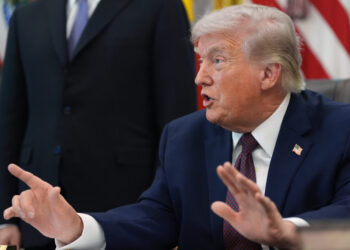
In the meantime, President Donald Trump has signed an executive order to pay TSA agents using funding from last year’s GOP tax and spending law.
This DHS’s partial closure follows a more widely felt full government shutdown that just ended in November.
While government shutdowns are unusual, they typically stretch on longer when they do happen, as parties dig in.
The guidelines that a funding gap should lead to a government shutdown emerged in the early 1980s, and short federal funding gaps were common in that decade.
The shortest ever was in 2018 — funding lapsed for several hours when Sen. Rand Paul (R-Kentucky) briefly filibustered a two-year bipartisan spending bill.
Some shutdowns were resolved in a matter of days as negotiators worked out a deal to reopen the government. Other funding gaps lasted such a short time, such as overnight or on weekends, that government agencies did not fully shut down.
Kevin Schaul and Kevin Uhrmacher contributed to this report.
The post The longest (partial) government shutdown in U.S. history appeared first on Washington Post.