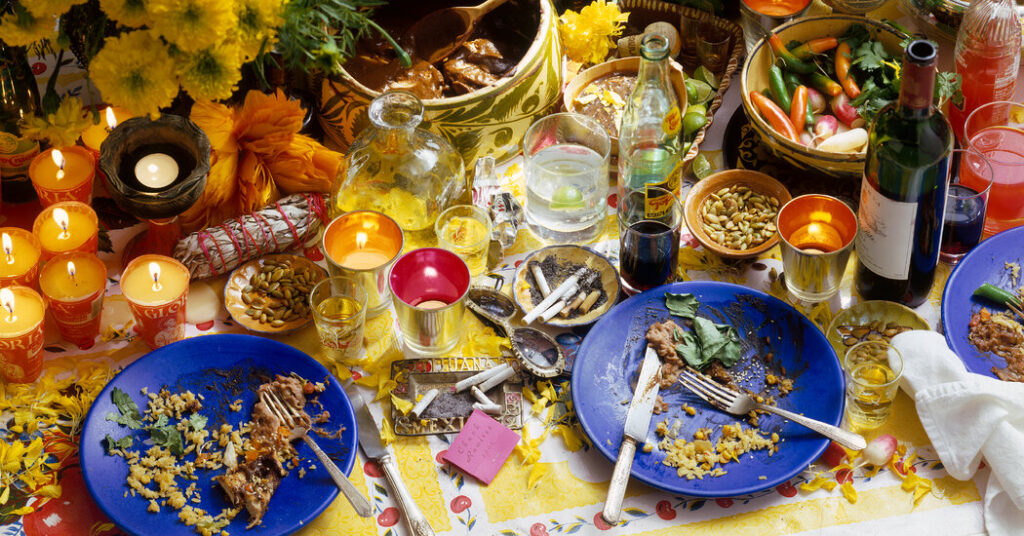
For the past several years, my work has taken me across the nation — into towns and cities, kitchens and community centers, where generations of Indigenous, Black and immigrant Americans shared their family recipes with me. I was warmly given a front-row seat to learn about the cooking that shapes American cuisine and culture.
I encountered not a single story of America, but many, all evolving as newcomers to our country inherited the practices of those who came before — and brought new ones to add to the national treasure.
Underpinning so many of these meals and immigrant stories — including my own family’s — was a centuries-old tradition that children born here are Americans. That guarantee is called birthright citizenship, and it’s been enshrined in our Constitution since 1868.
Birthright citizenship provides certainty, and that certainty is what propels people to invest in their communities, to innovate and ultimately to create traditions that become unmistakably American.
On Wednesday, the Supreme Court will hear a case challenging President Trump’s executive order seeking to end birthright citizenship. At stake is more than a legal case — birthright citizenship gets at the heart of American values and culture.
The Trump administration is arguing that not all children born in the United States should be citizens. Under the president’s executive order, babies born on American soil after Feb. 19, 2025, would be denied citizenship at birth if neither parent is a U.S. citizen or has permanent immigration status. The administration has attempted to justify this order by framing birthright citizenship as a legal loophole, rather than what it is: a constitutional safeguard that has shaped America for generations.
The principle predates the Constitution. Our colonial history brought the tradition over from the British, who recognized that birth on a nation’s soil carried citizenship. Later, after the shameful Dred Scott decision of 1857 denied citizenship to Black Americans, the nation fought a Civil War and corrected that injustice for all future Americans with the 14th Amendment. Designed to reflect America’s diverse identity, it codified birthright citizenship and placed citizenship beyond the whims of any one politician.
The law on birthright citizenship is clear, and a majority of Americans support it. But Mr. Trump refuses to accept limits on his ethnic gatekeeping and his attempts to bend the Constitution to his will. And he fails to recognize that birthright citizenship is American culture.
Our country’s cuisine shows it. I regularly work with chefs who blend their ancestral recipes with local staples to bring us meals that forge a culture for all of us. In the United States, we savor flavors from around the world precisely because birthright citizenship has been the law of the land for generations. I’ve visited the Nigerian American community in Houston, where the suya spice brought me back to the masala of my own childhood. I’ve eaten the cuisine of Cambodian refugees, as well as their children and grandchildren, in Lowell, Mass. And I’ve slurped delicious ceviche with Peruvian chefs in hipster Brooklyn.
America is interesting and strong because of the contributions of immigrants and their children, mixing with the ingredients of other cultures and evolving over time, creating both a blend of the world’s cuisines and our own unique food culture all at once.
Pizzerias, Turkish coffee shops, Chinese food, taco trucks — every one of us has directly engaged with the beauty of what immigrants bring to our country and the foods their children turn into the American staples we love.
The guarantee of citizenship is the fundamental American promise. If you’re born here, you belong here. And if you feel that you belong here, you are more motivated to contribute to our shared culture here. I struggle to see how tearing this rich tapestry apart would benefit Americans in any way.
If the Supreme Court doesn’t block this executive order, it would create a mess of legal and logistical consequences. Confusion would replace certainty, opening the door to discrimination and a patchwork of rules governing noncitizens’ access to our society. Hundreds of thousands of children born in the United States would be thrown into legal limbo every year. And the harm would compound. Ending birthright citizenship would create a permanent underclass of people born in the country but cut off from the rights that citizenship provides.
I never had to wonder whether my daughter would be recognized as American when she was born. I was brought to the United States when I was 4. I went to school here, worked here, paid taxes here, held my hand on my heart every day and pledged allegiance to our country’s flag. In my 20s, I chose to naturalize so I could vote and fully participate in our democracy. In other words, my family did not need birthright citizenship. Either way, my daughter’s birth on this soil completed a generational path: building a family that fully contributes to this country’s shared promise. It also meant her roots were firmly planted and never in question.
The path to citizenship of any kind is long, expensive and confusing, but it’s a path so many people are willing to take to build their lives here.
I have sat at dining room tables of grandparents, parents, aunties and uncles who share their meals, traditions and rituals. With them are the stories of their journeys and gratitude to this country for the lives their children have forged as birthright citizens — and their many powerful contributions that serve our culture.
America’s strength comes from the diversity that we have welcomed. The Supreme Court must uphold what the Constitution guarantees. All of us must stand up for the values behind birthright citizenship — it is at the heart of what actually makes America great.
Padma Lakshmi is the creator and host of “America’s Culinary Cup” and “Taste the Nation,” and the author of the cookbook and memoir “Padma’s All American.” She serves as an A.C.L.U. artist ambassador for immigrants’ rights and women’s rights.
The Times is committed to publishing a diversity of letters to the editor. We’d like to hear what you think about this or any of our articles. Here are some tips. And here’s our email: [email protected].
Follow the New York Times Opinion section on Facebook, Instagram, TikTok, Bluesky, WhatsApp and Threads.
The post Padma Lakshmi: The Decision That Would Create a Permanent American Underclass appeared first on New York Times.