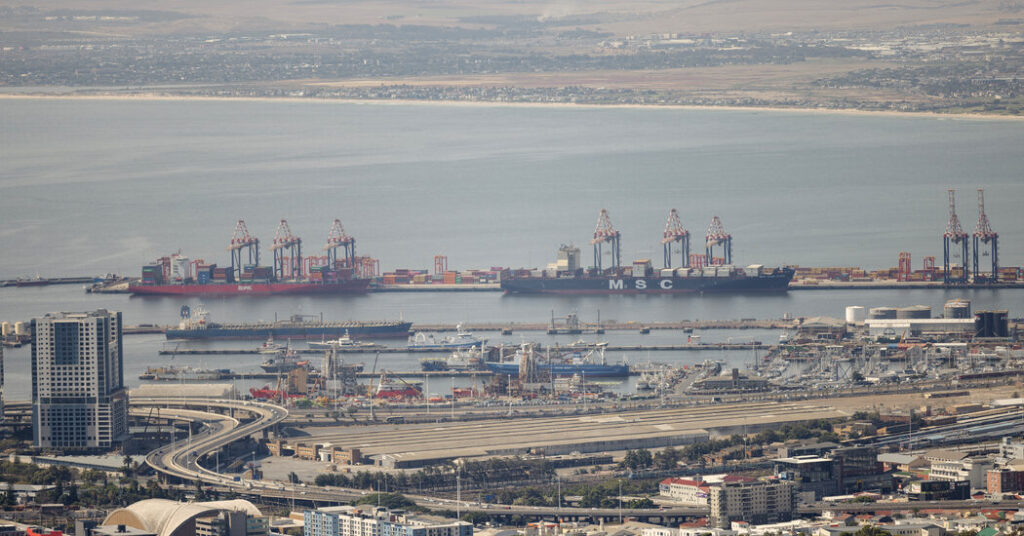
As the world’s largest shipping operators suspend Gulf transit amid the U.S.-Israeli war in Iran, many are redirecting vessels around South Africa’s Cape of Good Hope.
Companies like Maersk, CMA CGM and Hapag-Lloyd have all diverted vessels from the region’s high-risk areas, such as the Strait of Hormuz and the Red Sea, increasing traffic off the South African coastline.
The Strait of Hormuz has been closed since late February, when Washington and Israel launched their attacks on Tehran, which said it closed the vital waterway in response. The Strait of Hormuz usually transports about 20 percent of the world’s oil supply.
The Houthis, an Iranian-backed militia in Yemen, attacked Israel over the weekend, widening the war. They had previously disrupted global shipping in the Red Sea, attacking vessels and crew members.
As global shipping companies seek safer routes, Brian Ingpen, a maritime economist based in Cape Town, estimates that traffic through Southern Africa will almost double.
“It’s really the Houthi rebel situation that has, again, forced a lot of shipowners to redirect to the Cape, and if traffic builds up like it did a year ago, as many as 150 ships a day, including regular traffic, should now be passing around the Cape,” he said, referring to the strain on global shipping caused by Washington’s bombing of Iran last June and the war in Gaza before the cease fire.
In some cases, rerouting vessels around the Cape of Good Hope has already raised shipping costs 30 percent to 70 percent, according to some estimates. Refueling in Algo Bay, off South Africa’s east coast, is ideal for rerouted shipping as it avoids port fees on the extended journey.
But energy is not the sole industry in South Africa benefiting from the increased maritime traffic. Offshore services are the biggest beneficiaries of increased shipping,Mr. Ingpen said.
“They provide critical support, crew changes, urgent spares and supplies delivery, medical evacuation allowing vessels to avoid unnecessary port calls and reducing downtime,” he said.
As Gulf disruptions persist, shipping lines are relying more on the southern passage. But Mr. Ingpen said this is not new, but rather a return to historical patterns.
“The Cape route has always been a critical shipping artery,” he said.
The post South Africa Sees Maritime Traffic Surge Amid Iran War appeared first on New York Times.