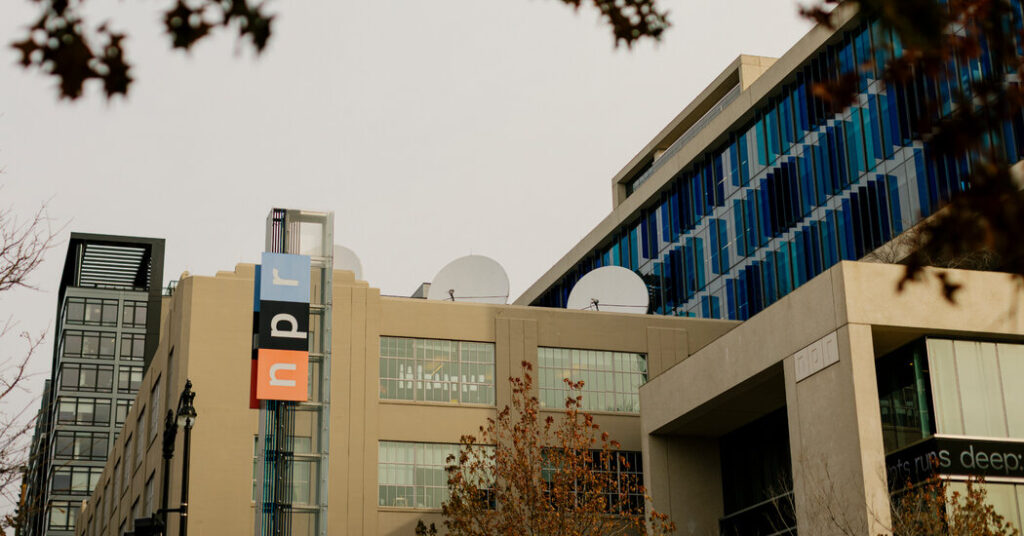
A federal judge ruled on Tuesday that President Trump’s executive order barring the federal funding of NPR and PBS violated the First Amendment.
Randolph Moss, a judge in the U.S. District Court for the District of Columbia, said in his ruling that Mr. Trump’s order, signed last May, was unlawful because it instructed federal agencies to refrain from funding NPR and PBS because the president believed their news coverage had a liberal viewpoint.
“The message is clear: NPR and PBS need not apply for any federal benefit because the President disapproves of their ‘left-wing’ coverage of the news,” Judge Moss wrote. But the First Amendment, he said, “does not tolerate viewpoint discrimination and retaliation of this type.”
The ruling will likely have minimal effect on the federal funding of public media. Two months after the executive order, Congress voted to claw back roughly $500 million in annual funding for the Corporation for Public Broadcasting, the organization that distributes federal money to NPR and PBS. The Corporation for Public Broadcasting has since shut down, and public radio and TV stations across the country have sought alternate forms of revenue.
The White House did not immediately respond for comment. “Today’s ruling is a decisive affirmation of the rights of a free and independent press,” Katherine Maher, NPR’s chief executive, said in a statement. PBS said in a statement that the judge’s ruling affirmed that Mr. Trump’s executive order imposed “textbook unconstitutional viewpoint discrimination.”
NPR’s lawsuit against the executive order upset some members of the public media community because it included the Corporation for Public Broadcasting as a defendant. NPR added the corporation as a defendant because Mr. Trump’s order directed it to deny NPR funding. NPR and the Corporation for Public Broadcasting eventually settled that dispute.
In his opinion, Judge Moss wrote that the executive order and other public statements from the White House criticizing NPR reporting, including about Russia’s attempt to interfere in the 2016 U.S. presidential election, “targets a disfavored viewpoint.”
“It is difficult to conceive of clearer evidence that a government action is targeted at viewpoints that the president does not like and seeks to squelch,” Judge Moss wrote.
Benjamin Mullin reports for The Times on the major companies behind news and entertainment. Contact him securely on Signal at +1 530-961-3223 or at [email protected].
The post Trump’s Executive Order on NPR and PBS Is Unconstitutional, Judge Rules appeared first on New York Times.