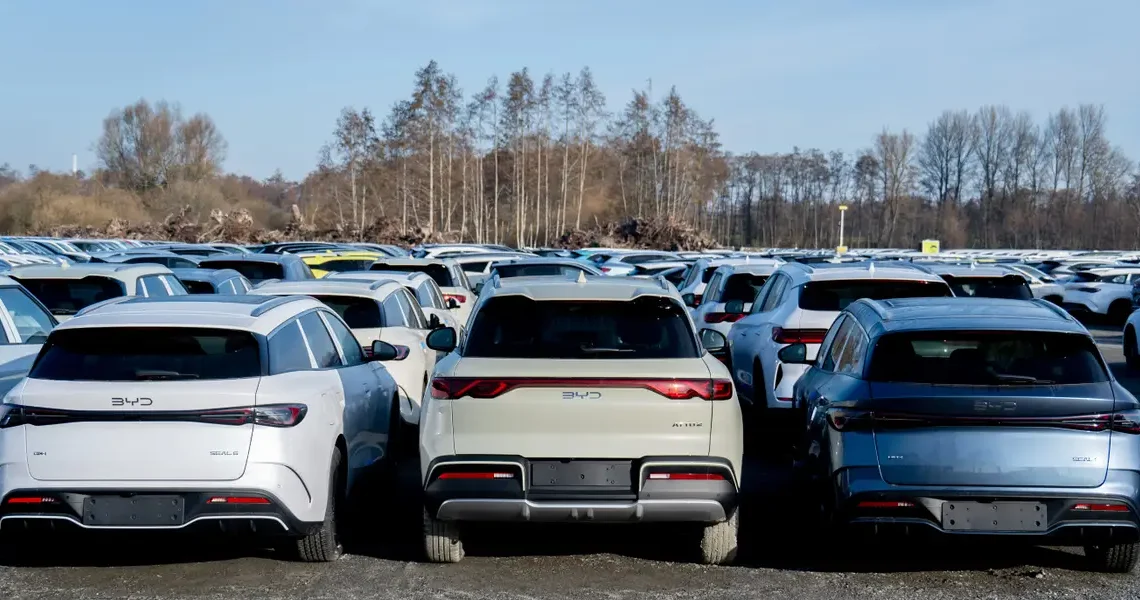
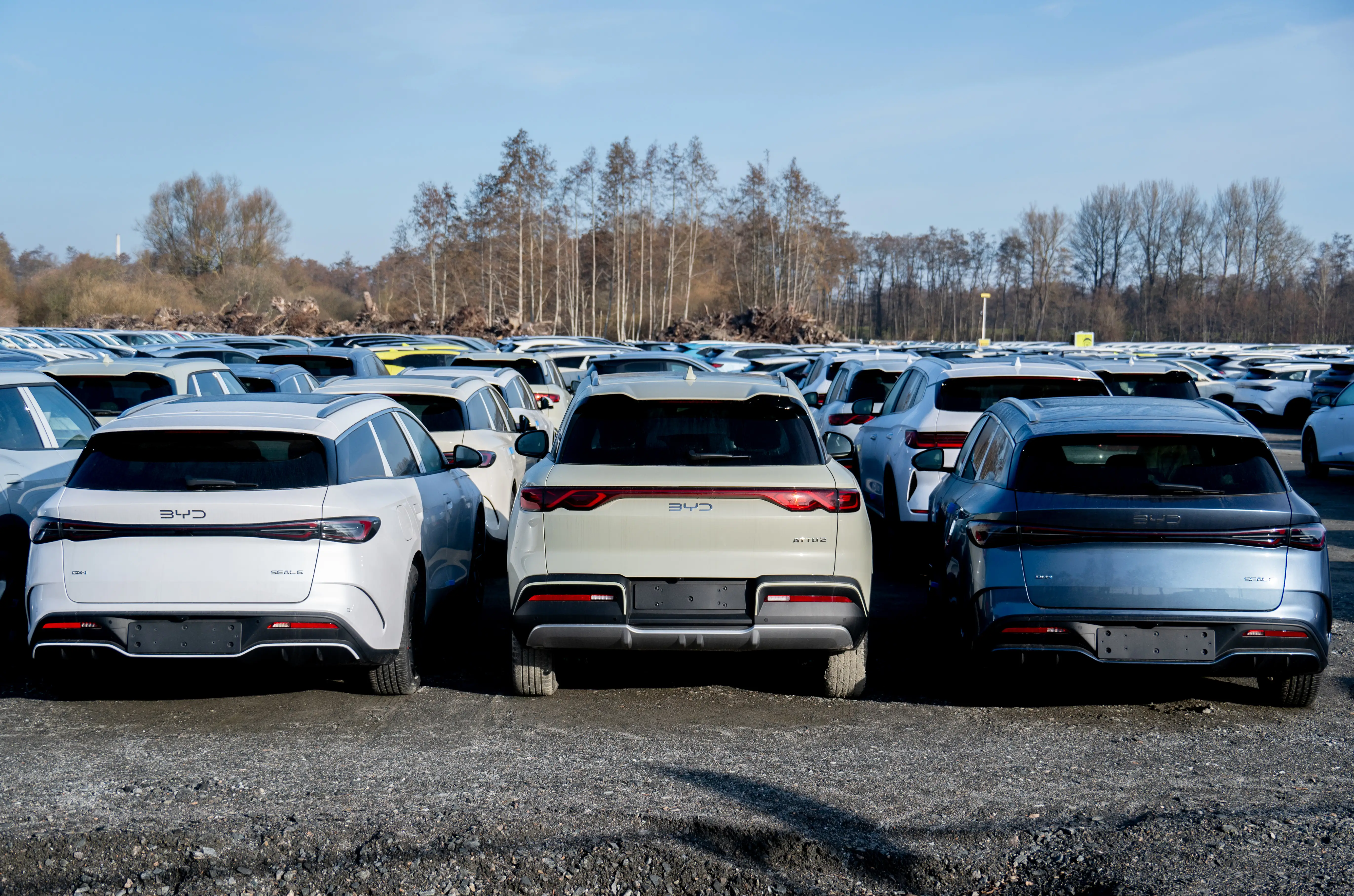
BYD’s global expansion was already accelerating. Now, it’s getting a new shot in the arm: high global gas prices.
Executives at the Chinese automaker, which overtook Tesla as the world’s most popular EV seller in 2025, said on Monday it is “highly confident” it will hit or exceed its target of 1.5 million overseas vehicle sales. Insiders also told Reuters that foreign markets could eventually make up half of BYD’s car business.
It’s a sign of how quickly BYD is moving from a domestic giant to a global contender — and squeezing legacy automakers on price and technology in the process.
“A lot of automakers are really worried for good reasons,” Adam Bernard, founder of AutoPerspectives and a former GM executive, told Business Insider. “BYD is really becoming a full-line automaker. The only thing they don’t quite have is the complete global presence yet — but that’s just a matter of time.”
Simultaneously, global oil prices have been rising since the war in Iran started. Brent crude prices, the global benchmark for the oil market, have floated above $100 a barrel for the past week. They’ve risen more then 40% in the past month.
That’s led to higher prices at gas pumps worldwide, with several nations incentivizing reduced fuel consumption. Many world leaders are asking people to work remotely or use temporarily free public transit.
A wide-ranging lineup goes global
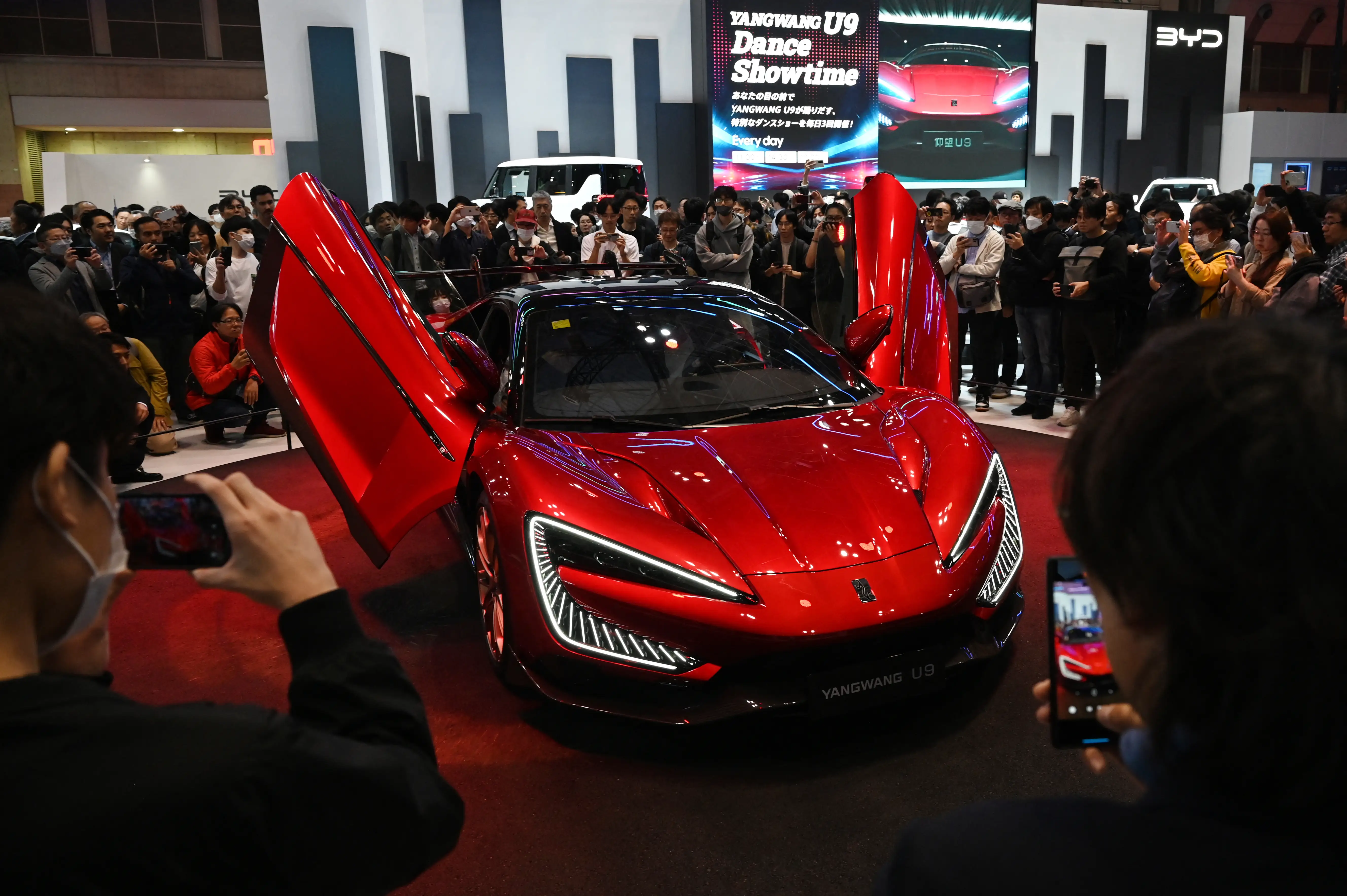
BYD (which stands for Build Your Dreams) has an expansive lineup of vehicles. Products include everything from the low-cost Seagull hatchback and the eight-passenger Xia luxury van to the world’s second-fastest sports car, the Yangwang U9 Xtreme.
The lineup includes both plug-in hybrids and full electric vehicles.
Now, those cars are increasingly reaching dealerships in South and Central America, Europe, and Australia. They’re also about to begin sales in Canada.
BYD’s concurrent expansion into these markets is showing signs of demand outstripping supply. Dozens of X users in Australia have reported waiting up to a week to even test-drive some models.
Test Drives for BYD’s in Australia are booked out for over a week… pic.twitter.com/tA9noUTDD1
— Mick Liubinskas (@liubinskas) March 26, 2026
The average price for a Toyota, Ford, or Hyundai in Australia ranges from AU$44,000 to AU$62,000, according to AussieMotor. Business Insider found offers to order a BYD Atto 1 hatchback for less than AU$25,000.
American consumers, however, remain largely off-limits. Chinese EVs face steep tariffs and regulatory barriers, including restrictions on software updates, effectively blocking large-scale entry.
China’s tech is advancing. Executives are worried.
Meanwhile, BYD’s technology keeps racing ahead of what legacy automakers offer. This month, the company revealed its new Blade 2.0 battery, which BYD said can charge from 10% to 70% in 5 minutes and deliver enough juice to power a car for more than 620 miles.
Those charging speeds are three times as fast as any EV on the US market.
And BYD isn’t alone. Several Chinese automakers — including Xiaomi, NIO, Li Auto, and XPeng — feature similar pricing and competitive battery technology.
Legacy automaker executives have taken note. In June, Jim Farley, Ford’s CEO, said Chinese EVs were “far superior” to US EV options. He repeated the sentiment in November, saying he was “humbled” after his engineers analyzed how Chinese competitors build their EVs.
“Unless things change, we will not survive,” Toyota’s current CEO, Koji Sato, said during a recent conference with auto parts suppliers, according to Automotive News. “Right now, we in the automotive industry are battling for our very survival.”
Not everything is rosy for the Chinese EV brand, Bernard of AutoPerspectives told Business Insider. He said the Chinese automakers still face challenges with long-term profitability, shifting government incentives (even in China), and potential backlash among US drivers.
Plus, constantly fluctuating gas prices are infrequently a stable driver for EV demand.
“It can become short attention span theater,” he said. “Gas prices move, and behavior follows — but not always for long.”
BYD didn’t immediately respond to a request for comment from Business Insider.
Read the original article on Business Insider
The post BYD’s global push is accelerating just as expensive gas jolts EV demand appeared first on Business Insider.