FLORIDA — The husband cried after turning over the stick from the pregnancy test, showing his wife was pregnant with their second child after three years of trying. The couple hugged, burying their faces in each other’s shoulders.
The mother was buoyant in that moment, which she recorded. She would finally get to use the girl’s name she had picked out nearly two decades earlier, when she was 17.
Two weeks later on Jan. 20, 2025, that joy turned to dread. The mother watched in shock as a TV newscaster announced that President Donald Trump, in one of the first acts of his second term, had signed an executive order denying citizenship to any child born to parents who lacked permanent immigration status.
Suddenly, the woman and thousands of immigrants like her faced a prospect largely unheard of in a nation that had long granted citizenship to virtually every child born on its soil: Her daughter might not have a country to call home.
On Wednesday, the Supreme Court will hear arguments about whether Trump’s order violates the Constitution. Many legal scholars believe it does, but this court has shown a willingness to upend expectation and precedent.
The woman — who spoke on the condition of anonymity because she fears her immigration status could be jeopardized by speaking out — was brought to the United States as a child by her mother, who was fleeing persecution in Colombia. Now 35, she eventually obtained temporary immigration status as one of the “dreamers” who came to the United States as kids.
But she knew all too well what not being a citizen meant. She had watched her mother pray to be invisible to authorities. She had suffered through her family’s financial struggles. She was forced to put on hold a legal career she had dreamed about since childhood.
In the shower that morning, she cried as she thought about her daughter.
“I remember thinking [she’s] going to go through the same thing that I went through,” the woman said.
Born in the U.S.A., but not American
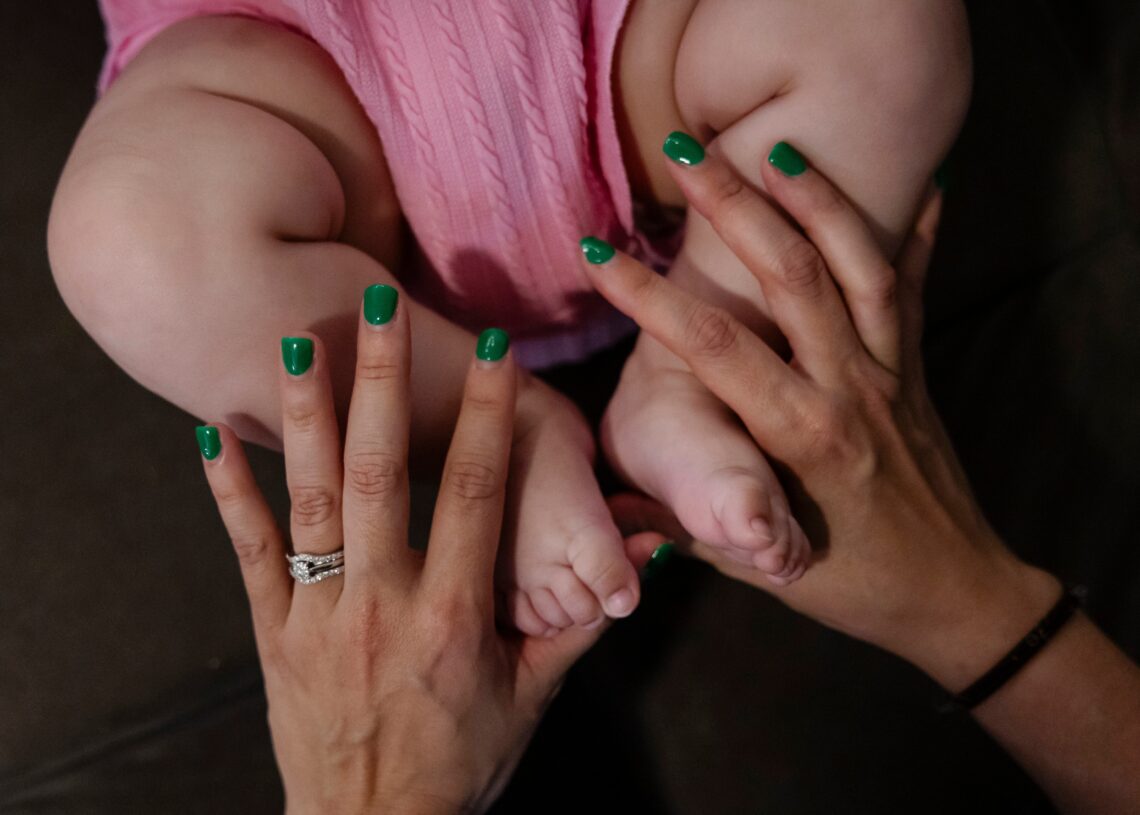
On a recent Saturday morning, the woman fed her now 5-month-old daughter a bottle of formula. She cradled the girl, who wore a bright pink dress, as she sucked happily. Nearby, the girl’s 4-year-old brother doodled in a coloring book on the floor. The woman’s husband breezed in with a pink box of Argentine pastries.
The tranquil domestic scene belied the fear and uncertainty hanging over the family. Trump’s executive order, and the Supreme Court case on its constitutionality, have the potential to upend who is considered American in ways not seen for more than 150 years.
Birthright citizenship was enshrined in the Constitution in 1868 by the 14th Amendment, which guarantees citizenship to “all persons born or naturalized in the United States.” The Supreme Court upheld that principle in a landmark 1898 case.
A decision ratifying Trump’s order could have far-reaching effects for the woman’s family, other immigrants and the nation as a whole. A ruling is expected by June or July.
“It would be an earthquake in American life, with radical consequences that we can’t completely predict,” said Cecillia Wang, national legal director for the American Civil Liberties Union, who will argue to uphold birthright citizenship before the high court.
Trump’s order, which has been temporarily blocked, is a centerpiece of his anti-immigration agenda. It denies citizenship to children born to migrants in the United States illegally, as well as to those on temporary visas for work, study, travel or humanitarian reasons.
U.S. Solicitor General D. John Sauer argues in his brief that birthright citizenship is a powerful magnet for illegal migration. Some migrants who take advantage of it commit crimes, strain the nation’s finances and undermine the rule of law, he adds.
Sauer also asserts that the 14th Amendment, which was passed in the wake of the Civil War, was only intended to extend citizenship to the formerly enslaved and their children. “The erroneous extension of birthright citizenship to the children of illegal aliens has caused substantial harm to the United States,” Sauer wrote.
Supporters of birthright citizenship say its demise would tear at the economic and social fabric of the country and undermine an ideal that has made the United States a beacon for persecuted and impoverished migrants for generations.
Roughly 250,000 children would be born without citizenship in the United States each year if Trump’s order is upheld, or about 5 million by 2045, according to a friend of the court brief in the case filed by a group of 141 professors.
They argue that ending birthright citizenship would create a swath of society with limited access to education, health care and social safety net programs and would damage the American economy.
“The Order would institutionalize a massive, undocumented underclass, prevent millions of U.S.-born children from fully participating in society, and undermine American growth for generations to come,” they say.
A flight from Colombia
The mother has few memories of Colombia, but one is vivid: arriving home one day in the late 1990s to find her family’s apartment ransacked.
She said leftist guerrillas fighting a long-running conflict against the government were trying to extort her family because they owned businesses. She said they often threatened to hurt her and her sister, who were both under 10 years old.
“We can’t be here any longer,” the woman recalled her mother telling her one day.
In 2000, the matriarch and the two girls came to the United States to seek political asylum. Years of struggle followed, their savings running out as they awaited action on their asylum application.
The matriarch of the family cleaned cheap hotels and movie theaters, taking shifts in the middle of the night. Her daughters were forced to help out to make ends meet. Sometimes the girls would collapse in exhaustion on hotel beds or theater seats as their mother continued to clean toward daybreak.
“I won’t drop a single piece of popcorn in a movie theater,” the mother of the 5-month-old said. “I know there is going to be someone coming here and work from midnight until 6 in the morning to clean. It’s horrible. We did that.”
Navigating the immigration system was no easier.
After missing a hearing, the family’s asylum claim was denied and they were ordered deported, about four years after they arrived in the United States.
The family eventually discovered that immigration officials had served notice of the hearing to the wrong address. They hired an attorney and got the deportation order reversed, but not before spending nearly a decade in the shadows.
The family would begin each car trip with a prayer to avoid authorities: “God, make us invisible.”
In 2012, the woman received protection under Deferred Action for Childhood Arrivals, the Obama-era program that offered deportation protection for 500,000 eligible young people brought to the country as children.
She felt lucky to win a reprieve, but its limits soon became apparent. As she approached graduation from high school, she told her mother she wanted to be an attorney. She was told it wasn’t possible; at the time, DACA recipients didn’t qualify for in-state tuition in Florida, so the cost of going to college and law school was beyond the family’s means.
“It was very hard,” the woman said. “Everyone says you can dream and get everything you want, especially in this country. I always heard my mom say this is the land of opportunity. I always thought that I can do anything here.”
More questions than answers
The mother found work as a paralegal, and in 2019, she married a man from her church. They had their son two years later.
The woman said she was initially a supporter of Trump during his 2024 run for president. As an evangelical, she liked Trump’s conservative agenda. She knew he was advocating for an end to birthright citizenship, but she never thought it would actually happen.
She was stunned and angry when the order came down.
Conchita Cruz, co-executive director of the Asylum Seeker Advocacy Project (ASAP), said the family’s situation is emblematic of the complications people will face if Trump’s order is upheld: Their son is a U.S. citizen, but his sister may not be.
“There are many aspects of U.S. law and life that are predicated on birthright citizenship,” Cruz said. “Limiting birthright citizenship in any way means a lot of those foundational things in the law and U.S. life will start to come undone.”
If Trump’s order is found constitutional, many parents would probably seek citizenship for their children from their native countries — but some children would probably be rendered stateless, Cruz said. She pointed to Venezuela as an example of a catch-22.
Venezuela has no consular services in the United States, so parents would not be able to begin the citizenship process here. If asylum seekers traveled home, many would face persecution and the prospect of their asylum application being dropped because they had left the United States.
Cruz said many of the migrants ASAP represents have other fears: contending with immigration authorities outside hospitals as they give birth, having their children taken away, seeing their kids even more susceptible to deportation than they are today.
The mother turns over such worries every day.
She said she is always the one her family turns to solve problems, but figuring out her daughter’s future is not one she can bring herself to confront. When her husband raises the possibility of returning to Colombia or Argentina, his home country, she said she shuts down.
Colombia has a pathway to citizenship for children born to citizens abroad, but she cannot imagine returning to a place where her life was threatened. Her husband fled Argentina to escape economic turmoil, so he is worried about providing for the family there.
But it is not just fear that drives her. She attended middle school in the United States, as well as high school. She went to prom. Her son is a U.S. citizen. She sat at her kitchen table surrounded by family photos of her life here.
She still dreams of attending law school one day.
“This is all I know,” she said. “I came here when I was 8 years old. I don’t remember anything about my home country. I can’t imagine putting my kids in the same situation, that they have to go somewhere they don’t even know.”
The post Supreme Court could strip citizenship of Florida baby, born to a ‘dreamer’ appeared first on Washington Post.