A global ban on taxing digital streaming and downloads across national borders expired on Monday, after members of the World Trade Organization concluded an annual meeting without agreeing to extend it.
U.S. representatives had pushed to extend the ban, which prevents the more than 160 members of the W.T.O. from issuing duties related to e-commerce. But Brazil and Turkey blocked a motion for a longer extension.
U.S. representatives excoriated the outcome as further proof of the organization’s irrelevance. The W.T.O. provides a forum for trade negotiations and setting rules for global trade. But U.S. officials have long criticized the group for its failure to police unfair trade practices by countries like China. Over the past year, the Trump administration has further abandoned W.T.O. by issuing its own global framework of tariffs instead.
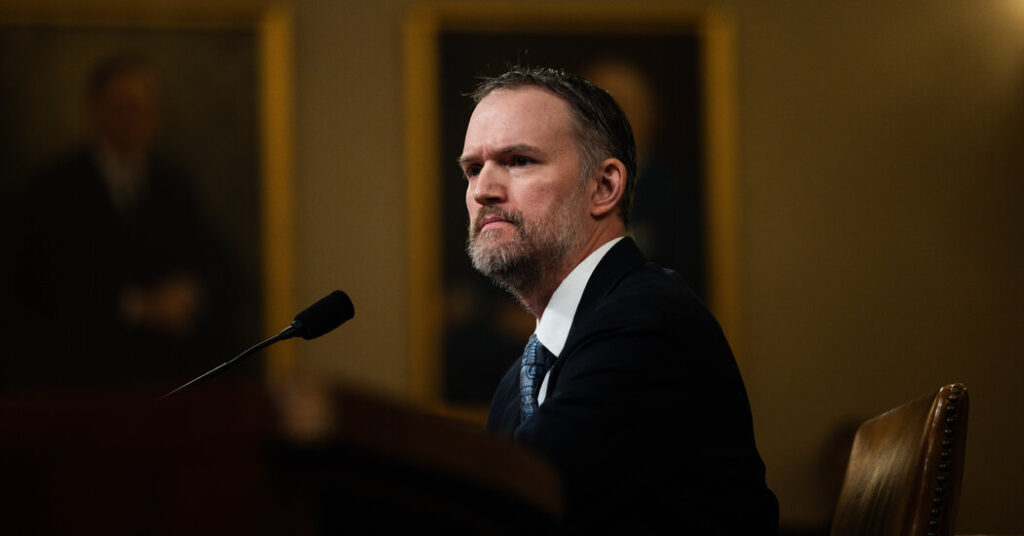
Jamieson Greer, the U.S. trade representative, who attended the conference, said on Monday that he was “disappointed at the lack of seriousness” from other W.T.O. members. Nearly 2,000 trade officials attended the conference, which was held in Yaoundé, Cameroon.
“I have always been skeptical of the value of the W.T.O., and this week’s conference confirmed that this organization will play only a limited role in future global trade policy efforts,” Mr. Greer said.
Brazil had pushed for a two-year extension of the moratorium on e-commerce duties, while the United States wanted a permanent one. The countries couldn’t come to a compromise, but negotiations are set to continue in Geneva this spring. W.T.O. members also failed to reach an agreement on future reforms for the organization.
On Monday, Bernd Lange, the chair of the international trade committee for the European Parliament, wrote on social media that “supporters of the multilateral trading system are waking up with a hangover.”
“We knew that a breakthrough might not materialize, but that doesn’t make it any less painful,” he wrote, adding that “without an agreement to extend moratorium on digital tariffs, a period of great uncertainty could soon begin for businesses and consumers.”
Ngozi Okonjo-Iweala, the director general of the W.T.O., insisted at the conclusion of the meeting that “a lot was accomplished,” including progress in talks about how to reform the W.T.O. and a decision to do more to restrain harmful subsidies for the fishing industry. She had opened the conference with remarks stating that, although global trade barriers had increased, most of the world’s trade still happened under W.T.O. rules.
“We are very close to a Yaoundé package of agreements that would be important for members and the future of the organization,” she said. “But we are not all the way there yet.”
Trump Administration: Live Updates
Updated
- King Charles will visit the U.S. during a state visit in April, Buckingham Palace says.
- Trump unveils his vision for a presidential library, complete with a golden escalator.
- Eric Swalwell sends cease-and-desist letter to F.B.I. over case files.
This is the second time the moratorium has lapsed since it was adopted in 1998. The moratorium also expired in 1999, when a W.T.O. meeting in Seattle drew widespread anti-globalization protests.
The W.T.O. is a consensus-based organization, which can often make agreement difficult. At the meeting in Cameroon, a subset of W.T.O. members agreed to go ahead with extending the prohibition on e-commerce duties on their own, as well as extending other agreements.
Jonathan McHale, the vice president of digital trade at the Computer & Communications Industry Association, called the outcome “deeply disappointing.”
“For more than two decades, W.T.O. members have recognized that imposing tariffs on electronic transmissions would be counterproductive, but allowed the issue to become a negotiating football,” Mr. McHale said.
Even as the Trump administration has piled up protectionist tariffs on traditional manufacturing industries like steel and cars, it has taken a different strategy with the technology industry. It exempted many electronic products from its tariffs and rolled back export controls to promote the sale of U.S. technology worldwide.
The Trump administration has also fought against other countries’ efforts to tax American technology firms, and gained support and political donations from powerful tech companies, many of which oppose taxing digital transmissions.
Lori Wallach, the director of the Rethink Trade program at the American Economic Liberties Project, said that many countries had opposed the U.S. extension “because they think a carve out for e-commerce is unfair to local retailers and undermines public health and education funding.”
Their resistance had been hardened by the “sheer cynicism” of the Trump administration, which has issued many tariffs on other products, she said.
Ana Swanson covers trade and international economics for The Times and is based in Washington. She has been a journalist for more than a decade.
The post Global Ban on Digital Duties Expires After Stalled Talks at W.T.O. Meeting appeared first on New York Times.