The economic fallout from the war in Iran, now in its fifth week, is squeezing consumers and businesses around the globe, raising the price of essentials like food and fuel.
“Although the war could shape the global economy in different ways, all roads lead to higher prices and slower growth,” top economists from the International Monetary Fund wrote this week.
On Tuesday, signs of strain could be seen in new projections of a sharp rise in poverty across the Arab world, a big jump in inflation in Europe and fresh highs for U.S. gasoline prices.
The effects are especially onerous for poor countries, which have the fewest resources. Countries in Africa, South Asia, Latin America and parts of the Middle East that import most of their energy are especially hard-pressed to afford skyrocketing costs.
For these economies, the effect is like “a large, sudden tax on income,” I.M.F. economists explained.
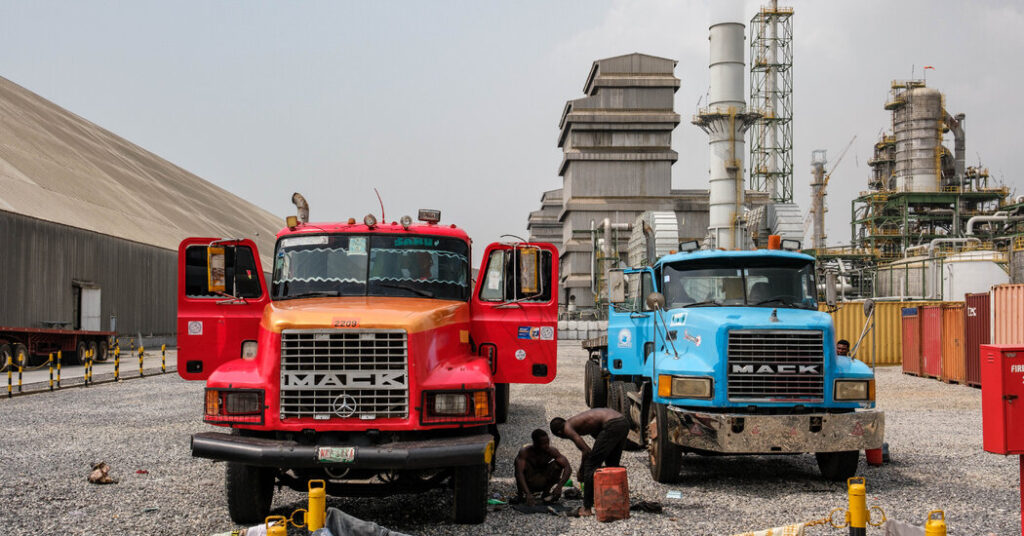
Yet even if countries can come up with the funds, supplies of oil, gas and many other crucial commodities may not be available because of Iran’s effective blockade of the Strait of Hormuz, a key shipping route, as well as damage to energy infrastructure across the Gulf region.
About a third of the world’s fertilizer is shipped via the Strait of Hormuz. With planting season starting in the Northern Hemisphere, fertilizer shortages now can result in poorer harvests and higher food prices later.
Shortages of other materials produced in the Persian Gulf, including helium, sulfur and naphtha, which is used to process plastics, can slow industrial production, dragging down growth in some countries.
For many people in the Middle East, the outlook is particularly disturbing. A new United Nations report estimates that the war may push four million more people across the Arab world into poverty and reduce the region’s output by well over $100 billion.
In Europe, higher energy prices caused by the war helped push up inflation in the 21 countries that use the euro, raising concerns that central bankers might raise interest rates if prices continue to accelerate.
Consumer prices in the eurozone rose at an annual rate of 2.5 percent in March, the fastest pace in a year, according to the bloc’s statistics agency on Tuesday. February’s increase was 1.9 percent.
Christine Lagarde, the president of the European Central Bank, said last week that policymakers were prepared to raise interest rates if inflation persisted above the bank’s 2 percent target.
In the United States, gasoline crossed an average of $4 a gallon on Tuesday, a threshold it hadn’t reached since August 2022. Since the end of February, the average cost of regular gasoline has jumped 35 percent, according to data from the AAA motor club.
Seeing gasoline at more than $4 a gallon — when it was below $3 a month ago — could push American drivers to change their spending habits.
Lower- and middle-income households are most acutely feeling the pinch. The disproportionate impact is making the U.S. economy even more lopsided and dependent on spending by high-income consumers, Moody’s said in an update on Tuesday.
The uncertainty about how long the war will last and how severe the damage may be to energy infrastructure in the region is unsettling governments, businesses and consumers. Some officials have taken measures to reduce consumption — including asking the public and civil servants to use bikes instead of cars, take the stairs instead of elevators and work four days instead of five.
There are a few winners amid the economic disruption. Oil-exporting countries that can deliver their product — including Iran and Russia — are reaping windfall profits from higher prices. Now that the United States has lifted some sanctions against these two nations, both can use the infusion of funds to funds their war efforts.
Erika Solomon and Emmett Lindner contributed reporting.
Patricia Cohen writes about global economics for The Times and is based in London.
The post For the Global Economy, ‘All Roads Lead to Higher Prices and Slower Growth’ appeared first on New York Times.