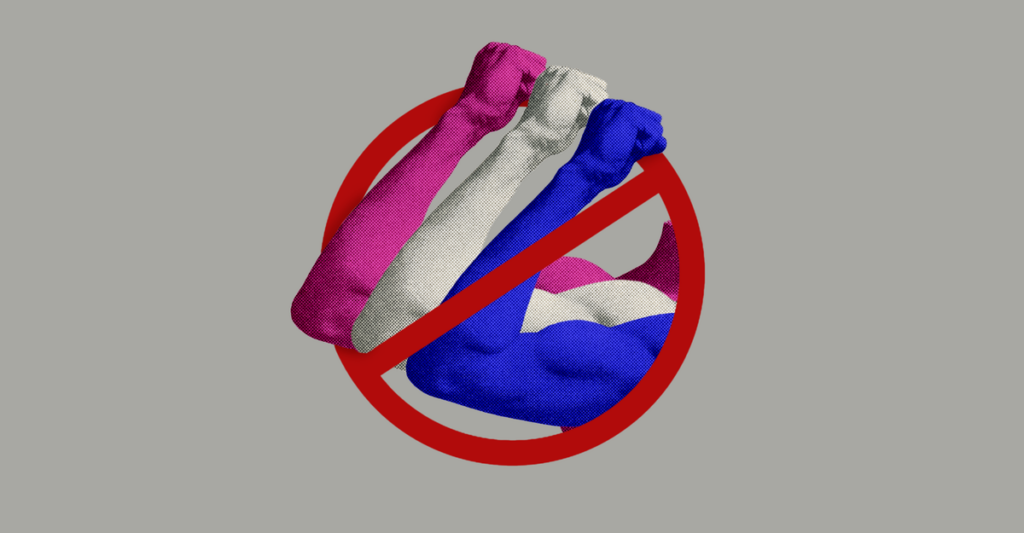
Perhaps you’ve heard of looksmaxxing, the online trend in which young men strive to become supposedly attractive, often through self-harm. Thanks to Clavicular, a young, fringe manosphere influencer, this term—and others modeled after it—has proliferated. You can be a looksmaxxer by soft maxxing (skin care or exercise) or by hard maxxing (plastic surgery or self-mutilation). Looksmaxxers often find themselves jester-maxxing, that is, using humor to gain the attention of women.
Maxxing can be specialized, too, and even modest, maximally speaking. A dude might be personality-maxxing instead of jester-maxxing. Less incel-maxxing versions might entail health-maxxing—what people called wellness approximately 10 minutes ago. Want your gut to be more regular? That’s fiber-maxxing. Want to build bulk? You’re protein-maxxing. Some so-called tradfem women want to bear more children through fertility-maxxing—a process our culture once understood as getting pregnant again. Maxxing goes the other way too, maximizing harm instead of benefit: Maybe you’ve got a drug habit, in which case you might be pill-maxxing. Anorexia, for some, is now starve-maxxing.
Everything worth doing seems to be worth maxxing. Want to use technology less and pursue human connections more? That’s friction-maxxing. What about relaxing or zoning out? You’re nothing-maxxing. Reading is book-maxxing. Going to bed is sleep-maxxing. Buying a pair of denim shorts for the welcome spring is probably jorts-maxxing. Think you’re reading an article right now? Nah, bruh, you’re Atlantic-maxxing.
The trend is irritating and stupid, but it also betrays a truth: The online life is an extremist one, and the result is fatigue-maxxing.
As with any trend, but especially in the depths of YouTube, Reddit, 4chan, Discord, Kik, or any of the other very online places, maxxing is overblown. Not many people are saying any of these things—at least not in large numbers. Instead, they are consuming protein, getting pregnant, and even reading books.
[Thomas Chatterton Williams: ‘Looksmaxxing’ reveals the depth of the crisis facing young men]
But an idea can become potent through its rapid depiction in culture—including in articles such as this one, which maxes maxxing even as it attempts to minimize it, somewhat. Online, our odd verbal tics—“Do better,” the figurative literally, “I can’t”/“I’m dead,” “THIS”—can seem like a mania. News about a mania can help make it a reality.
Writing at The New York Times, Nitsuh Abebe argues that -maxxing as a suffix is the love child of two cursed parents: the idea of optimizing a resource, which he attributes to video gaming, and incel culture, where he locates the origin of looksmaxxing specifically.
These two origins—gaming and incel culture—make maxxing seem perverse and fringe. Critic-maxxers hope Clavicular is, as my colleague Will Gottsegen put it, a curiosity—in other words, a freak. But a freak who might be dangerous, because his words and actions could spread. Perhaps they already have: Gottsegen’s concerns, for example, were affirmed by the hateful, violent, and anti-Semitic abuse he received from Clavicular acolytes after requesting an interview with the looksmaxxer in chief.
This version of online extremism’s story is a comforting one. A bad actor becomes radicalized online by other, prior bad actors, who then spread their particular gospel of badness further, online.
Radicalization really does work this way, sometimes. Colleen LaRose, a.k.a. Jihad Jane, became immersed in jihadist recruitment forums online, joined an al-Qaeda cell in Ireland, and became entrenched in a homicidal conspiracy. Anwar al-Awlaki, an American al-Qaeda propagandist, spread Muslim extremism among the English-speaking online world. Dylann Roof internalized white-supremacist messages from websites surfaced by search algorithms, and later carried out the 2015 shooting at the Emanuel African Methodist Episcopal Church in Charleston, South Carolina. Tamerlan Tsarnaev, one of the Boston Marathon bombers, was inspired by YouTube. So were Brenton Tarrant, who killed 51 people at Christchurch, New Zealand, mosques in 2019 after absorbing far-right ideologies from online forums such as 4chan, and Jake Angeli, the “QAnon Shaman” known for his shirtless, head-dressed appearance during the January 6, 2021, attack on the U.S. Capitol.
Though distressing, these well-known individual extremists offer consolation for aspiring normals, because they represent a perversion of norms, even while also threatening to erode those norms. So do categories of softer radicalism unattached to specific figureheads: “grindset” work extremists, manosphere red-pillers, disinformation-addled elder Facebookers, or “HODL” investment perverts. Life online appears to be neatly divisible, and indeed divided, into freaks on the one hand and, on the other, reasonable people such as yourself.
It is not. Online life is extremist in deep and broad ways. The intensity of internet life, even under ordinary circumstances, pushes us toward extremes on any topic—and every topic. No idea, belief, purchase, product, or event can be ordinary or innocuous. Everything must be done with absolutism, and those extremes must be performed in public, online.
When an influencer announces that she is “obsessed” with a makeup palette, slop bowl, or imported low-cost garment, her verbal tic spreads. Suddenly ordinary people also become “obsessed” with cleansers. They discover peptides they “can’t live without.” Mild enthusiasm doesn’t travel online. Intensity does. The algorithm, and the economy that supports it, first escalates speech that overstates the emotions that underlie it. As the speech spreads, the feeling follows. People truly come to believe that they cannot live without a particular peptide or a palette.
Over time, everything becomes either life-changing or irrelevant. Moderate positions can certainly be held, but only in the ordinary life one leads quietly and calmly offline—insofar as living offline is even possible anymore.
Fans no longer simply like a television show, film, comic book, author, quick-service restaurant, or any other cultural product. Instead, their enjoyment has become ramped up to a level formerly reserved for unhinged, extremist fandoms, such as Trekkies and Beanie Baby collectors. Fans feel the need to defend a work’s true meaning. They attack deviations from agreed-upon “canon.” They cease to interpret but instead draw lines in the sand. For every cultural good, identity has become fused with the object of interest, turning previously normal people leading unremarkable lives into Steak ’n Shake beef-tallow purists, Harry Potter moralists, or cast-iron-pan-cleaning radicals.
[Charlie Warzel: This is what it looks like when nothing matters]
On Facebook or Nextdoor, a missing package can never represent a simple misfortune or misunderstanding; it must instead become urban decay or a racist incursion. A loud car heard blocks or miles away represents social breakdown. A dog let off the leash becomes indicative of moral rot. An opinion offered offhand suggests a secret wickedness that must be exorcised. Platforms reward escalation with attention, and the audience also often responds. And so everyday life becomes overinterpreted, as local forums become symbolic battlegrounds.
You no longer buy or use or encounter goods, services, or events, but endure them with your whole person: I am a Moleskine journaler; I am a Stanley-cup commuter; I am a barefoot-shoe jogger. Advice or even just notions—only check email after noon; never do 10 reps of crunches—solidify into absolutism or vanish.
The speed, urgency, and constancy of online life amplifies extremism because posting, replying, and generally participating in the discourse is its own virtue enrobing all the rest, an internet-maxxing to rule all the others. Liking became fixation, watching became safeguarding, asking turned to prosecution, trying devolved to optimizing, noticing twisted into diagnosis.
Maxxing declares this state of affairs honestly. Finally, we can shed the pretense that internet life is reasonable, level-headed, or healthy. The whole internet is a machine for extremist thought, belief, and action. Maxxing could amount to its endgame—the final victory of full-throated extremism of any form and kind. But immoderacy online always ratchets up. Eventually, and probably soon, the max-maxxers will seem temperate in hindsight.
The post How We Maxxed Maxxing appeared first on The Atlantic.