Behnam Ben Taleblu is a senior fellow and senior director of the Foundation for Defense of Democracies’ Iran program. Andrew Ghalili is policy director of the National Union for Democracy in Iran.
News of more troop movements and indirect diplomacy notwithstanding, there are signs that the Trump administration is seeking a shortcut out of Iran.
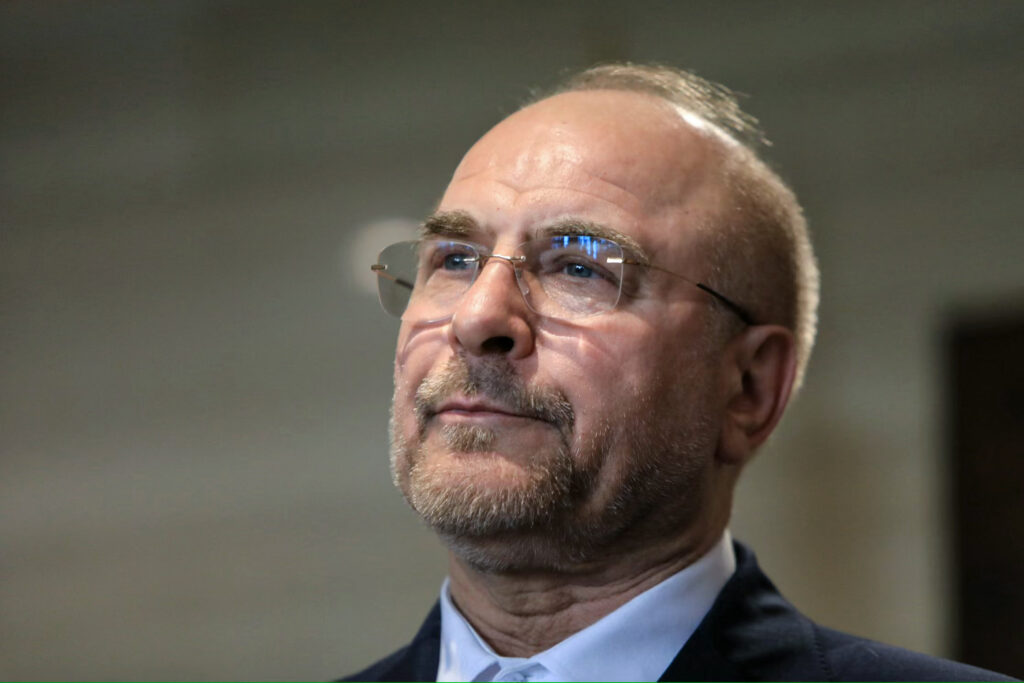
According to Politico, the White House is reportedly weighing the speaker of the Iranian parliament, Mohammad Bagher Ghalibaf, as a potential partner and future leader. One administration official, calling Ghalibaf “a hot option,” exposed the administration’s logic: Find someone pragmatic to install at the top, secure favorable energy terms and declare victory. Call it a path of least resistance to “regime change.”
This idea was not born in a vacuum. It comes straight out of the administration’s Venezuela playbook: There, following the capture of President Nicolás Maduro, Washington supported Vice President Delcy Rodriguez’s ascent to power in exchange for favorable terms for Venezuelan oil.
The problem? The analogy collapses upon contact with reality — and history. American presidents have looked for the all-too-elusive moderate Iranian leader since 1979. They have not found one. And Iran and Venezuela are led by two different regimes ruling over two different societies. Trying to maintain the option of hunting for a Delcy Rodriguez in Tehran is a mistake.
It should be clear by now that the Islamic Republic is not your run-of-the mill personalist dictatorship, but one with overlapping security structures designed to survive the loss of any single leader. Playing musical chairs in Tehran will change nothing about how such a regime operates. Nearly a month into the conflict, and with a new supreme leader who has not been seen or heard since his installation, Iran continues to launch ballistic missiles and is threatening to widen the radius of maritime and energy instability it is already causing in the Strait of Hormuz. This contrasts sharply with the operation against Maduro, which was accomplished in a matter of hours, with no regional spillover effects.
Now enter Ghalibaf, a product of this system who has risen through its political, economic and military ranks for four decades. A retired brigadier general of the Islamic Revolutionary Guard Corps (IRGC), an entity now under sanctions as a terrorist organization from the United States, Canada, Australia and the European Union, Ghalibaf is also a veteran of the 1980-88 Iran-Iraq War, the military ordeal that birthed the generation now leading the regime’s most important institutions. The ties Ghalibaf developed during that war included Iran’s late supreme leader Ali Khamenei and the current and late IRGC Quds Force (IRGC-QF) chiefs Ismail Qaani and Qasem Soleimani.
Ghalibaf’s postwar résumé offers insight into not only his ambition and corruption but also his ideology. He led at least two institutions in the 1990s that would later be subjected to international sanctions: Khatam al-Anbiya, the IRGC construction conglomerate that helped build military and nuclear sites, and the IRGC Aerospace Force, the branch of the Guard Corps overseeing the regime’s ballistic missile arsenal.
Yet curiously, Ghalibaf himself has never been under sanctions by the U.S. government, despite his affiliation with a designated terrorist organization, his later role in domestic suppression and rights violations during protests, his reported corruption and graft as mayor of Tehran, as well as his appointment to government offices by Iran’s supreme leader. These are all sanctionable offenses.
Perhaps the Trump administration cynically regards Ghalibaf’s record of corruption — which has led to the enrichment of terrorist entities like the IRGC-QF — as proof that he can be dealt with or bought off. But the fact is that Ghalibaf has cultivated the impression of being a pragmatic alternative to the regime without ever offering substantive proof that he is one.
In 2024, for example, the news website IranWire reported that Ghalibaf’s team had contacted European diplomats to solicit their support in a post-Khamenei Iran. Yet Ghalibaf now threatens to make U.S. military bases “legitimate targets” and has led chants of “Death to America” in the parliament. This is not change from an Iranian leader.
Tellingly, Ghalibaf’s wheeling and dealing has never provided him with any constituency or social base in Iran. Despite trying to position himself as a modernizing and “can-do” candidate, especially in his first presidential bid in 2005, Ghalibaf has failed to generate any meaningful support from hard-liners, reformists or even military veterans in his four presidential runs over the past two decades. This raises real questions as to why the administration thinks he could stabilize a post-conflict Iran.
In an era when Iranians are increasingly looking to the street rather than the ballot box to change the political system, his leaked braggadocio about thrashing protesters “with wooden sticks” in Tehran in 1999 or ordering live fire against student demonstrators in 2003 means that Iranians are unlikely to view any government he might lead as offering unity or reconciliation.
If Trump replicates his Venezuela decision and promotes a regime insider like Ghalibaf to the helm, he is unlikely to attain the stability and calm that he seeks in the Middle East. Iranians did not turn out in droves in January and give their lives for musical chairs or ornamental change in Tehran. They are not likely to stop protesting against a corrupt establishment that turned Iran into a failed state and is complicit in their killing. If it partnered with these forces, Washington would risk losing one of the most pro-American populations in the Middle East and entrenching chaos in the country and region.
Earlier this year, Trump said his endgame in Iran was “to win.” Yet an Iran led by a man like Ghalibaf will not pave the way to victory for Trump and U.S. national security — or the Iranian people.
The post Iran is not Venezuela, President Trump, and this man is no moderate appeared first on Washington Post.