A Russian tanker full of crude oil approached Cuba on Monday, and the Trump administration said it would allow the fuel delivery, after months of a de facto U.S. oil blockade that has helped plunge the energy-starved nation into a humanitarian crisis.
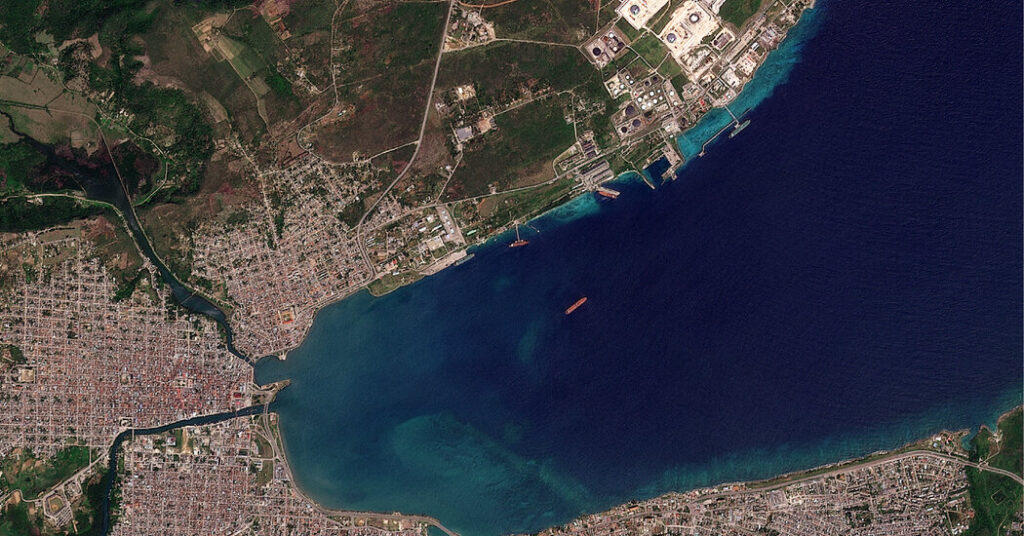
The tanker, which is carrying an estimated 730,000 barrels of oil, was skirting the northern Cuban coastline and approaching its destination of Matanzas on Monday morning, according to MarineTraffic, a ship-data provider.
The fuel shortage has crippled essential services, including Cuba’s health care system. The U.S. ban on foreign oil imports has been seen as a strategy by the Trump administration to bring Cuba’s government to its knees.
While significant, the hundreds of thousands of barrels aboard the Russian tanker would provide Cuba with only a few weeks’ worth of fuel, experts said.
What is driving Cuba’s energy crisis?
Cuba largely relied on Venezuelan and Mexican oil, but shipments stopped in early January after the United States captured Venezuela’s president and took control of its oil exports. The Trump administration also said it would impose tariffs on countries that tried to provide fuel to Cuba, keeping Mexico from sending oil.
President Trump has said he believes he’ll “have the honor of taking Cuba,” and in negotiations with Cuban officials, his administration has signaled that Cuba’s president, Miguel Díaz-Canel, should step down.
The Cuban government has publicly condemned the Trump administration for trying to push Cuba toward economic collapse, and Mr. Díaz-Canel, the leader of a Communist regime that has ruled Cuba for more than 65 years, said “surrender is not an option.”
On Sunday night, after The New York Times reported the U.S. administration’s intention to let the oil shipment reach Cuba, Mr. Trump suggested it was a humanitarian gesture.
“We don’t mind having somebody get a boatload, because they need — they have to survive,” he told reporters. “If a country wants to send some oil into Cuba right now, I have no problem with that. Whether it’s Russia or not.”
On Monday, Dmitri S. Peskov, the spokesman for President Vladimir V. Putin of Russia, said the fuel shipment had been raised in advance with the United States.
Russia, he added, has an obligation to “provide the necessary aid to our Cuban friends.’’
The White House did not immediately respond to a request for comment about Mr. Peskov’s statement.
Why is the U.S. allowing this shipment?
It is unclear why the United States allowed a Russian shipment while countries like Mexico, that have been eager to help Cuba, have been prevented from sending tankers after Mr. Trump threatened tariffs.
The shipment could signal that the United States did not want to make the Cuban people suffer even more, experts said. But they also said that the pressure campaign against Cuba has likely been sidelined by the war in Iran.
“Cuban society and infrastructure is so hampered right now that there is a real risk of a complete breakdown that would not be in anybody’s best interests,” said Pedro A. Freyre, the chair of international practice at Akerman, a law firm in Miami, and an expert on U.S.-Cuba policy. “That’s a bridge too far.”
The Iran war, he added, had likely extended the timeline for the Trump administration’s plans on Cuba.
“There is a palpable delay,” he said. “The process is stalled.”
For some Cubans, the Russian fuel provided a rare bit of good news.
“Hopefully the worst is over,” said Aldo Alvarez, who runs a delivery business in Cuba.
But other Cubans saw the planned oil arrival as a temporary patch potentially delaying the collapse of a regime they loathed.
“It provides more desperation to the people who just crave for a complete change here,” said Giovanny Fardales, a translator in Havana who has been waiting weeks to purchase gas for his car and diesel for his home generator. “Nobody wants more oil arriving, everybody wants this system to collapse, no more Communism, period.”
Is the shipment going to make a difference?
Roughly 40 percent of Cuba’s energy grid is sustained by power plants that largely run on crude oil that Cuba produces domestically. But Cuba relies on foreign fuel to power much of its economy, including factories and farms.
Cuba has also been racing to install solar panels to prop up the grid, but the nation has still experienced daily blackouts.
The halt of oil shipments has caused food shortages, brought water pumps that operate on fuel to a halt, ratcheted up gasoline prices, forced hospitals to cancel surgeries and shut down lifesaving equipment like dialysis machines and incubators.
The Russian fuel is “not a solution in the face of the extreme fuel shortage,” said Ricardo Torres, an economist at the American University in Washington who specializes in Cuba.
Mr. Trump said the oil shipment would not make much of a difference for Cuba in the long run.
“Cuba is finished,” he said. “They have a bad regime. They have very bad and corrupt leadership. And whether or not they get a boat of oil, it’s not going to matter.”
Alina Lobzina contributed reporting from London.
Emma Bubola is a Times reporter covering Argentina. She is based in Buenos Aires.
The post Why Did the U.S. Allow a Russian Oil Tanker Through Its Cuba Blockade? appeared first on New York Times.