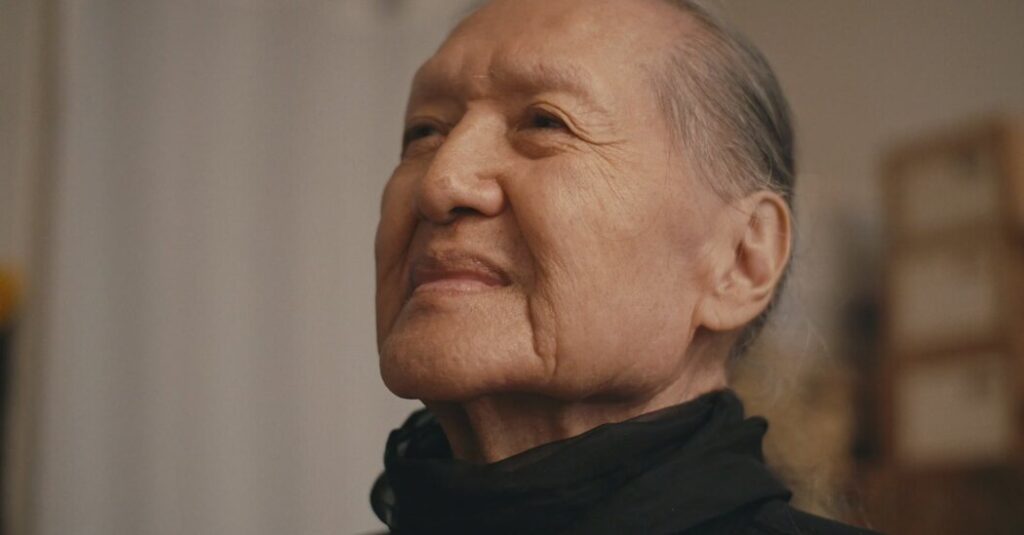
Agosto Machado, a beguiling artist and performer who was among the whirling tribe that made up Manhattan’s downtown avant-garde in the 1960s and ’70s, and who memorialized his compatriots as they were felled by AIDS and other scourges in shrines he created from the artifacts of their lives, died on March 21 in New York City. He was believed to be in his late 80s.
His friend Glen Santiago confirmed the death. No cause was given, and he has no known survivors.
As a young man, Mr. Machado was a self-described “street queen,” soignée in thrift-shop gowns, costume sparklers and an assortment of wigs, promenading along Christopher Street and on the piers off the West Side Highway. To his surprise, he found himself on a proper stage when Jackie Curtis, the screwball drag personality, Warhol superstar, playwright and director, selected him for one of the demented theatrical works that Mr. Curtis produced in the late 1960s.
As the story goes, Mr. Curtis approached Mr. Machado with three questions: Can you act? Can you sing? Can you dance?
Mr. Machado’s answers, all in the negative, delighted Mr. Curtis. “Would you like to be in a play?” he wondered.
The production was called “Amerika Cleopatra,” and the plot was vaguely connected to the Egyptian monarch. From then on, Mr. Machado was a reliable participant in Mr. Curtis’s extravaganzas, which typically involved an enormous cast cavorting chaotically onstage while hewing, more or less, to a script.
“The jokes are abysmal,” Mel Gussow of The New York Times wrote in 1971 in his review of “Vain Victory: The Vicissitudes of the Damned,” the second production that Mr. Machado appeared in, fetching in a blonde wig. “But the delivery is so ingenuous as to make almost the worst line excusable.” (“Campy Transvestite Musical Spectacle” was the review’s headline, with the rather stiff addition of “Show Recalls Movies of the Forties.”)
Onstage, Mr. Machado played ancillary characters, but he stood out for his comedic timing and improvisational skills. Especially because he was not particularly adept at remembering his lines, those skills helped him navigate the many, many avant-garde shenanigans he found himself involved in over the decades.
He performed in various productions of the anarchic, absurdist theatrical genre known as Theater of the Ridiculous, appearing at experimental downtown venues like La MaMa, where he was mentored by the company’s iconoclastic founder, Ellen Stewart. For years, he performed with Ethyl Eichelberger, the towering and versatile drag star and parodist who could portray a gallery of characters in a single show and who died by suicide in 1990, after receiving an AIDS diagnosis.
Mr. Machado was also a muse to Jack Smith, the filmmaker, photographer and performance artist, who swathed him in shimmering fabric and sparkles; Mr. Smith was diagnosed with AIDS as well, and died in 1989. And Mr. Machado posed for Peter Hujar, the photographer who chronicled the downtown demimonde and died of AIDS in 1987.
Throughout, Mr. Machado collected souvenirs: stage props, costumes, fliers and newspaper clippings. He collected his friends’ artwork and took their photos with his Instamatic camera.
He saved the black platform shoes that belonged to Candy Darling, the glamorous transgender actress who was immortalized in Lou Reed’s 1972 song “Walk on the Wild Side” and appeared in “Vain Victory,” and who died of cancer in 1974, at just 29.
He saved a sign that proclaimed “Justice for Marsha,” which he had made to mourn and celebrate Marsha P. Johnson, the exuberant drag star, activist and sex worker said to have been among the vanguard of those who resisted the police raiding the Stonewall Inn during the Stonewall uprising in 1969; she was found dead, floating in the Hudson River, in 1992. (Mr. Machado was outside the bar the night of the riot and joined the protests that erupted on the street.)
These memento mori filled Mr. Machado’s East Village apartment, where he began to make shrines to his lost friends — vibrant altars of ephemera that included snapshots, prayer cards and Day of the Dead figures, bedazzled with costume jewelry and feathers. He called his practice “ancestor worship.”
So many were dying. During the height of the AIDS crisis, Mr. Machado began caring for his sick friends — taking them to medical appointments, cleaning their apartments, bringing them food. He stopped frequenting gay bars in those years, he said, because people knew of his tireless caregiving and had begun moving away from him, as if he were contagious.
Over the next three decades, Mr. Machado collected the ashes of 14 friends in his apartment, including those of Ms. Johnson, Mr. Smith and Holly Woodlawn, another Warhol superstar. When it came to his own death, he was extremely well prepared: He paid cash in advance for his cremation, to get a discount, and left instructions for his executors to mix a bit of his ashes with those of his friends to sprinkle in the Hudson River.
“Somehow we were incarnated collectively in the East Village; isn’t that a miracle?” he said in “The Underground Archivist: 50 Years of Saving New York History,” a short film the Museum of Modern Art made about him last year. “A generation or so in the future they’ll say, ‘Who was that queen?’ No, they won’t. They’ll say, ‘Who was this person?’”
Mr. Machado was born in Manhattan, possibly in late September or October — he said his astrological sign was Libra — and perhaps in the late 1930s.
“A lady never tells” was how he deflected questions about his birth date, given name and parentage. His heritage may have been Chinese, Latino and Filipino. Or maybe just Filipino.
He described himself as an “orphan with a sixth-grade education” who grew up in Hell’s Kitchen before embarking on a life as a street kid in Greenwich Village. Like other gay teenagers of the era, he may have been thrown out of his home, or left on his own. He was secretive about his early life, and the few friends he confided in kept what secrets he did share.
“I have a feeling that someone in his life loved him really deeply,” the artist Thomas Lanigan-Schmidt said in an interview, noting Mr. Machado’s skills as a caretaker. “He did all the things you do as a good son.”
In 1959, when he was perhaps 20, he christened himself Agosto Machado, choosing his surname in homage to China Machado, the Chinese-born, mixed-race fashion model who appeared in the pages of Harper’s Bazaar in February of that year, the first nonwhite model to do so. (She was also the first model to pose nude in the magazine, in 1961.)
But why Agosto, the Spanish word for August? “It’s the hottest month of the year?” Mr. Lanigan-Schmidt speculated. “I don’t know.”
When he was young, Mr. Machado lived in a rooming house carved out of a brownstone on the Upper West Side, carrying the mementos he had already begun to collect in shopping bags. For much of his life, he paid the bills by cleaning houses, pet-sitting and doing other odd jobs. (Riches — or even a living wage — do not often accrue to those in experimental theater.)
By 1971, he and his archives were living in an apartment on East Fourth Street in the East Village, where he once filled a room with autumn leaves. When the landlord emptied the building of its tenants in the late 1990s, Mr. Machado and his collections moved to a studio a block away, on East Third Street. He named his new space “the Forbidden City.”
“I never called myself an artist with a big A,” he said in the MoMA film, discussing his prodigious archives. (In fact, he mostly described himself a hoarder.)
“But it was a chance to share the journey and all the people who should be remembered,” he said. “These people lived — they were able to walk and drag in the street together and fulfill one of the fantasies of their lives.”
Long a supporting player, Mr. Machado found himself unexpectedly in the spotlight when the gallerists Sam Gordon and Jacob Robichaux, who focus on emerging, self-taught and overlooked artists, met him through one of their artists, Tabboo!, otherwise known as Stephen Tashjian.
They began working with Mr. Machado five years ago, and in 2022 they mounted a show of his shrines at their Union Square gallery, Gordon Robichaux. In 2024, they brought him to Art Basel Miami Beach. MoMA acquired a shrine; so did the Whitney Museum of American Art. Four of his shrines, including one devoted to Mr. Eichelberger, are on display at this year’s Whitney Biennial, which runs through August.
“His colors and ephemera stand out like flags, signaling life in a colorless, dying world,” Hilton Als wrote of Mr. Machado’s pieces in his review of the biennial in The New Yorker. “The shock of his work is that it reminds you of that dirty, beautiful word ‘taste,’ which Machado had plenty of.”
“Machado made pieces that are what one might call documents of reverence, excavated burial grounds,” Mr. Als added, “that reveal what we once had and must now live without.”
Penelope Green is a Times reporter on the Obituaries desk.
The post Agosto Machado Is Dead; Artist Memorialized New York’s Avant-Garde appeared first on New York Times.