For generations, most legal experts and the courts have agreed that the Constitution guarantees citizenship to nearly all babies born in the United States.
But ever since Donald Trump issued an executive order to eliminate so-called birthright citizenship for the infants of undocumented immigrants and temporary residents, some conservative legal scholars have begun re-examining the history of the 14th Amendment, long understood as the source of the birthright guarantee.
On Wednesday, the Supreme Court will hear arguments on the legality of Mr. Trump’s executive order, and some conservative legal experts say that, in light of new scholarship, it might be a closer call that once thought.
“A lot of people, when Trump first started talking about it, thought this is crazy,” said John Yoo, a law professor at the University of California, Berkeley, School of Law, who was a top lawyer in the George W. Bush administration. “But in the intervening years, a lot more serious people are taking it seriously.”
Even as the legal debate has grown more robust, many legal experts, including Professor Yoo, remain confident that a majority of justices across the ideological spectrum will rule against Mr. Trump’s quest to redefine citizenship. Doing so would mean another major defeat for Mr. Trump in front of a court that includes three of his own nominees. Last month, the court invalidated the president’s sweeping tariffs on imports from major U.S. trading partners.
The debate over the bounds of birthright citizenship moves from law review articles to the Supreme Court on Wednesday, in a historic case that will test the president’s power and the common understanding of what it means to be an American.
The Trump administration is asking the court to reinterpret the 14th Amendment, which was added to the Constitution in 1868 after the Civil War. The amendment reversed the Supreme Court’s infamous decision in Dred Scott, which in 1857 had denied citizenship to Black Americans. “All persons born or naturalized in the United States, and subject to the jurisdiction thereof, are citizens of the United States and of the State wherein they reside,” the amendment declared.
The key question for the justices is what it means for a person to be “subject to the jurisdiction” of the United States, a phrase that courts have for more than 125 years interpreted as meaning nearly everyone born on U.S. soil.
But the Justice Department says the passage has been misread for decades to grant citizenship to the children of hundreds of thousands of undocumented immigrants, incentivizing foreigners to travel to the U.S. to have babies.
Groups challenging the legality of Mr. Trump’s order, led by the American Civil Liberties Union, emphasize that courts, Congress and past presidents have all embraced a broad reading of the text of the 14th Amendment, which they say embodies fundamental American values of equality and opportunity.
President Trump promoted his narrower view of birthright citizenship during his first campaign. The president and his top advisers have long claimed so-called birth tourism is a national security threat and have sought to end the citizenship guarantee as part of their broader efforts to restrict immigration and deport immigrants already in the country.
“Birthright Citizenship was not meant for people taking vacations to become permanent Citizens of the United States of America, and bringing their families with them, all the time laughing at the ‘SUCKERS’ that we are!” the president posted last spring.
Mr. Trump issued his executive order on his first day in back in White House last January. It was immediately challenged by Democratic-led states and immigrant advocacy groups, which said it would lead to chaos and uncertainty for parents who would have to prove their immigration status for their babies to be citizens. The order has been blocked by the courts ever since.
A case related to the issue was first considered by the Supreme Court last May, but at that time the justices considered only the legality of nationwide orders federal judges had issued to halt presidential policies, including the citizenship order. The justices did not address the constitutionality of Trump’s policy, instead agreeing to limit the ability of individual lower court judges to issue such universal orders, in a 6-to-3 ruling in June that split along ideological lines.
More lawsuits quickly followed, including the case the justices will hear on Wednesday, which was filed in New Hampshire on behalf of a group of expectant parents and their children who would be subject to the order.
The new scholarship concerns the history both of the 14th Amendment and the circumstances of the 1898 Supreme Court ruling considered the key precedent on the matter.
That kind of research is especially important to conservative legal scholars who consider themselves originalists, who examine historical evidence to determine the meaning of the Constitution at the time of its adoption to decide how it should be interpreted in the modern day.
Members of the court’s conservative majority consider themselves originalists, and it has caused some conservative scholars to conclude that they may not view the arguments against birth citizenship as obscure or fringe theories.
“We had seen enough to convince us that this question was not open-and-shut, that conventional wisdom may not be correct and that the Trump EO has more going for it than people realized,” said Ilan Wurman, a University of Minnesota law professor who wrote a recent paper on the topic and co-wrote an essay in The New York Times with Georgetown Law professor Randy E. Barnett entitled “Trump Might Have a Case on Birthright Citizenship.”
Professor Wurman and others argue a more than 125-year-old precedent long considered the court’s definitive word on the issue is not actually parallel with the circumstances of Mr. Trump’s order.
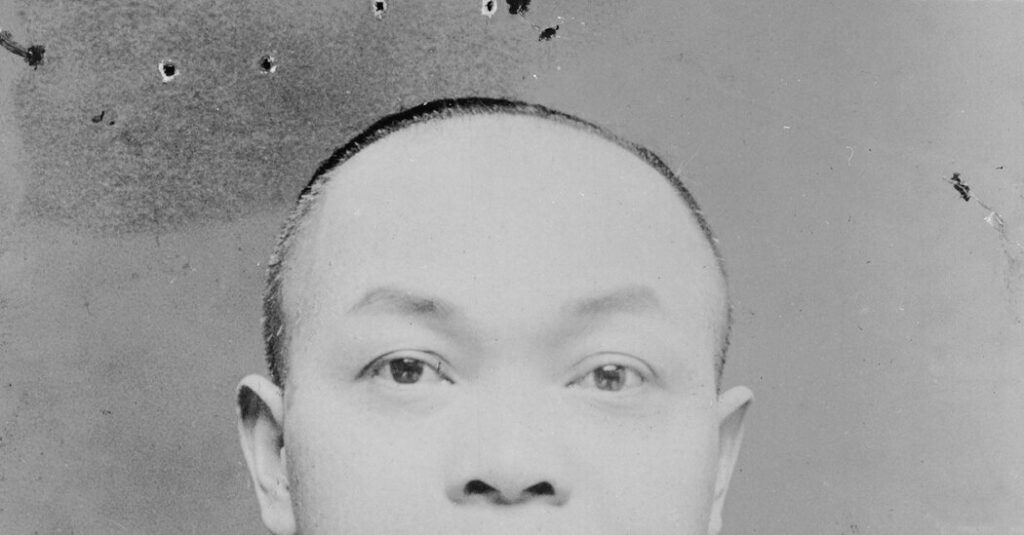
In that case, United States v. Wong Kim Ark, the court concluded that a man born in San Francisco to Chinese parents was a citizen.
But Professor Wurman notes Mr. Wong’s parents were legal permanent residents — or “domiciled” — in the United States. (In its filing, the Trump administration points out that their status is cited more than 20 times in the landmark opinion.) Professor Wurman said the ruling did not directly address whether the newborn children of undocumented immigrants are citizens, making it an open question for the court.
Opponents of Mr. Trump’s order counter that the 1898 ruling nevertheless made clear that the residency status of the parents was not a factor in court’s reasoning and not a prerequisite for citizenship.
As for the 14th amendment, scholars agree the modern concept of illegal immigration did not exist at the time of its adoption, and Congress did not discuss or consider it. Congress did however outline some populations they considered not “subject to the jurisdiction” of U.S. law and therefore not citizens.
They included the children of foreign diplomats as well of the children of hostile foreign forces occupying U.S. territory. And, the scholars note, initially, they included Native Americans tribes, who were not granted citizenship until a separate act of Congress in 1924.
The Trump administration has seized on the tribal exception as a historical find that it says supports its position. The administration argues that the children of undocumented immigrants are similarly not “completely subject” to the nation’s “political jurisdiction.” Like the tribes, the administration says illegal immigrants “owe allegiance” elsewhere, and the migrants have broken the law to enter the United States.
The challengers insist the administration and those who back its position are misinterpreting the historical record. Tribes were excluded, they argue, because they were seen as separate nations exercising their own governing authority. In contrast, they say there is no question that migrants are subject to American laws, even if they’ve entered the country illegally.
They note too that the administration’s order would target many expectant parents who are in the country legally, including students with visas, asylum seekers or those with temporary protections from deportation that permit them to live and work in the United States while they seek permanent residency.
The legal team representing the migrants said the order is part of the administration’s broader effort to crack down on immigration and to redefine what it means to be an American.
“Theories and ideas that were once far-right fringe ideas become adopted by this administration and made into policy,” said Taryn Wilgus Null, senior counsel with the Democracy Defenders Fund. “The fact that the administration is taking these extreme actions does not transform them into mainstream action. It does not make them legal.”
Still, Stanford law professor Michael W. McConnell, a conservative former federal judge, called some of originalists who have sided with Mr. Trump’s position “serious scholars” whose views have given him “some pause.”
Ultimately, however, he believes the court should conclude that Trump’s executive order exceeds his power and should rule against him.
Law professor Michael D. Ramsey, a former clerk to Justice Antonin Scalia, first examined the citizenship question in 2020 and again after Mr. Trump returned to office in a recent paper entitled “Birthright Citizenship Re-Examined.”
Like Justice Scalia and some members of the current court, Professor Ramsey considers himself an originalist. He said he concluded that while some of the new research has highlighted statements from members of Congress during the debates over the drafting of the 14th Amendment that could support Mr. Trump’s position, they were ambiguous. Instead, he said the justices should stay focused on the text of the Constitution and its language that broadly confers citizenship to U.S.-born babies.
He noted that originalism has been criticized as a methodology designed to achieve politically conservative outcomes. This case, he said, might offer originalist justices a chance to demonstrate otherwise — that examining the text and history is not an approach designed to reach only one kind of outcome.
“It’s important,” he said, “to show that it leads where it leads.”
Erica L. Green contributed reporting.
Ann E. Marimow covers the Supreme Court for The Times from Washington.
The post Trump’s Birthright Citizenship Order at Supreme Court Splits Conservative Scholars appeared first on New York Times.