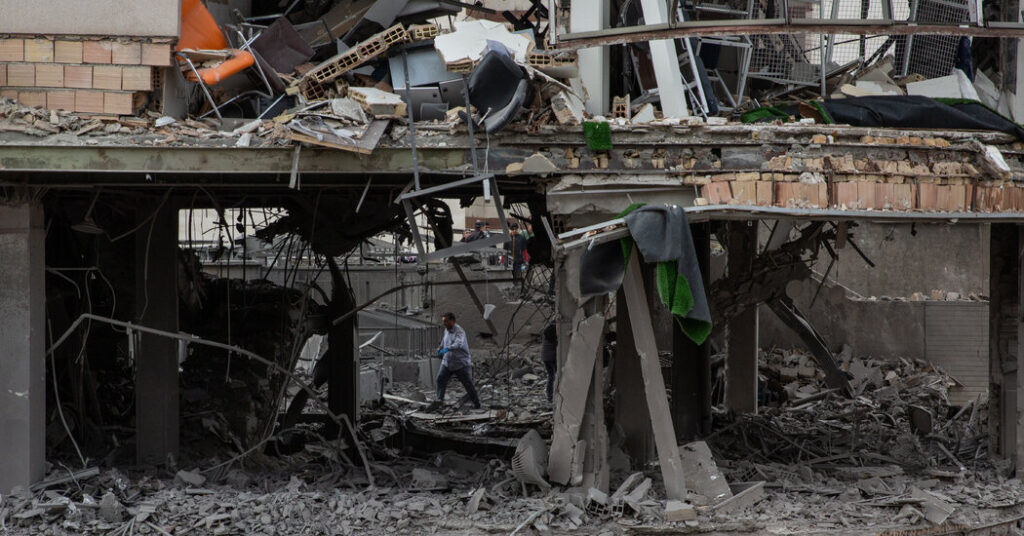
Oil prices rose and stocks in Asia slumped on Monday amid increasing signs of escalation of the U.S.-Israeli war in Iran, which has led to a blockage of critical energy supplies.
In recent days the Houthis, an Iran-backed militia in Yemen, launched a missile at Israel and vowed further attacks. Israel said it launched strikes targeting infrastructure in Tehran and other areas, and Iran retaliated. President Trump is weighing whether to try a larger attack as part of efforts to open shipping routes, and 2,500 U.S. Marines and hundreds of commandos arrived in the Middle East.
Oil rises.
-
The price of Brent crude, the global benchmark for oil, was above $116 a barrel. On Friday, Brent settled at $112.57 — a 56 percent increase since the war began.
-
West Texas Intermediate crude, the U.S. benchmark, was around $102 a barrel. The W.T.I. price finished on Friday at $99.64, up 5.5 percent.
-
Investors and analysts have been focused on the Strait of Hormuz, the narrow waterway between Iran and Oman that is a vital trading route for oil and natural gas that normally carries as much as one-fifth of the world’s oil supply.
Stocks fall.
-
Stocks across Asia fell sharply on Monday. The Nikkei 225 in Japan was down over 4 percent and stocks in Korea fell about 4 percent. Stocks in Hong Kong and China were also lower.
-
Futures on the S&P 500 pointed to a decline when stocks resume trading in the United States on Monday.
Gasoline prices steady.
-
U.S. gas prices have steadied recently to a national average of $3.98 a gallon on Sunday, according to the AAA motor club. The increase has raised the cost for drivers by 34 percent since the war began.
-
U.S. diesel prices have increased even more quickly and stood at $5.41 on Sunday, up 44 percent since the start of the war.
The post Oil Jumps to $116 a Barrel on Signs of Escalation of Middle East War appeared first on New York Times.