Right off the bat, I have to acknowledge that English is a terrible language for love.
You can “love” your spouse, your dog, your job, the Red Sox and Chicago deep-dish pizza. If love means the same thing to you in all those cases, you need help beyond anything I can provide. (Spanish is marginally better: There are two verbs, querer and amar, that mean love. Only the latter of which denotes passionate, romantic love.)
The ancient Greeks, in contrast, had a whole love vocabulary, dividing it into at least seven types.
Eros meant romantic, passionate love. Philia, brotherly love, was used for deep friendship, and agape meant unconditional, selfless love — including love by and for the divine. Then there was storge (between family members), ludus (playful love or flirtation), pragma (practical love and companionship) and philautia (self-love).
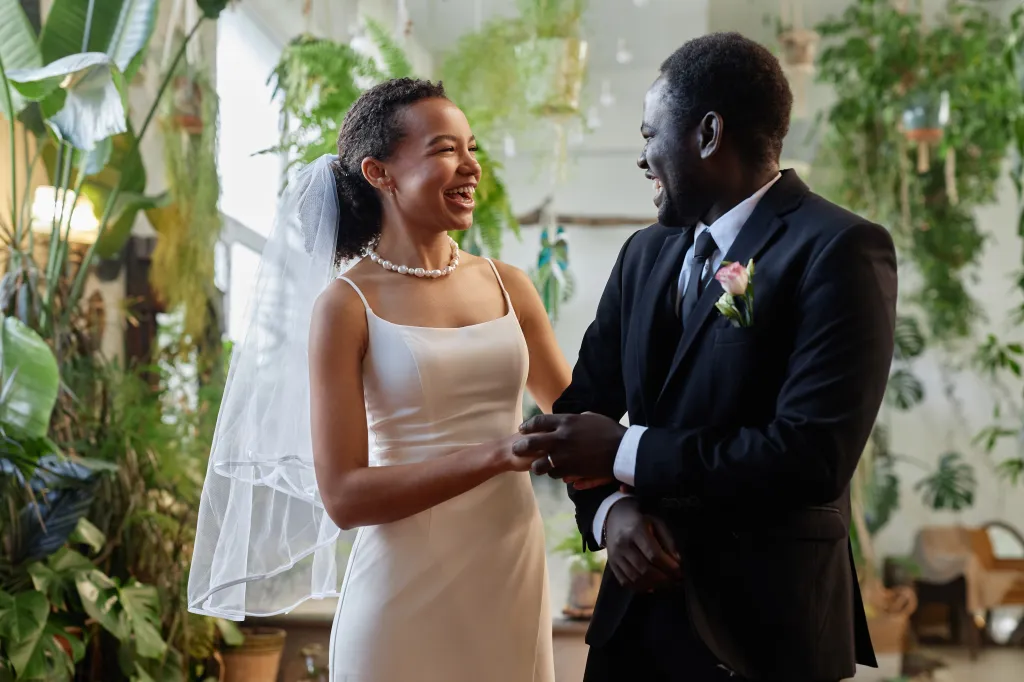
These are not mutually exclusive: My marriage is composed of literally all seven of these types of love, al- though it has taken more than three decades to build this whole repertoire.
Understanding this Greek love taxonomy can sort out confusion. Did you ever find yourself, heartbreakingly, in the dreaded friend zone with someone you were secretly in love with? An ancient Greek would say that your eros was met with your beloved’s philia. This mismatch was the reason for the heartbreak.
Of the different types of love, the Greeks thought that mutual eros had the special property of igniting a mysterious process. In Plato’s “Symposium,” Socrates (Plato’s teacher) tells a story of having been taught in his youth by a prophetess named Diotima of Mantinea about the “philosophy of love.” She explained to him that romantic love draws a person into an understanding of the essence of life’s deepest meaning.
How, you ask? Enter the Ladder of Love, the first rung of which was a physical attraction to a single beautiful person. When successful, this leads to an appreciation for physical beauty in general; then to love of beautiful souls; then to love of good things in society. This leads to a love of ideas, which leads finally to a love of what is most beautiful and meaningful in life.

Meaning can feel impossible to understand and acquire, precisely because it is so complex. You need a way to get started — an entry point to begin the journey. That is what romantic love does. If you let it, that love will become fuller and more expansive over the years, encompassing bigger and bigger parts of your life. It will carry you from the earthly to the sublime.
Over a lifetime, a romance lifts you and your partner from the realm of physical attraction to a transcendent understanding of the essence of life itself. That’s exactly how I feel about my marriage. At the beginning, when I thought about my wife, Ester, it was white-hot passion. Today, we walk together toward our lives’ meaning.
Plato didn’t talk about neuroscience, but there is also a biological story behind the Ladder of Love. This shouldn’t lower its mystery in your mind at all, however. On the contrary, it shows that we are built for the mystical.
This is what I call the “neurochemical cascade.”

First, romantic love ignites with the feeling of attraction, which involves the sex hormones testosterone and estrogen. When attraction between two people is initiated and they are in contact, the neurotransmitters norepinephrine and dopamine become involved, giving each person a sense of anticipation about seeing the other, and euphoria when that occurs.
Next, after parting, comes a drop in serotonin, which leads to rumination about the beloved. This can lead to ridiculous behaviors such as obsessing over a text message or leaving 20 voicemails in an hour, but as irrational as such actions seem, they represent a frantic effort to bond with the other person. At this stage, you feel “addicted” to the other person.
Neuroscientists have compared images of the brains of people in love and those addicted to drugs, and found similar activity in the pleasure and pain regions. These include the ventral tegmental area, nucleus accumbens, caudate nucleus, insula, dorsal anterior cingulate cortex and dorsolateral prefrontal cortex.
If the relationship survives this neurological hurricane, over time, the hormones oxytocin and vasopressin bind a couple together as adopted kin. Ideally, this establishes a lifelong pair-bond that feels deeply metaphysical and even spiritual.
According to a 2011 poll, nearly three-quarters of Americans (74% of men and 71% of women) answered affirmatively to the question, “Do you believe in the idea of soul mates, that is two people who are destined to be together?”
This is the “two hearts beating as one” phenomenon. Actually, it should be called “two brains thinking as one”: Lovers’ brains tend to synchronize.
Reflecting the mystical sense of romantic love, the world’s religions treat it as a supernatural phenomenon. One of Hinduism’s core texts, the Bhagavata Purana, elegizes the earthly loves of the deity Krishna as a symbol of divine love. In the Judeo-Christian Bible, Adam sees Eve and says, “This is now bone of my bones, and flesh of my flesh,” describing not just the physical facts of her creation in the Genesis story but their divine union in God’s divinely ordered universe.
In many faith traditions, deeply religious couples see their marriage as a connection to the heavens, through which God transmits love to one through the other. In this spiritual understanding, to deny love to one’s spouse is thus to deny them God’s love. Given the sway of such beliefs, regular religious service — as found by one study of female nurses — is associated with 50% lower divorce rates than that population’s average.
Romantic love is, for the devout, a manifestation of heavenly love.
Romantic love, when successful beyond the initial stages, is the ultimate complex experience — you know when you feel it, but it’s impossible to solve for it like you would a physics problem.
The greatest scientific minds in history have fallen under love’s spell, have made reckless, impulsive decisions when enamored, and have had their hearts broken without really understanding why. But when successful, this love opened a door for the lovers through which they could walk, hand in hand, toward the meaning of their lives.
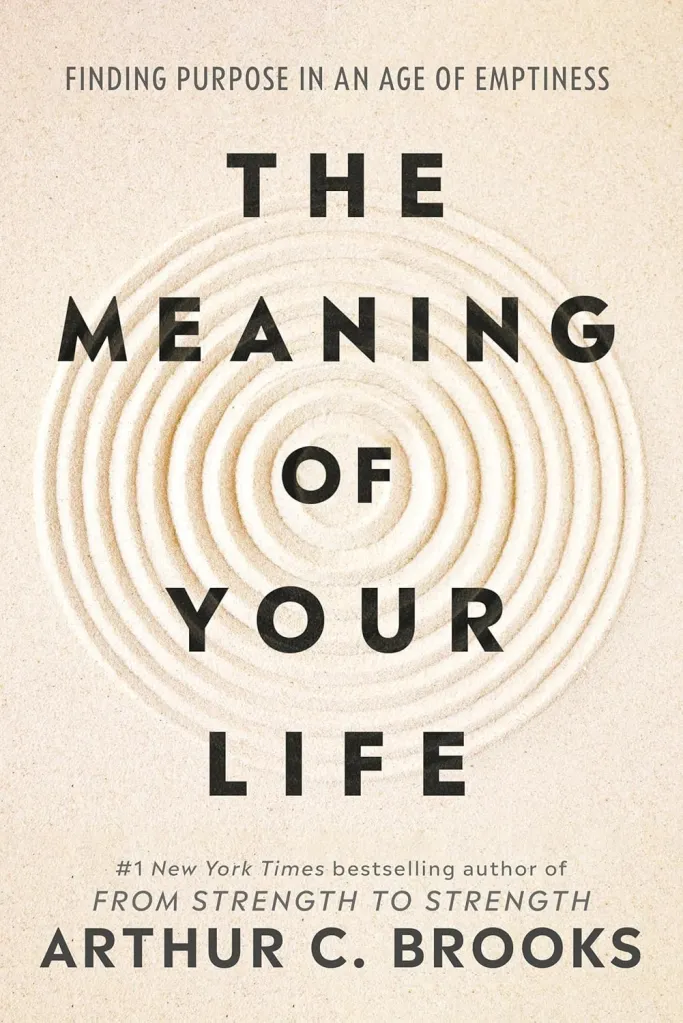
From “THE MEANING OF YOUR LIFE: Finding Purpose in an Age of Emptiness” by Arthur C. Brooks, published on March 31st, 2026, by Portfolio, an imprint of Penguin Publishing Group, a division of Penguin Random House, LLC. Copyright (c) 2026 by ACB Ideas LLC.
The post Why the English language makes it so hard to say what you really feel about love appeared first on New York Post.