When the final season of “Queer Eye” dropped this year, it did so with too little fanfare: a scant five episodes and a late, fleeting appearance on the Netflix home page for someone who had faithfully cried over all previous episodes — me. The show’s low-key farewell could be down to well-documented intracast disputes or air dissipating from a franchise that has run for nearly a decade. But the end of “Queer Eye” also dovetails with a second story: the beginning of a precipitous fall in the acceptance of gayness in mainstream American culture. It’s a particularly bitter aftertaste for a show that placed the pursuit of acceptance at its heart.
I am a lesbian in my late 30s, around the same age as the “Queer Eye” cast. Many of our microgeneration missed the almost universal brutality that our gay predecessors endured — criminalization, forced sterilization, the AIDS crisis. But we did encounter that era’s stinging tail: “don’t say gay” laws, conversion therapy and casual conversations that now sound archaic. When I was at university, a fellow student asked, “Would you prefer for your son to be born gay or have no legs?” and people around me responded, “No legs.” This was in 2010. But in the years after we graduated, in a new post-marriage-equality lull, many corporations sponsored Pride. There was a certain cachet in being gay, and then labels seemed on course to become irrelevant altogether.
Now we are caught up in an era of backlash-whiplash, when the gains of the past few decades seem to be at increasing risk of slipping away.
“Queer Eye” is a reboot of the original franchise, “Queer Eye for the Straight Guy,” which ran from 2003 to 2007, battleground years for gay rights. The premise: Five gay men perform a makeover on someone whose cobwebs could do with a dusting. The first version was criticized for sanitizing gayness for straight audiences and leaning into limiting stereotypes — gay guy as hairdresser, interior designer, sidekick. But through television screens, it got gay people into homes they might not have otherwise entered, just as the national fight for gay marriage started to ramp up.
When the show was reimagined with a new cast in 2018, liberated from its “for the Straight Guy” shackles, the hosts reflected a more expansive expression of queerness — less white, more gender diverse — and many of the heroes, as the makeover subjects are known, were from red states. It was an exercise in bridge building that wasn’t shy about its ambition: “The original show was fighting for tolerance,” Tan France, the fashion expert, says in the first episode. “Our fight is for acceptance.”
The first stop for “Queer Eye,” filmed after President Trump’s first election, was in Dallas, Ga. The show’s first hero, Tom Jackson, describes himself as a “dumb old country boy from Kentucky”: He drinks margaritas from liter tankards, keeps barbecue tongs by his bed and has a giddy crush on his ex-wife. When the Fab Five flamboyantly ambush him in a diner, cameras capture restaurantwide looks of surprise and delight. There are jokes about douching, and Jonathan Van Ness (grooming) covers the hero’s ears: “Don’t scare her. We just got here.” When the hero asks Bobby Berk (design) about his marriage, “Are you the husband or the wife?” he’s gently re-educated. By the end, the hero, beard marshaled and socks pulled up, says, “I’ve never hung with gay guys before, and they were great.” It was indicative of the period’s prevailing hope that familiarity would lead to acceptance.
Eight years later, however, anti-queer bias is in ascent. Transgender people’s rights are being upended in states across the country. Even marriage equality no longer feels indelible. The current 47-point gap between Republicans and Democrats on gay marriage is the largest since Gallup began tracking the measure three decades ago. Research from psychologists at Harvard and Northwestern suggests that acceptance of gay people peaked in 2020 and, instead of plateauing, fell sharply. Strikingly, that reversal is most robust among people under 25. In America, Gen Z is more likely to identify as queer than any previous generation. But globally, the younger generation is also more traditionalist: Gen Z men around the world are more than twice as likely as boomers to think that wives should obey husbands.
Popular culture is sending warning signals, too. Pixar’s chief creative officer recently revealed that the company ordered the removal of gay content from the 2025 film “Elio” because “we’re making a movie, not hundreds of millions of dollars of therapy.” Netflix has canceled highly acclaimed adult shows with gay representation, like “Boots,” a show that inspired the Pentagon to call Netflix’s programming “woke garbage.” In the months after Elon Musk acquired X, homophobic, transphobic and racist hate speech on the platform soared by 50 percent, and engagement on posts with hate speech doubled.
And yet in New York City, where I live, we are still in a formerly unimaginable utopia. There it feels as if every second person is gay. I just had a child with my wife, and even though I’ll have to adopt my own daughter in order to ensure that I’m legally protected as her mother, the experience was relatively easy. We see the rabid response to “Heated Rivalry” and think: Maybe it can all flip yet again. Cycles of backlash have become shorter and shorter. We tell ourselves it’s a pendulum that will swing back. I wish I felt more confident.
Fifteen years ago, I could feel nervous about holding my first girlfriend’s hand because of looks that seemed to say, “You are doing something kids shouldn’t see.” Over the past decade, those looks — or the worry that made me watch for them — faded. Now they’re back.
There is a theory that gay acceptance became swept up in a wave of rejection, by the right, of liberal elites telling people what to think. It is possible to see “Queer Eye” as an emblem of this — polished urbanites coming to backwaters with improvements to make — but for me, the show felt different. Some of the hosts were from small towns themselves, and they were seemingly beloved by heroes and viewers alike. A makeover show alone was never going to change culture, but it did reflect a hopeful cultural landscape. Today, however, even tolerance is in doubt.
And so this goodbye from “Queer Eye” feels apologetic, even if the hosts are apologizing for something far outside their control. For the finale, the Fab Five take on Washington, D.C. “The eye of the storm,” Mx. Van Ness calls it. Against this backdrop, the hosts grasp for their trademark optimism: “This is not the end,” Mr. France tells the camera. “We were just starting off a movement.” “Now it’s your turn,” Karamo Brown (culture) says. “It’s your turn,” Mx. Van Ness echoes. Jeremiah Brent (design, a newer addition) says nothing. He appears to be on the verge of tears.
In these final episodes, when the hosts video-call their husbands and children, it reads as one last request for acceptance: We are just like you. Please let us keep this.
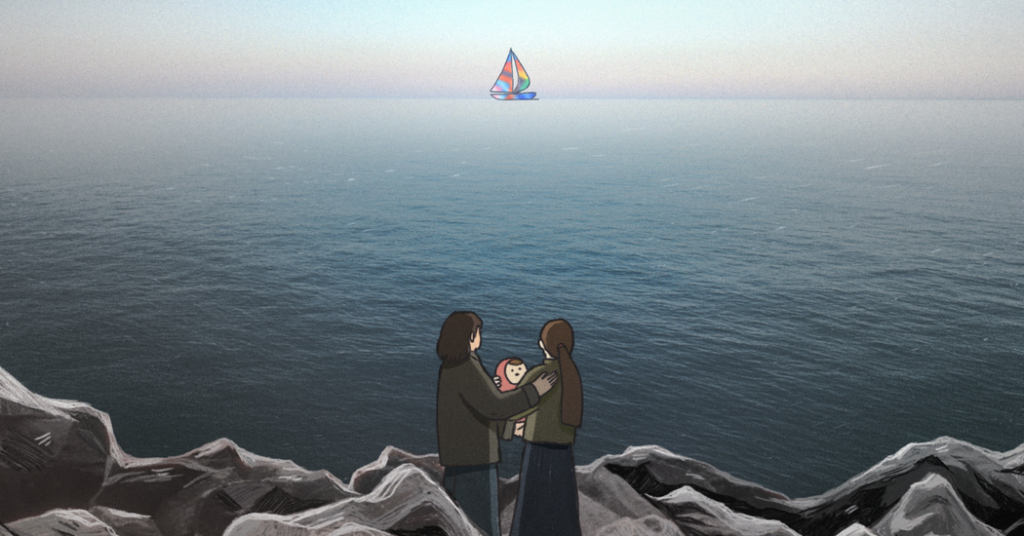
I hold my daughter in my arms, too. She is 5 months old. I know how lucky I am. It’s so much better than it was. You don’t know how good you have it. But we do. That’s the point.
Rosa Rankin-Gee is a novelist. Her forthcoming novel, “My Only Boy,” is about a lesbian and a gay man who fall in love.
The Times is committed to publishing a diversity of letters to the editor. We’d like to hear what you think about this or any of our articles. Here are some tips. And here’s our email: [email protected].
Follow the New York Times Opinion section on Facebook, Instagram, TikTok, Bluesky, WhatsApp and Threads.
The post Goodbye, ‘Queer Eye.’ Goodbye, Queer Acceptance. appeared first on New York Times.