NILES, Ill. — It would have been Lola Muñoz’s 20th birthday, yet for her family she remains forever 13.
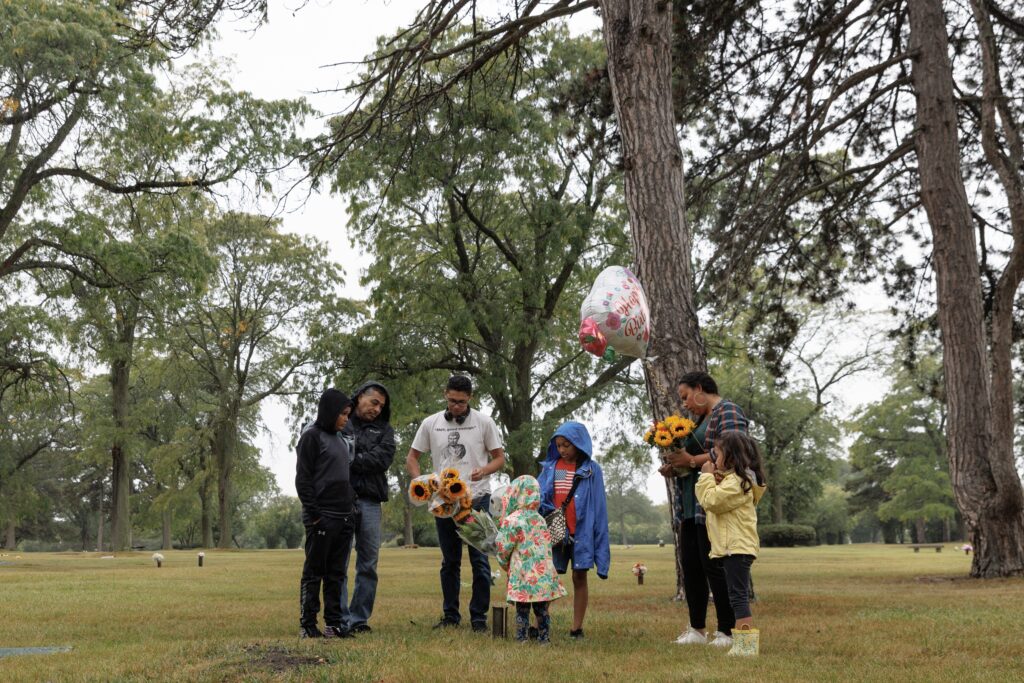
The day began for her parents and siblings with breakfast at a retro-styled restaurant called Lola’s Diner, one of the last places Lola went out to eat. Then they picked up flowers and a “Happy Birthday” balloon in the shape of a heart on the way to Mount Emblem Cemetery, where she was buried.
Since Lola’s death, the Muñoz kids take the day off of school on her birthday.
Lola died of a rare pediatric cancer called diffuse intrinsic pontine glioma. A type of tumor found in the brain stem, the cancer, also known as DIPG, affects 200 to 400 U.S. children annually, with fewer than 10 percent surviving two years after being diagnosed, according to the Central Brain Tumor Registry of the United States.
After her diagnosis on Aug. 26, 2016, at age 11, Lola received radiation therapy, followed by an experimental trial that combined two adult chemotherapy drugs. To date, no drug is known to improve DIPG survival rates, and the goal was to see whether a child could tolerate the highest possible dose. Lola qualified, and she chose to participate, saying at the time, “I’d rather help find something for the other kids that will get DIPG than to not help at all.”
On April 24, 2017, Lola withdrew from the trial, and by December, her disease had progressed. She was losing motor function and went into hospice before her death on April 2, 2018.
The grief remains ever-present for her family, despite the passage of time.
“Every day, I live with the fact Lola’s not here — every second. [I’m] never not thinking about it. I don’t know how to describe it,” said her mother, Melissa Muñoz.
Throughout Lola’s diagnosis and treatment journey, Melissa and her husband, Agustin, participated in online DIPG support groups for parents, where they learned not only how to cope with Lola’s illness as a family, but also how to honor a child after they die. It inspired routines that have helped the family stay connected to Lola through the years, even as they’ve welcomed new children who never got a chance to meet their sister.
Whenever they take a photo together, they bring a framed picture of Lola to create “a picture of all of us together,” Melissa said. It has become a habit for marking milestones. Melissa described it as “a great way to show this is our complete family: There’s no one missing in this photo.”
Honoring Lola’s life
Since Lola died, Melissa and Agustin have had three more children, joining the three siblings who knew Lola when she was alive. For the younger siblings — Selma, Alma Marie and Magnus, who were 6 years old, 3 years old and 9 months old when Lola would have been 20 — there’s a unique sense of loss as they experience grief for someone they never met. They learn about Lola and what she meant to the Muñozes through family narratives, inherited belongings and traditions — like celebrating Lola’s birthday with visits to her grave site, followed by a meal featuring her favorite foods.
The love in their relationship continues despite Lola not being there. As the children grow, they are developing an internal relationship with Lola, who now only exists in memory and story, learning about who she was and what she meant within the context of their family.
Some experts in family grief vouch for such practices. They also recommend using honest language with children to discuss family members who have died.
Using euphemisms and potentially confusing statements might lead to deep-rooted misconceptions, as children have rich imaginations and a tendency to interpret language literally, said Hania Thomas-Adams, a child life specialist for a pediatric hospice program in Oakland, California. Avoiding certain words leads to avoiding the topic, she said — so using direct language not only provides clarity that children need to understand the biological reality of death as irreversible, but also signals safety and permission to talk about it.
“It’s tempting to shield kids from aspects of the truth, and it leads them to be confused and left to fill in gaps on their own,” Thomas-Adams said. “If there are gaps in the story, they will fill them in. And they will fill them in with guilt or things that are not accurate.”
When adults leave gaps in the story, children get the message that they cannot talk about it. Sharing information in simple and small doses helps establish openness and a sense of togetherness as a family, said Thomas-Adams. Asking children what they want to know also gives them the chance to tell you in their own words when they’re ready to hear more about a sibling who has died.
“We’re missing something when we don’t talk to children about death and the reality that it can happen anytime,” said Melissa, Lola’s mother.
Learning how to exist in the world without someone, and how to function as an altered family, becomes a shared process — and though each family member will have different needs at different times, labeling this healing journey as something the family is experiencing together provides both acknowledgment and support, said Thomas-Adams.
Stories, traditions, and repeated acts tied to milestones and even everyday moments allow the Muñoz children to learn about Lola.
Some of Lola’s belongings have been integrated into the Muñoz household. A yellow fleece blanket Lola had throughout her treatment journey is draped over the living room couch. A smiling-emoji pillow she loved sits on the bed of the oldest Muñoz sibling, Soren, who is in his early 20s. The dress Lola wore to her confirmation has been offered to Izel, who is 10 years younger than Lola would have been.
Although the children may not grasp the meaning of wearing Lola’s clothes, for her parents, it keeps Lola’s memory and presence alive, and the items become vessels for sharing stories about her.
Rebecca Hobbs-Lawrence, a grief services coordinator in Portland, Oregon, explains that attachment objects — physical, tangible items — can carry a loved one’s memory forward because they are tied to the verbal story of that person’s significance. Over time, Hobbs-Lawrence said, the items become less central as they help teach children how to carry the person’s memory within themselves.
When asked about his relationship with Lola, Soren reminisces about playing board games with her and the ordinary sibling banter between them as they would try to get each other in trouble from time to time. He said he misses having someone to talk to: “I should have just put my homework down and spent more time with her.”
Going to the gym, talking with friends, playing Lola’s favorite games and being with the family pets have helped Soren cope.
Melissa said some of Soren’s high school peers thought he was lying about having a sister who died. Ellis, 12 when Lola would have been 20, experiences the same: He recalls a time when, after sharing about Lola, someone said, “Yeah, right,” assuming he was seeking attention. When another student asked why he wasn’t at school on Lola’s birthday, Ellis said he had gone to visit his sister’s grave site. The student looked at him and walked away. Ellis mentioned, however, that those who remembered what happened to his sister would tell him, “I’m sorry for your loss.”
The younger siblings, who never met Lola, recognize who she is. Even at their ages, if Melissa points to a photo of Lola and asks who it is, they can correctly identify her.
Melissa wishes people would ask her about Lola more often, but many who knew her daughter no longer live nearby. “The people most open [to] talking about Lola are the ones who’ve lost children,” she said.
A few years ago, she met with other parents who had kids with brain cancer. She said she “didn’t even have to talk. … I knew that these mothers understood.”
A birthday meal
After breakfast on Lola’s birthday on Tuesday, Sept. 24, 2024, the family goes to a basketball game at Izel’s school. The buzzer reverberates as the scoreboard shows the guest team in the lead. Izel wears jersey No. 19 — the same number her older sister wore when she played basketball — along with Lola’s hand-me-down sneakers that don’t hug her feet properly. Melissa and Agustin sit in the bleachers rooting for the home team while their youngest squirms restlessly in Mom’s lap.
After celebrating a win by Izel’s team, the family returns home for dinner. Melissa jokes that Izel is a lot better at basketball than Lola was.
On the menu are Lola’s favorites: hamburgers and homemade chocolate cake. With their hands pressed together, the family says a prayer before the meal. Plates clatter, ketchup bottles squeak, and the evening winds down, marking another year of celebrating Lola.
“I feel in my heart she’s in heaven. … I know a lot of people have been praying for her,” Melissa says. Her role as a mother, she says, is to raise her children well, guide them toward heaven and do good in the world. “Then we get to see Lola,” she says.
“I just want to see her, be with her, hug her — and I know I get to do that in heaven.”
The post Live like Lola: How a growing family keeps a daughter’s memory alive appeared first on Washington Post.