“Love Story,” the fictionalized, televised account of the doomed romance between John F. Kennedy Jr. and Carolyn Bessette, ended Thursday evening amid paeans to its minimalist fashion, memories of guiltlessly languid smoking, a perfect Gen X soundtrack and scenes of a ’90s Manhattan social swirl untethered to cellphones and social media. But I watched it for the steely dowagers with immobile bouffants, learned matrons, socialite survivors, quiet optimizers of power, veteran observers of human nature. Theirs are the voices I won’t soon forget.
In the Ryan Murphy mini-series, Jacqueline Kennedy Onassis, her sister-in-law Ethel Kennedy and Ms. Bessette’s mother, Ann Marie Messina Freeman, are portrayed with the benefit of hindsight and a dramatist’s poetic license. They recognize the challenges of being an intelligent and accomplished woman standing alongside a famous man — especially a man whose experience with fame looked like being affectionately hoisted onto a pedestal rather than viciously targeted for comeuppance. They understand the unfairness, but also the opportunities. They are clear on what is within their control and what has the potential to rip your heart out.
These women are not so pessimistic that they believe certain relationship hurdles were insurmountable, but they are wise enough to recognize that ignoring pitfalls and perils, or believing yourself immune to them, is not a path forward. They can see beyond the blush of new love and the invincibility of youth that makes it hard to acknowledge that sometimes life just doesn’t work out.
Mr. Murphy has a history of exploring the truth-telling ability of older women, with Jessica Lange’s roles in “American Horror Story” iterations and as Joan Crawford in “Feud,” as well as with Isabella Rossellini’s Franny Forst in “The Beauty.” He gives his audience a seen-it-all version of Jackie Onassis, portrayed by Naomi Watts (who played a similarly wise and compromised Babe Paley in Mr. Murphy’s “Feud: Capote vs. the Swans”). Jackie is filled with concern over her son’s inability to see himself clearly in the glare of all the world’s attention and expectations. She worries about this man-child whose forgetfulness and disorganization are less about an overloaded schedule and more about willful irresponsibility and, quite possibly, fear.
This Jackie knows that any wife to her son would need to be comfortable with the world’s gaze focused on her, but not needful of it, not worshipful of it.
When she inquires about his love life, John (played as earnestly oblivious by Paul Anthony Kelly) mentions his new girlfriend, Carolyn (a studiously aloof Sarah Pidgeon, who always looks good smoking a cigarette.) “She seems to know who she is,” John says about Carolyn. “And when she looks at me, I can tell that she knows that I don’t.”
“Know who you are,” adds his mother, acknowledging what he has left unspoken.
This Jackie understood fame. She displayed an exquisite ease with being watched — as she walked through the city in sunglasses or when she essentially returned home from the hospital to die.
As she reads the news tributes that precede her death, she is cleareyed about their genesis and what they say about her life alongside the president and after. “In some ways our life together was more of a realization of my dream than his,” she tells her son. “I always knew I was bound for a different life than everyone else.”
“It’s not the adulation I question, it’s where it stems from, how it came to be,” she continues. “I can’t help but sometimes wonder how I’d be remembered if I hadn’t, if I wasn’t America’s widow.”
Jackie dies before meeting Carolyn. But she walks the audience through an anatomy of fame: the shock of it, the revulsion, the addictive nature of it, the negotiated peace. In doing so, she offers a lesson for today’s movie stars and politicians, and civilians, too — people who suddenly find that they’ve gone viral for reasons beyond their control. She knows what is coming for Britney Spears and Meghan Markle. Or Rama Duwaji, the accomplished artist and sort-of private person with a long social media trail, who is now best known as the wife of New York’s mayor, Zohran Mamdani. “Public’s always holding a flower in one hand and a stone in the other,” Jackie tells her son. “Don’t forget that.”
People might assume they can ride out a wave of notoriety only to realize too late that they might well be drowning in it. It’s the struggle for a private self while being a public figure, the painful realization that the public sees itself as a co-writer of your personal narrative, which seems to keep tripping up Chappell Roan.
Ethel Kennedy, Robert F. Kennedy’s widow, wouldn’t stand for such reticence. As with the show’s characterization of Daryl Hannah, Mrs. Kennedy is not portrayed particularly generously in “Love Story.” As played by a sharp-tongued Jessica Harper, she comes across as a tightly wound woman who revels in her role as the family matriarch, especially in the aftermath of Mrs. Onassis’ death in 1994. (Don’t call her Ethel. She is Mrs. Kennedy.) She is an authoritarian who gazes at Carolyn with impatience and disdain. Ethel unleashes a geopolitics pop quiz in the midst of a family dinner party. “Clinton is looking into establishing diplomatic relations with Vietnam. Any political risks there?” she asks Carolyn.
She targets Carolyn’s style flourish — an ivory scarf draped just-so around her shoulders — as a bothersome affectation. “Are you cold, dear?” Ethel asks. “I’m just growing flushed just looking at you with that thing on your shoulders.”
She is intentional in taking aim at fashion. She is belittling Carolyn’s professional home. She’s dismissing fashion’s attachment to contemporary gestures. She’s scoffing at its reliance on change rather than tradition. Fashion is a form of communication and Ethel is taking stock of just how easily Carolyn can be muzzled.
Yet beneath that mean-girl facade, Ethel knows what it meant to feel inconsequential in the midst of a consequential life. She is a Kennedy, after all. But she is not the wife who drew the longing gaze of men and the envy of women.
“I was never going to be beautiful,” Ethel says, “but I could always be special. Until Jackie.”
She knows that Carolyn is unaccustomed to being ignored, to feeling silenced. As hard as that might be, there is a certain safety in the shadows. As Ethel explains, once Carolyn marries into the Kennedy clan, she will not be able to stop people from staring; she can only control — just barely — what she reveals. And so, in some ways, the vicious dismantling of Carolyn’s style, an incident that leaves her in a puddle of acquiescence, is a test.
“Like Jackie, you’ve been spared the indignity of the world’s indifference. You are noticed. And it’s now entirely up to you whether to receive this gift — as burdensome as it may be — with grace,” Ethel says. “You’ll never be given the benefit of the doubt again.” She adds, “The whole world will be watching you. It’s your choice what you want them to see.”
Carolyn, of course, would prefer that the world see nothing at all, but as she and John convene with a marriage counselor in the final episode, it’s clear that such a goal is only rendering her invisible to herself.
It’s a dilemma faced by many prominent women — particularly those whose words are monitored, constrained or misappropriated. Whether it was the ladies of another era who placed great social stock in their position on the best-dressed list, a generation that broke ground in the workplace, the first female secretary of state who had an eloquent collection of brooches or a former first lady, appearance can be a burden or an opportunity. Michelle Obama embraced the public’s interest in her attire knowing that many people wouldn’t sit still to hear her thoughts on childhood obesity or the employment struggles of military spouses. Fashion was a side-door entry point.
“People looked forward to the outfits and once I got their attention, they listened to what I had to say,” Mrs. Obama wrote in her book “The Look.”
It’s Carolyn’s mother, Ann (played with barely contained panic by Constance Zimmer), who ultimately takes viewers past the hurdles of fame, history and the loss of privacy, to speak to the truth about human nature. Her toast the evening before her daughter’s wedding evolves into a plea that the groom will see and value what she is giving up for him. It reaches its denouement in an ensuing conversation with John in which he pledges his devotion to her daughter and vows to always care for her.
“I know you believe that,” Ann says, as she gently places her hand on his arm.
It’s also Ann who reminds us that the world also lost the talents of Carolyn’s sister Lauren — a wise woman in the making — who was on board that plane with the golden couple when it went down.
What people say they will do on their best days and what they earnestly believe they will do on their worst ones are simply the reassurances they give themselves to keep moving forward. They can only believe the best about themselves. They’ll be different from all the rest.
To varying degrees, these women all had the advantages of money, education and whiteness. But they all came of age at a time when women’s lives were constrained by laws and traditions and they learned how to navigate treacherous waters with little more than their wiles and fortitude. They learned not to be sentimental even as they gave in to their emotions.
They made their own choices from sometimes limited options, often choosing between bad and worse. They made accommodations that today might seem unthinkable or simply unnecessary. But they possessed a skill that is becoming increasingly elusive. They could see people the way they are, rather than the way they wanted to be.
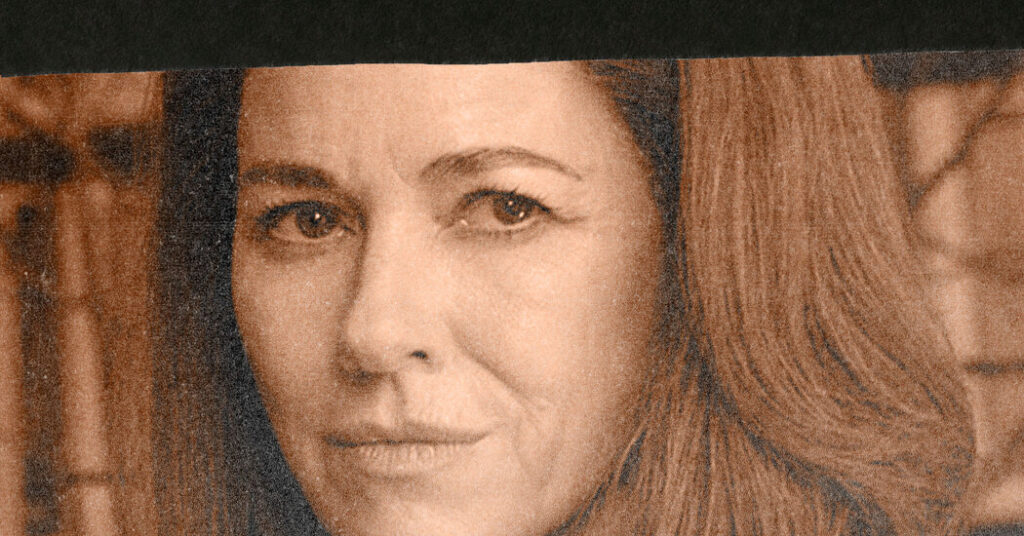
Source photograph by Kurt Iswarienko/FX.
Robin Givhan is a Pulitzer Prize-winning fashion critic and a former senior critic at large for The Washington Post.
The Times is committed to publishing a diversity of letters to the editor. We’d like to hear what you think about this or any of our articles. Here are some tips. And here’s our email: [email protected].
Follow the New York Times Opinion section on Facebook, Instagram, TikTok, Bluesky, WhatsApp and Threads.
The post ‘Love Story’ Wasn’t Really About John or Carolyn appeared first on New York Times.